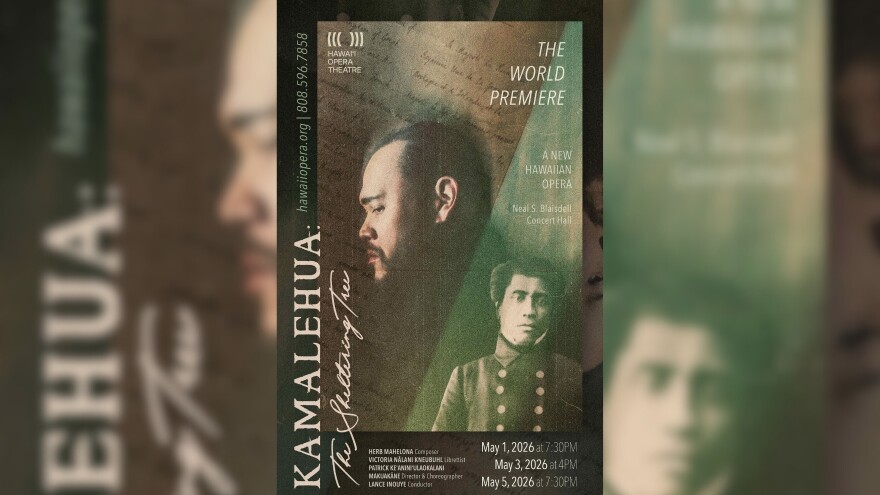
Timoteo Kamalehua Ha’alilio was the Kingdom of Hawaii’s first international diplomat, dispatched by his King and close friend, Kamehameha III, to America and Europe in 1843 to secure recognition of his homeland’s sovereignty. During his travels, growing political turmoil at home threatened to upend Hawaii irreversibly. But the tenacious efforts of Kamalehua, the King and Country’s “Sheltering Tree,” resulted in an Anglo-Franco treaty that confirmed and restored Hawaii’s independence.
Kamalehua’s heroic achievement wasn’t dust-binned. It simply languished until brought to the fore by the Hawaiian historian Kau’i Sai-Dudoit, along with the tireless advocacy of the gay Honolulu-born and San Francisco-based kumu hula (hula master) Patrick Makuakāne, the founder and artistic director of Nā Lei Hulu I Ka Wēkiu, “Kamalehua: The Sheltering Tree” was commissioned by Hawaii Opera Theatre (HOT) and took shape over a six-year period, during which Makuakāne was tapped to direct and choreograph the ambitious production.
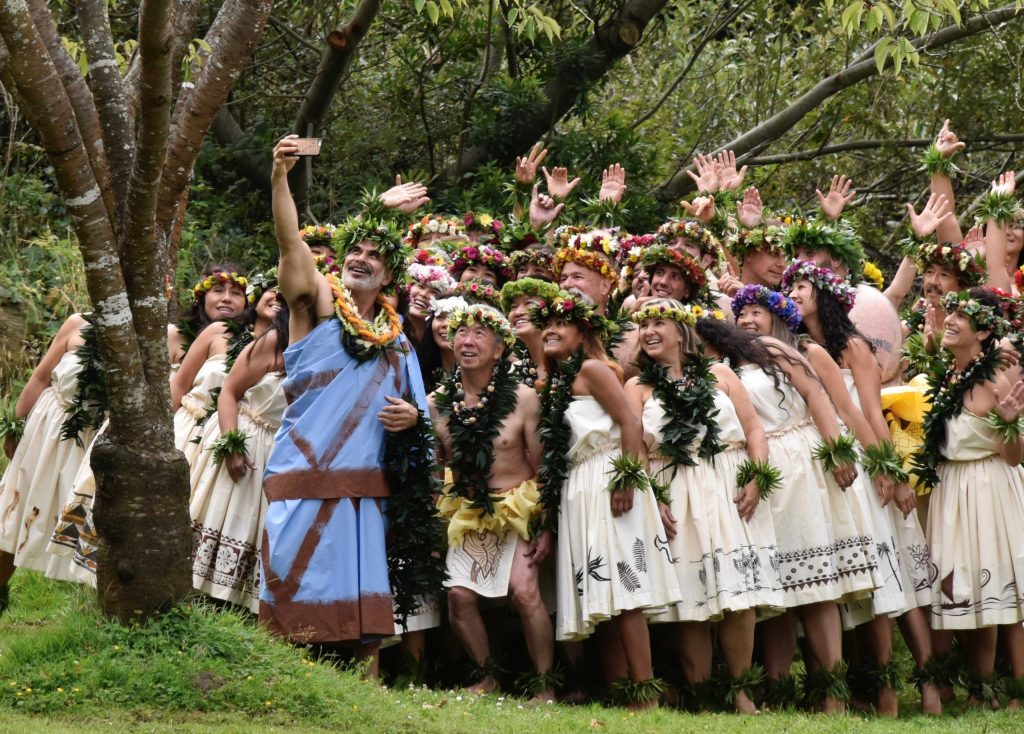
It premiered to a sold-out audience at Honolulu’s Blaisdell Concert Hall on May 1, with subsequent sold-out performances on May 3 and 5. This was a new frontier for HOT, whose previous seasons have featured warhorses (e.g., Rossini, Bizet, Wagner). But if you know you know: those familiar with Makuakāne’s 40 years of popular hula shows in San Francisco, with Honolulu tour engagements, knew that this production would explode with energy.
Vocal presence And for opera fans, the title role casting of Hawaii-born Quinn Kelsey, the prominent world-class baritone whose operatic repertoire spans a broad range of roles performed at major houses worldwide including the Met, was quite the coup. For the San Francisco Opera, he has sung the title role of “Rigoletto” and will sing Scarpia in “Tosca” this season.
He didn’t disappoint with his enormous vocal and physical presence, his instrument rich, clear, and commanding in Hawaiian and English. Despite his star power, he didn’t set himself apart from the ensemble, he lifted it, and his tremendous acting chops conveyed Kamalehua’s humility and vulnerabilities with almost surgical precision.
Kelsey’s scenes with the also superb Brendan Boyle as Kamehameha III were reminiscent of the tenor-and-baritone “Au Fond du Temple Saint” duet from “The Pearl Fishers” (in which Kelsey, by the way, sang a widely-praised Zurga in English National Opera’s 2010 production).
The cast as a whole was luminous, with standout performances, besides Kelsey and Boyle, by John Pickle, a villainous Alexander Simpson, a British Consul attaché; Tasha Hokuaa Koontz as Kamalehua’s wife Hana; Joshua Jeremiah as Reverend William Richards (Rikeke); and Blythe Kelsey as Kekauluohi, the Queen consort.
Emotive qualities The emotive quality of Herb Mahelona’s brilliant harmonic score, especially the ravishing Kamalehua and Monarch brotherhood motif, was keenly conducted by Lance Inouye leading the Hawaii Symphony Orchestra. And Victoria Nalani Kneubuhl’s libretto captures the roiling real-world tensions of the times ultimately eclipsed by Hawaii’s mystical and spiritual intensity.
The staging is simple but effective. The curtain stays up for the 150 minutes of fluid sequences on a set dominated by two sheltering trees depicted on either side, awash with changing light and color, and evocative backdrops.
The chorus in “Kamalehua” is exceptional, including a wry tone-setting troupe of five adroit male hula dancers (Makuakāne’s own dancers from San Francisco) who open the opera, move props, and act appropriately clownish, aggrieved, or indifferent with stylized expression and movement. They were Christopher Brodie, Ryan Fuimaono, Jason Laskey, Jason Ogoo, and Neil Romabiles. They were joined at times, radiantly, by the Honolulu-based kumu hula and Makuakane’s hula sister, Ka’ilihiwa Vaughn-Darval.
A few quibbles, both minor, in the second half: in one scene, in full lighting, two stagehands with headphones walk on to move a rock bench when it could’ve easily been handled by chorus members already onstage; and in the penultimate scene, during which Kelsey sings heartbreakingly, “May the water of Hawaii come raining over me…”, an angel (a gorgeously-costumed Sarah Hodges) lingers a tad too long.
This was Makuakāne’s first outing directing and choreographing an opera. Obviously, HOT trusted him for his musicality and integrity, and he delivered. A dynamic showman, he takes big swings with his projects, and has provided us with numerous thirst-trap moments over the years, but he’s also measured, bringing subtlety and nuanced touches to this aloha-loaded ode to his heritage.
At the end of the curtain call, everyone on stage – cast and creative team – chanted and danced hula in unison to the battle cry, “Hole Waimea,” a fierce and life-affirming coda.
Makuakane said in a recent local media appearance that he hopes to bring “Kamalehua” to San Francisco in 2029 if he can find backers and half-a-million dollars in funding. His steely determination is not to be underestimated. As HOT’s Board President told a group of us ticket holders during pre-performance lobby chatter, “Whatever Patrick touches turns to gold.” Wherever this exquisite opera lands, hopefully sooner than 2029 and in San Francisco, it is not to be missed.
Kumu Patrick Makuakane shares insight on Kamalehua: The Sheltering Tree—a groundbreaking all-Hawaiian opera bringing culture, history, and storytelling to the stage.
Three dancers from Nā Lei Hulu i Ka Wēkiu will be performing in the show Kamalehua: The Sheltering Tree
A new opera sung primarily in the Hawaiian language tells the story of Timoteo Ha‘alilio, the royal secretary of Kamehameha III who played a vital role in securing Hawai’i’s status as a sovereign nation.
The opera focuses on Ha‘alilio’s mission between 1842 and 1845 during trips to the United States, Great Britain, Belgium and France to secure treaties recognizing Hawai‘i as a sovereign nation. Ha‘lilio died of tuberculosis on the voyage back to Hawai‘i.
“Kamalehua” is the first opera sung in ‘Ōlelo Hawai‘i to make it to the main stage.
“It’s about time,” said Patrick Makuakāne, director and choreographer.
Makuakāne, a kumu hula, said he’s never directed opera before. In fact, he wasn’t much of an opera fan. But he jumped at the chance to direct a show featuring Hawai‘i’s historical figures.
“This is a story about our nation, our lāhui,” he said. “The music and singing is so incredible. It will grab you and stir you in a way that you’ve been in any sort of musical presentation. Very different from Hawaiian music.”
The cast is made up of 40 chorus members and about 10 principals. It’s a mixed group with native and non-native speakers. Some of the cast are local while others are from around the world, according to Makuakāne.
Opera in Ōlelo
On a recent Tuesday at the Hawai‘i Opera Theatre in Downtown Honolulu, the cast rehearsed some scenes while singing the Hawaiian language in harmony. At multiple times during the rehearsal, the conductor halted lines to ensure cast members were pronouncing words correctly.
After each correction, they’d disperse to the sides of the rehearsal room to restart the scene, with some cajoling from the conductor to pick up the pace if they were moving too slow.
Baritone singer Quinn Kelsey plays the role of Timoteo Ha‘alilio. He’s been singing opera since he was 13.
Quinn Kelsey is a baritone singer who will play Timoteo Haʻalilio for the opera “Kamalehua: The Sheltering Tree.”
“When you think of Hawaiian music, you think of parties and a really relaxed kind of atmosphere,” Kelsey said, referring to how different Hawaiian music is with opera. “In rehearsals, I start singing in ʻŌlelo Hawai‘i, and my voice naturally disconnects from my operatic training. So, I have to stop myself and go ‘Wait. We have to merge these two.’”
Kelsey comes from a musical family. His mom is classically trained and his father is performing in the upcoming opera alongside him.
Opera takes immense vocal training to fill a room with thousands of people, let alone perform for a long period of time — sometimes two to three hours.
Opera singers rolled their Rs in Spanish and Italian repertoires. In ʻŌlelo Hawai‘i, it’s more focused on the enunciation.
That can be challenging in opera singing, according to Makuakāne.
“You have to be careful where you’re closing the diphthongs, those vowel sounds get to it right away, then hold the note and not slide for too long,” Makuakāne said.
Queen Lili‘uokalani composed, too
While Hawai‘i’s monarchs were immersed in classical music, there hasn’t been an opera composed in the Hawaiian language.
The closest one was an unfinished operetta written in English by Queen Lili‘uokalani, according to DeSoto Brown, the Bishop Museum historian and curator of the archives department.
“We only know that she did this through scattered papers which she wrote by hand,” he said.
The operetta Queen Lili‘uokalani was working on before she died was titled, “Mohailani.”
Blythe Iakuinipuaʻokahana Kelsey (left), Tasha Hokuao Koontz (middle) and Leslie Louise Goldman (right), harmonize during a rehearsal while the chorus members sing while performing hula that’s directed by Patrick Makuakāne.
An operetta is shorter than an opera. It’s light-hearted and often theatrical, combining music, dance and spoken dialogue. Whereas opera has a serious tone and is sung throughout the entire performance.
The scattered pages outlining Queen Lili‘uokalani’s operetta are at Bishop Museum and the Hawai‘i State Archives.
While the operetta was written in English, Hawaiian music is also in the pages.
“She could have written her operetta to be in Hawaiian, but she didn’t choose to do so. She chose to write it in English,” DeSoto said. “I’m sure that’s because she was thinking if she ever did complete it, she wanted it to be performed for the widest audience as possible, which would have taken in primarily people who spoke and understood the English language.”
For Quinn Kelsey, he hopes the opera would make the ali‘i proud.
“I hope we would honor them and do right by them,” he said.
The cast of “Kamalehua” is wrapping up its final set of rehearsals. The show runs May 1, 3 and 5 at the Neal S. Blaisdell Concert Hall in Honolulu.
The hall is just across the road from Thomas Square, the site where Hawaiian sovereignty was formally restored on July 31, 1843, after the Paulet Affair when Hawai‘i was briefly seized by a United Kingdom representative. That restoration was made possible in large part by the efforts of Ha‘alilio.
John Berger, April 28, 2026
He said that in San Francisco he spent as much as a year planning and preparing a show for his halau, Na Lei Hulu i ka Wekiu. For “Kamalehua” he had just 30 days.
An exciting theatrical debut is coming to Hawaiʻi: the world premiere of a new opera entitled “Kamalehua: The Sheltering Tree.” It tells the story of King Kamehameha III and his royal secretary, Timoteo Haʻalilio.
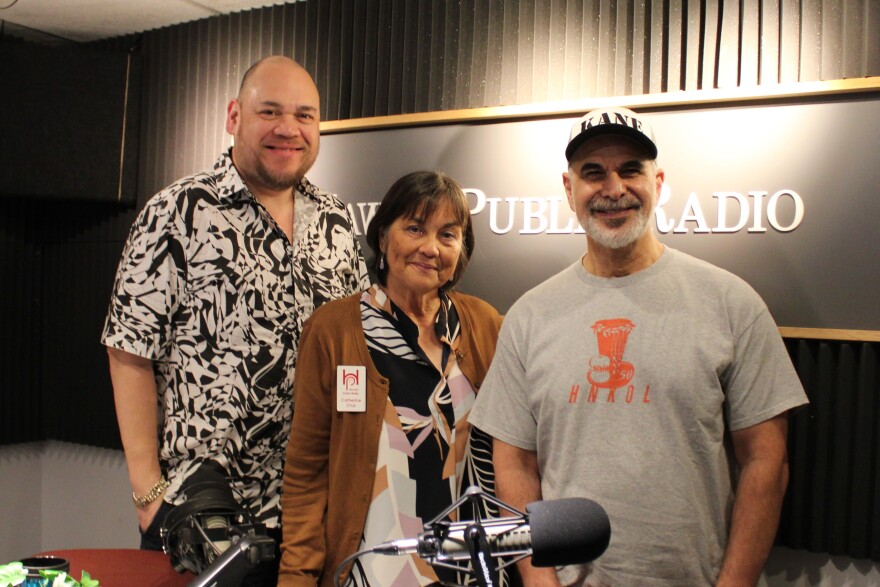
To learn more about the opera and its story, HPR spoke with two homegrown Hawaiian creatives behind the production: baritone singer Quinn Kelsey and director and kumu hula choreographer Patrick Makuakāne.
Kelsey is set to headline as Macbeth at the Metropolitan Opera’s 2026-2027 season later this fall in New York City, but he’s back home now to star in this latest Hawaiʻi Opera Theatre production. And Makuakāne has been very busy since he was last featured on The Conversation, he says.
From left to right: Opera baritone Quinn Kelsey, HPR’s Catherine Cruz, and kumu hula Patrick Makuakāne.
They are two weeks into rehearsing for “Kamalehua: The Sheltering Tree,” which premieres on May 1. More information about the opera can be found on the Hawaiʻi Opera Theatre website here.
This story aired on The Conversation on April 10, 2026. The Conversation airs weekdays at 11 a.m.
HONOLULU – To foster meaningful cultural experiences in Hawai‘i’s visitor hubs, the Hawai‘i Tourism Authority (HTA) is investing $397,000 in seven Hawaiian cultural programs and practitioners through its Ho‘okipa Malihini Initiative. Hoʻokipa malihini means to “welcome guests” and true to its name, this program funds projects that enhance the visitor experience while fostering meaningful interactions between residents and visitors in resort areas and harbors statewide.
“The Ho‘okipa Malihini initiative supports Hawai‘i’s host culture while enhancing the experiences of our guests,” said Caroline Anderson, interim president and CEO of HTA. “These programs are an essential part of how we ensure that the values, traditions, and stories of our people remain at the forefront of Hawai‘i’s visitor experience.”
Funding supports Hawaiian programs and cultural practitioners, including craftspersons, musicians, linguists and other artists. These practitioners offer regularly scheduled, free entertainment and cultural awareness programming in designated resort areas and harbors. The Hoʻokipa Malihini program is an HTA destination stewardship program administered through a partnership with Kilohana, a division of the Council for Native Hawaiian Advancement.
A committee of community leaders, industry experts, business representatives, and Hawaiʻi Tourism Authority staff, representing each island, evaluated proposals for events happening across the state from July 1, 2025, through June 30, 2026. The committee selected the following seven programs based on cultural impact, community engagement, organizational capacity and feasibility. Priority was given to efforts that best support Hawaiian culture, natural resources, local communities and responsible tourism marketing.
The Kūhiō Beach Hula Show and Torch Lighting offers free, authentic Hawaiian music and hula performances by top hālau hula on select Saturdays and Tuesdays. Held outdoors at the Kūhiō Beach Hula Mound, the show welcomes locals and visitors with casual seating and a vibrant cultural experience. Organization: Aloha Week Hawai‘i.
The Aloha Greeting and Cultural Program transforms routine cruise ship arrivals into a moment of genuine cultural connection. It offers authentic, Native Hawaiian-led welcome ceremonies that feature hula, mele (song), cultural talks and teachings on ocean stewardship. Organization: Kona Coast Heritage Foundation-Destination Kona Coast.
The Hilo Gateway Information and Hawaiian Culture Program presents Hawaiian music, cultural demonstrations and live hula performances in the heart of historic Downtown Hilo, creating an unforgettable venue for visitors to shop, dine and experience the rich layers of Hawai‘i’s culture, past and present. Organization: Destination Hilo Foundation.
The Hilo Harbor Pier Greetings Program welcomes cruise ship passengers with authentic Hawaiian music as they step onto Hilo Pier and then inspires them to explore downtown Hilo through personal interactions and information at the Aloha Information Center. Organization: Destination Hilo Foundation.
Maui Ola: Cultural Practitioner Initiative presents live cultural performances by Maui-based practitioners — musicians, hula dancers, weavers and storytellers — to resort venues on Maui and Oʻahu. It ensures these artists are compensated while sharing authentic Hawaiian traditions through mele, hula and hands-on demonstrations. Organization: Kāhuli Leo Leʻa.
The Return of Kapaemahu, directed by Kumu Hula Patrick Makuakane, brings to life the story of four māhū who sailed from Tahiti to bring healing arts to Hawai‘i. The weekly live hula performances at the Kūhiō Hula Mound foster respect for long-suppressed Hawaiian traditions while deepening understanding of Hawai‘i’s history, culture and values. Organization: Na Lei Hulu I Ka Wekiu.
Waikīkī By Moonlight features traditional mele and hula celebrating Waikīkī’s rich history and cultural significance. Each week, Waikīkī by Moonlight brings traditional mele (song) and hula performances that celebrate the story of Waikīkī to the Kūhiō Beach Hula Mound. Performances are free and open to the public. Organization: Hawaiian Music Perpetuation Society.
HONOLULU (KHON2) — A new hula show in Waikīkī brings a centuries-old story home to the very place it began. Just steps from the sacred healer stones of Kapaemahu, “The Return of Kapaemahu” tells a moʻolelo of healing, duality and aloha through traditional hula.
The free outdoor performance takes place every Wednesday from 6:30 to 7:30 p.m. under the banyan tree at the Kūhiō Beach Hula Mound.
Located on the beach side of Kalākaua Avenue near the Duke Kahanamoku Statue, the show invites both visitors and locals to sit on the grass, relax and experience the story where it happened.
“We in Hawaiʻi are fortunate to live in a land that not only recognizes but celebrates and honors gender diversity” said Lei Pua ʻAla co-director Dean Hamer in opening remarks at the premiere. “I hope that the thousands of visitors who see this show will take that message home with them and spread it far and wide.”
A moʻolelo of healing and legacy
The story began long before the 1500s, when four Tahitian healers — Kapaemahu, Kapuni, Kinohi and Kahaloa — arrived in Waikīkī from Moaulanuiakea, Raiatea. Known as māhū, individuals of both male and female spirit, the healers were celebrated for their gentle nature and miraculous cures.
When they prepared to leave, the healers asked that four large stones be placed to mark their presence, two at their home and two at their bathing site. The stones, quarried from Kaimukī, were set on the night of Kāne. The healers performed prayers and fasting for a full moon cycle, then vanished.
According to oral tradition recorded in 1906 and published the following year, their mana lives on in the stones. The site remains a tribute to healing and inclusion.
“At its core, this story is a reminder from our kupuna of how to treat people with aloha and respect even if you view them as different,” said Kumu Patrick. “Because in the end, they’re not different. They’re your ‘ohana, your friends. They’re you. Just a more fabulous version of you. And couldn’t we all use a more fabulous version of ourselves to remind us of our potential?”
Hula in the shadow of the stones
The show is composed and directed by Patrick Makuakāne, the first Native Hawaiian recipient of the MacArthur Foundation Genius Award.
“This extraordinary production by Kumu Patrick is a great example of visitor entertainment that’s not only enjoyable but culturally meaningful, educational, and impactful. And because it is free to the public, it is a wonderful addition to the resurgence of Hawaiian cultural programs now helping to reshape the visitor experience in Waikīkī,” added co-director Hamer.
Lei Pua ʻAla Queer Histories of Hawaii and Hawaii LGBT Legacy Foundation invite the public to the unveiling and dedication of a new plaque celebrating the history of Queen’s Surf Beach in Kapiolani Park on Wednesday.
What You Need To Know
The June 4 ceremony begins at 4 p.m. and will include remarks by Mayor Rick Blangiardi, community elders and special guests
Kumu Patrick Makuakāne will conduct a blessing followed by an ʻawa ceremony and picnic on the lawn
Queen’s Surf Beach was a popular gathering spot for Hawaii’s diverse LGBTQ+ Māhū communities in the 1970s, and by 1974, it became the site of the first gay pride celebration in commemoration of the 1968 Stonewall Revolt in New York
Created by Lei Pua ʻAla Queer Histories of Hawaii, the Queen’s Surf Beach plaque is the newest in a series of physical and digital historical markers to document and memorialize gender and sexual diversity across Hawaii’s multicultural landscape
The June 4 ceremony begins at 4 p.m. and will include remarks by Mayor Rick Blangiardi, community elders and special guests. Kumu Patrick Makuakāne will conduct a blessing followed by an ʻawa ceremony and picnic on the lawn.
Queen’s Surf Beach was a popular gathering spot for Hawaii’s diverse LGBTQ+ Māhū communities in the 1970s, and by 1974, it became the site of the first gay pride celebration in commemoration of the 1968 Stonewall Revolt in New York.
“Queen’s Surf provided a sense of community and family for many young people who were not accepted by their own families,” said Sina Sison in a release. Sison is a respected community advocate who was a Queen’s Surf regular in the 70s and 80s. “It was a place to learn about Hawaiian culture and traditions and make friends with people from across the islands and around the world.”
Unlike other gay beaches in the area, Queen’s Surf was highly visible to the public symbolizing Hawaii’s generally more accepting environment. Everyone was welcome at Queen’s.
Bill Char was another Queen’s Surf regular and a master lei maker who was named a Living Treasure of Hawaii this year. “Saturday night, we’d play volleyball all day, until they shut the lights off. We would sleep down at the beach so that the next morning when we woke up, we could take a shower right there, brush our teeth and be back on the court.”
Created by Lei Pua ʻAla Queer Histories of Hawaii, the Queen’s Surf Beach plaque is the newest in a series of physical and digital historical markers to document and memorialize gender and sexual diversity across Hawaii’s multicultural landscape.
“The aim of our work is to make the lives and experiences of LGBTQ+ Māhū folks, who have always been part of Hawaii’s story, more visible, because being seen and understood increases possibilities for being accepted and valued in the place you call home,” said project co-director Joe Wilson.
“We had no idea we’d be doing this work at a time when queer lives, and queer stories, are quite literally being erased from the public record,” added project co-director Dean Hamer. “We’re fortunate to be living in a place where our government is working with us instead of trying to eliminate us or pretend we don’t exist.”
The historical marker is a plaque mounted on a large stone selected by master craftsman Keoni Mossman, whose connection to the site comes through his uncle Sterling Mossman, the “hula cop” famous for entertaining at the Barefoot Bar at Queen’s Surf in the 1950s and 60s. The Queen’s Surf Restaurant and Bar were demolished in 1972 to make way for a public beach.
The new marker is intended to inspire current and future generations to “reclaim and reactivate the beach.” This includes The Māhūi, a group of young cultural advocates who are part of the Hawaii LGBT Legacy Foundation.
“For decades, Queen’s Surf provided a safe space for fellowship, cultural activities, sports and storytelling,” said Legacy Foundation Executive Director Randy Soriano. “To honor the history of this place and connect generations of queer people, our Māhūi has centered monthly community gatherings and our annual Pride kick-off picnic at the site, recreating the energy that once regularly filled this beach.”
Lisette Marie Flanary’s documentary explores the Native Hawaiian concept of gender fluidity by interweaving intimate interviews with multimedia stage performance.
MĀHŪ: A TRANS-PACIFIC LOVE STORY Directed by Lisette Marie Flanary 2025 | USA | 29 mins
“Rush Line: Be like Troye Sivan and feel the rush! When advance tickets are no longer available, we will form a separate Rush Line at the venue. We always try to find a seat for every fanny!” Rush ticket info from Frameline
Frameline49 Festival runs June 18-28, 2025
Business Wire | Apr 23, 2025
KAPOLEI, Hawai‘i–(BUSINESS WIRE)–The Council for Native Hawaiian Advancement (CNHA) has announced the launch of Hawai‘i Calls | Advancing Hawai‘i to the World — a first-of-its-kind televised talent competition and cultural initiative created to uplift the voices, talents, and stories of those who can authentically represent Hawai‘i on a global stage.
Open to individuals and groups (up to six people) ages 18 and older, the competition seeks artists, storytellers, musicians, comedians, fashion designers, and other individuals whose talents reflect the depth and beauty of Hawai‘i. Audition videos (up to 5 minutes) can be submitted now at www.hawaiiancouncil.org/auditions.
Filmed across six locations — Maui, Hawai‘i Island, Kaua‘i, O‘ahu, Seattle, and Tokyo — Hawai‘i Calls | Advancing Hawai‘i to the World will be televised on Hawai‘i News Now and streamed (details to be announced). The series leads up to a live finale at the Ko Olina Resort on Oʻahu on December 14, 2025. Winners will be awarded cash and prizes and invited to join a global cultural ambassador tour showcasing the talent and spirit of Hawai‘i to the world.
“This series is about telling our own story — not one shaped by others, but one grounded in truth, lived experience, and cultural pride,” said Blaine Miyasato, CNHA chief brand officer and executive producer. “If we want the world to learn about the real Hawai‘i, it has to come from those who know it best.”
With more than half of all Native Hawaiians now living outside of Hawai‘i, according to the most recent U.S. Census, CNHA created the Continent Calls episode to honor the diaspora. This edition will be filmed on October 9, 2025, the final day of CNHA’s 2025 Native Hawaiian Convention in Tulalip, Washington.
“Our greatest asset is our people,” said Kūhiō Lewis, CEO of CNHA and co-creator of the show. “There’s no better way to market Hawai‘i than by showcasing the talent, heart, and spirit of those who live it every day. The marketing ads about Hawai‘i may draw people in, but it’s our people who truly make Hawai‘i special.”
A special international episode will be filmed in Tokyo. The winner of Japan Calls will be invited to perform in the live finale and appearances in Japan.
Auditions are now open. Submission deadlines and filming dates vary by location. For full rules, waivers, and the latest updates, visit www.hawaiiancouncil.org/auditions.
“No matter where you live, if Hawai‘i lives in you — we want to see you. This is our moment to redefine how the world sees us,” added Miyasato.
Each location will feature a guest judge alongside the following:
Weaving together a cultural community while celebrating individuality can be challenging. The artists of Nā Lei Hulu I Ka Wēkiu understand this deeply. For over two decades, the Hewlett Foundation’s Performing Arts Program has funded this company of dancers as part of our efforts to support meaningful artistic experiences for communities in the Bay Area.
Nā Lei Hulu has been celebrated for their unique contemporary style called “hula mua,” or “hula that evolves”. By blending traditional hula movements with modern styles, music, and ideas, the company honors a rich Hawaiian cultural heritage while expressing new ideas that reflect an ever-evolving world. With a history spanning over 40 years in the Bay Area arts community, and multiple accolades to their name, the company has brought together people from all walks of life to discover the beauty, legacy, and possibilities within hula.
To learn more about the company’s work, we spoke with their founding Artistic Director Patrick Makuakāne and dancers Ryan Fuimaono, Shawna Alapa‘i, and Kate Motoyama about how hula has shaped them as people and creatives — and how, through their artistry, they continue to create new ideas of who they and their community can be.
Early encounters with hula
Patrick
Born in Honolulu, Patrick Makuakāne grew up during a complicated time in Hawai‘i’s history. “We just became a state a few years prior to my birth, and so everybody was rah, rah, America,” he recalls. “My upbringing was mostly like pseudo-American slash local.” As a result, he felt disconnected from his Hawaiian heritage. Fortunately, initiatives such as the Kamehameha Schools Explorations program offered Native Hawaiians like Patrick the opportunity to learn more about their cultural roots and traditions.
When he was first introduced to hula at school, Patrick didn’t like it. “I recognize now that [it was] because the guy who was teaching it was extremely flamboyant…[H]e scared me with his confidence and his flamboyance… I guess, because as a young child, I knew that I was gay…and it was this sort of weird, internalized phobia like, oh, that’s how I’m gonna be.” It wasn’t until high school, where he was exposed to an all-male dance company that performed at Andrews Amphitheater, that Patrick fell in love with dance: “I was blown away. They seemed super athletic. I thought, ‘Oh, my God!… I want to dance for them.’”
Yet, he was still conscious of how he presented himself: “trying to hold on to that masculinity while being graceful… [I]t’s that sort of balance, kind of like a masculine grace… [that] defined the way I moved as a dancer because I didn’t want to be perceived as gay.”
Kate
Kate Motoyama’s early resistance to hula stemmed from different sources. As a child, she gravitated toward ballet more than Hawaiian dance. Her father would read books to her at bedtime, and she reflects, “[T]hat influenced me to be a dreamy child with a sense that the world was larger than the Honolulu I was born in.” As a result, she says, “I wanted to be like those books, and hula [and] my Nikkei heritage [were] not represented in those worlds.”
Ryan
Ryan Fuimaono grew up with a Samoan father and a White mother in San Diego. His family expected dance to be a part of his life. “It’s a very Western concept to be like, ‘Oh, only if you like it, or only if you’re good at it’…” Ryan shared, “…that certain people are talented and certain people are not…” His father’s family had a different way of seeing things, “Everybody in the village participates [and] lends their voice to the collective. Whether or not your voice is ‘good’ or ‘bad’.”
Like Patrick, Ryan developed a complex relationship with hula as he neared his teenage years, “[I] was struggling with what’s okay for a boy to do versus what girls should be doing. And also, coming into my own identity as an emerging queer person, very much wanting to fly under the radar and not really wanting to put my creative expression sides out there…”
Shawna
For Shawna Alapa‘i, hula was part of an ultimatum. At the age of 11, when she was invited to be the quarterback for the boys flag football team, her grandmother gave her a choice: learn to sew or dance hula. Shawna chose hula, simply because she “thought that sewing was boring.”
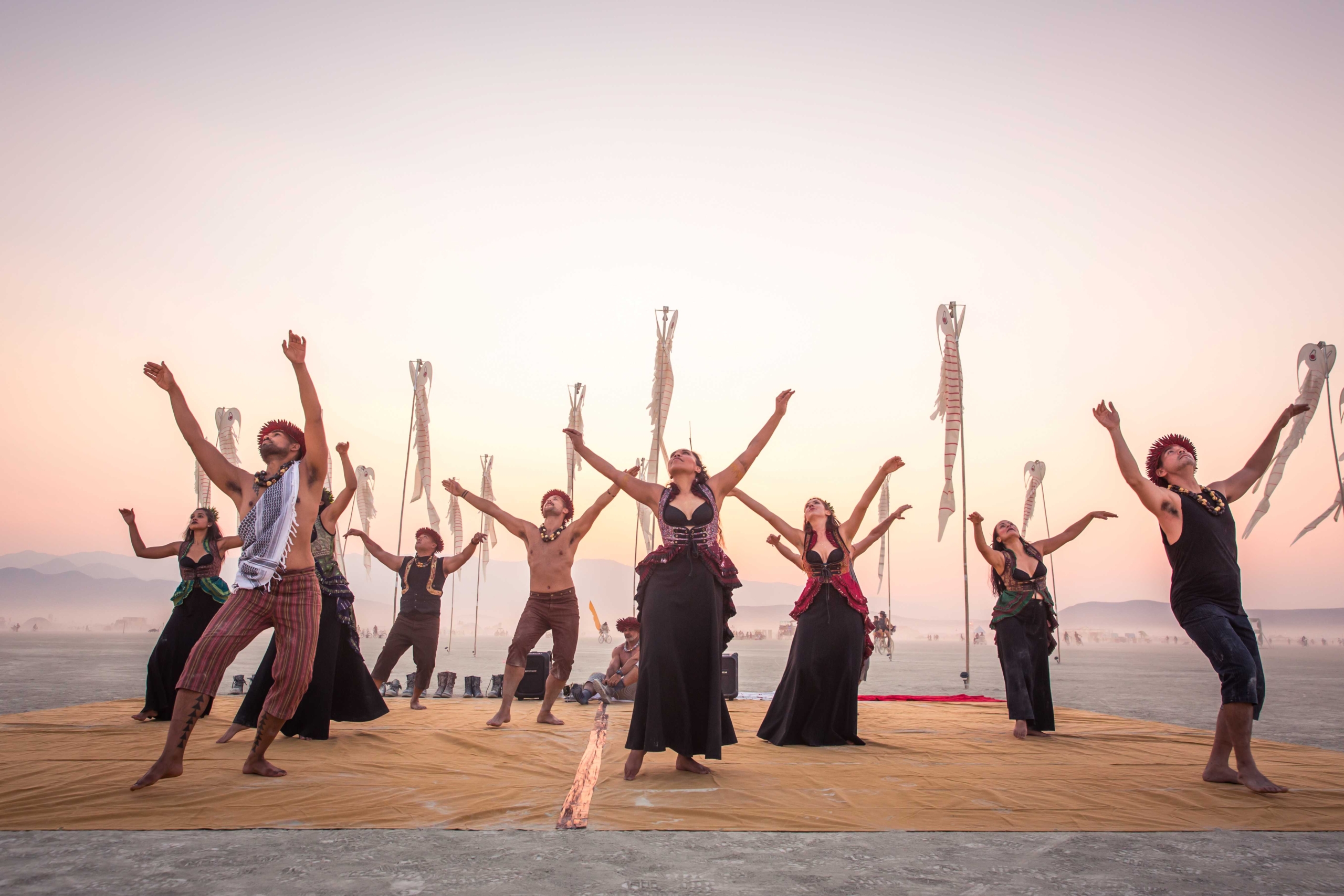
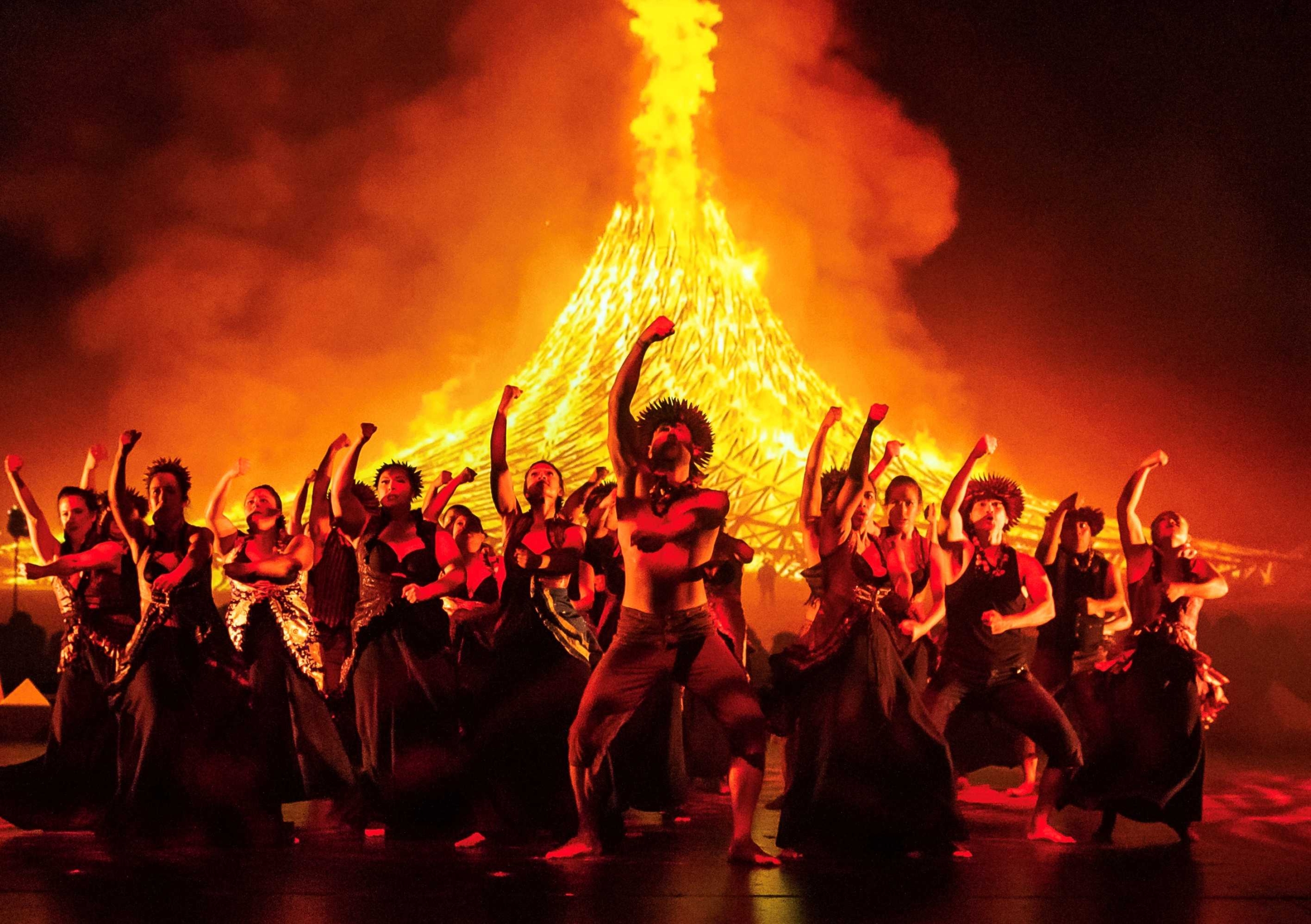
Nā Lei Hulu at Burning Man, Black Rock Desert in 2017 (Photo credit: Ron Worobec)
Moving as self-expression
These early experiences impacted how each artist would eventually embrace hula as an art form—as a method of self-expression that is true to them as individuals while maintaining a deep communal connection.
Patrick
Patrick now approaches teaching with an understanding of gender’s complexity: “I teach both men and women, and [my] approach to both is different…one is not completely 100% masculine, and one is not completely 100% feminine. You have to adopt a range…[I]t’s just a more expressive way of moving…”
He reflects about himself: “[A]fter living in San Francisco for forty years, being gay is something I actually celebrate and often speak candidly to my audiences about…San Francisco gifted me with pride and offered fabulous role models…out and proud gay men making a difference in the world.”
Kate
With time, Kate found herself gravitating back to hula. She began finding a renewed sense of self at Nā Lei Hulu 18 years ago.
“After years of denying the connection of my very soul to the islands, becoming a professor, and speaking perfect English, I longed for a connection to my birth sands,” Kate shares. “Hula invites us to lose ourselves in community to the music and the movement …You can be your authentic self in hula class. It sets you free while moving together in unison and unity.”
Ryan
For Ryan, Hula re-entered his life when he moved to San Francisco in 2007 and joined Nā Lei Hulu. “I achieved a lot of healing,” he reflects, facing the part of himself that had said, “No, cover up! Don’t [let] the world [see] that expressive side of you, or even [your] cultural identity…”
He was recently recognized as a kumu, a master hula teacher, which he views as a profound milestone in his journey: “I feel really accomplished [and] really proud to carry this legacy that we come from in Kumu Patrick’s line … and wondering what my role will be in the future to create these spaces for community and for others.”
Ryan has even found lifelong friends through the experience: “I remember coming in as a new person and being a little apprehensive and not knowing where I fit into all of it…but being welcomed in with such warmth and support, and people saying, ‘You’re gonna form relationships here that are gonna last for the rest of your life!’ Fast forward almost 20 years later, and it was so true.”
“I achieved a lot of healing…I feel really accomplished [and] really proud to carry this legacy that we come from in Kumu Patrick’s line … and wondering what my role will be in the future to create these spaces for community and for others.”
Ryan Fuimaono
Shawna
Though Shawna initially picked hula due to an ultimatum, on the first day of hula, she experienced something special. “When I saw my Kumu Ellen Castillo dance, I felt in my heart, an awakening and purpose for me in this life and there was no question that I found my place of joy and comfort. Hula was my sanctuary.”
Since then, Shawna has established her own hālau (school/group) in Marin and Sonoma counties. While she is not an official member of Nā Lei Hulu, she and Patrick have a decades-long artistic partnership: “Patrick and I met in 1980, when I began dancing professionally for The Brothers Cazimero. Patrick has featured me in his hula shows as a guest artist in almost every show he’s produced in San Francisco.”
Connecting past and present
Hula is an art steeped in history — helping artists examine where they come from and where they can go. It creates purpose and direction for dancers, as it represents the telling and unfolding of history through the power of dance.
Patrick Makuakāne with Hōike (recital) students in Golden Gate Park in San Francisco in 2017 (Photo credit: Susan Baranowski)
RYAN
“We’re all there to have a role in this collective,” Ryan explains, “to tell these stories of native Hawaiians of today and of yesterday, and to tell the stories about our ali`i (our ancestral chiefs). The natural environment and also political things [such as] the illegal overthrow of the Hawaiian kingdom and the Protect Mauna Kea movement.”
SHAWNA
For Shawna, it’s a similar feeling. “Hula allows me to not only tell the stories of my ancestors but also allows me to transport myself to places of old Hawai`i and of Hawai`i today, therefore allowing me to live in those moments and events that the songs tell of.” It’s also a uniquely embodied experience, “Hula was born from nature. The movements, gestures, facial expressions, and physical strength all come together to express the stories being told in the songs and chants.”
There is a particular way that hula transports us across time — there is an echo of those that came before that reverberate through the dancers of today. It is a form that taps into all the senses of an artist.
KATE
To Kate, it’s “poetry and emotion” in motion. “Rarely have I encountered such beauty and its ability to move me in most writings in English,” she says. “Hula embodies thoughts and feelings captured in the mele (songs) and, in going deeper into the layered meanings of the lyrics, you become connected with Kānaka ʻŌiwi (Indigenous Hawaiians) cultural wisdom and their gift of seeing with fresh eyes what loveliness surrounds you.”
“Rarely have I encountered such beauty and its ability to move me in most writings in English. Hula embodies thoughts and feelings captured in the mele (songs) and, in going deeper into the layered meanings of the lyrics, you become connected with Kānaka ʻŌiwi (Indigenous Hawaiians) cultural wisdom and their gift of seeing with fresh eyes what loveliness surrounds you.”
Kate Motoyama
The Lessons and Legacy of Hula
The arts have a great deal to teach us about our values, resilience, and self-perception. When asked to share their learnings from lifetimes of dance, the artists referenced Hawaiian proverbs or “‘ōlelo noʻeau.”
SHAWNA
Shawna finds inspiration in the ancient chant “A Ko‘olau Au,” meaning “I was at Ko‘olau” (a mountain range on O‘ahu).“It recounts a story of the goddess Hiʻiaka, as she journeys through the Ko‘olau mountain range who went through tribulations and how she persevered,” Shawna describes. “Perseverance is what hula has taught me through this ancient chant. And it has given me the strength that I needed to overcome many challenges in my life.”
“Perseverance is what hula has taught me through this ancient chant. And it has given me the strength that I needed to overcome many challenges in my life.”
Shawna Alapa‘i
KATE
Kate reflects, “My mom and dad were forever giving to others, which turns out to be a Hawaiian value, “ʻōpū aliʻi”, to give freely without expectation of return…That was a value expected of the chiefs of Hawaiʻi. The conversation you begin with a stranger… being there for a friend through hard times, are small examples of this kind of sharing.”
RYAN
For Ryan, the Hawaiian proverb “Not all learning comes from one place,” resonates deeply with his experience in the Nā Lei Hulu community. “Kumu Patrick is one of…a handful of Native Hawaiians who invited me into hula,” he shares. “[They] have seen something in me. And saw that I had gifts worthy to cultivate, and that I had a role.”
The form has taught him to find learning in all experiences: “whether it’s positive, negative, or neutral, there’s something to learn from that experience or from that person that gets put in your path.”
PATRICK
Patrick’s guiding principle speaks to the power of community: “One of my favorite Hawaiian proverbs is, ‘No task is too great when done together by all.’ We have been proving that for decades. You’re strongest in a community. If you’re not treating your community well, then, you won’t have a successful community…and you won’t survive either.”
Nā Lei Hulu in the Palace of Fine Arts in San Francisco in 2018 for I MUA: Hula in Unusual Place (Photo credit: Patrick Kelly)
Moving forward together
Patrick reflects upon the legacy and impact of Nā Lei Hulu: “How grateful am I? [Sometimes] I think I live my life going from one amazing, blessed event to another…The richness that I’m treated to because of being in this culture and in this dance form, in this art form and living in San Francisco and going back to Hawai‘i. It’s just been such a fulfilling life.”
He will celebrate his 64th birthday in August, and looking forward, he hopes to inspire the next generation of dancers. “So many of us who were with the company in the early days, we’re getting older,” he says. He also recognizes that this work will bring communal evolution: “Now we really have to look to the new generation to let them continue.”
“I am a firm believer [that] you are what you say. So, if you’re saying I can’t do it anymore, then there you go. But if you say you know what, I’m gonna make something happen…I still have good people around here. I’m excited at what’s gonna happen.”
Patrick Makuakāne
Patrick understands the real-life obligations and challenges of today’s dancers, and he knows these will be crucial parts of the ongoing legacy and longevity of Nā Lei Hulu. He remains an energetic leader, drawing inspiration from the people around him: “I am a firm believer [that] you are what you say. So, if you’re saying I can’t do it anymore, then there you go. But if you say you know what, I’m gonna make something happen…I still have good people around here. I’m excited at what’s gonna happen.”
Nā Lei Hulu’s dancers demonstrate that art can preserve tradition while embracing change, creating space for both collective connection and personal truth. As one era transitions to the next, they continue to teach us that the most powerful movements can happen when communities move as one.
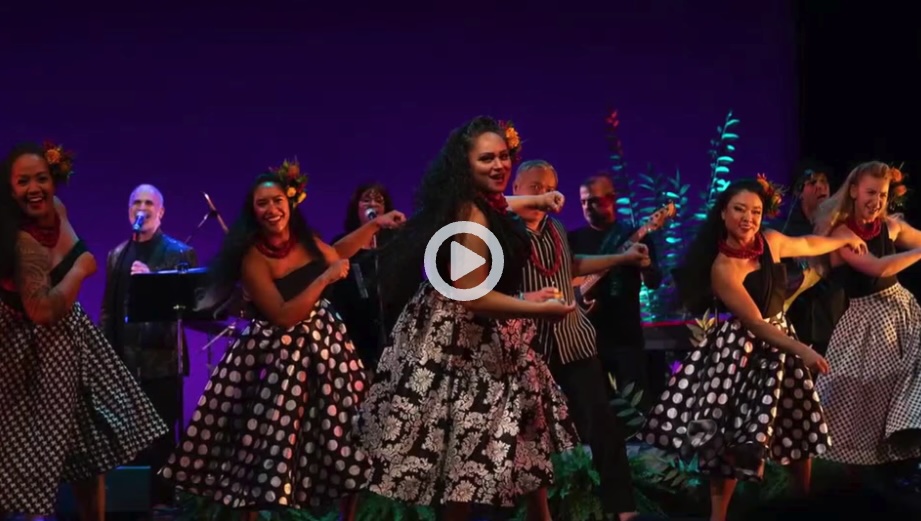
Leeward Community College’s Leeward Theatre is set to host KUPUKUPU: A Musical Hula Adventure, an innovative new production by Nā Lei Hulu i ka Wēkiu, on March 15 and 16. Kumu Hula Patrick Makuakāne joined Living808 to share how KUPUKUPU blends the artistry of hula with a live ten-piece musical ensemble, creating a vibrant and unexpected fusion of storytelling and sound.