The Hula Show
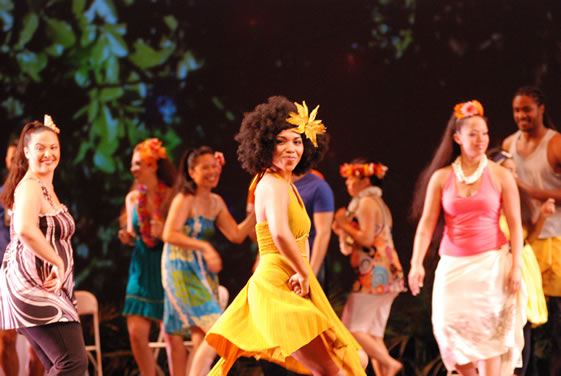
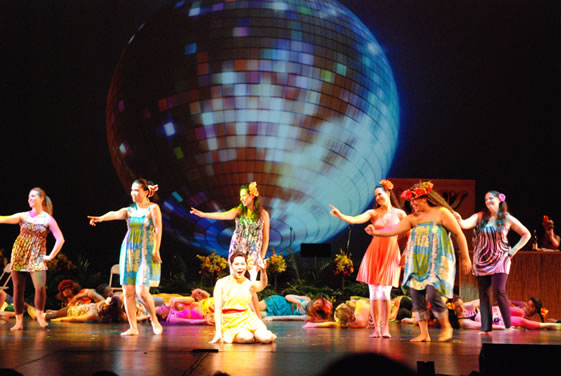
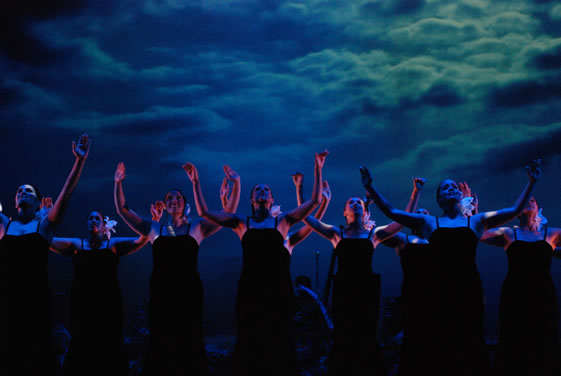
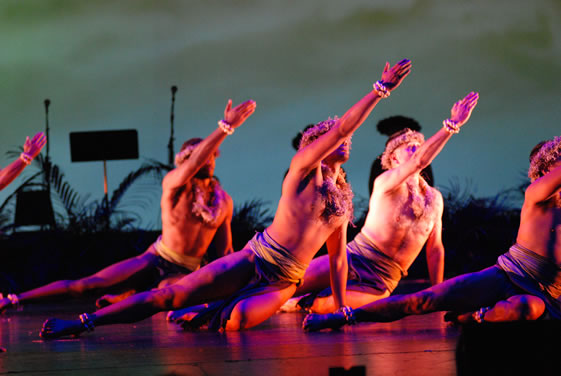
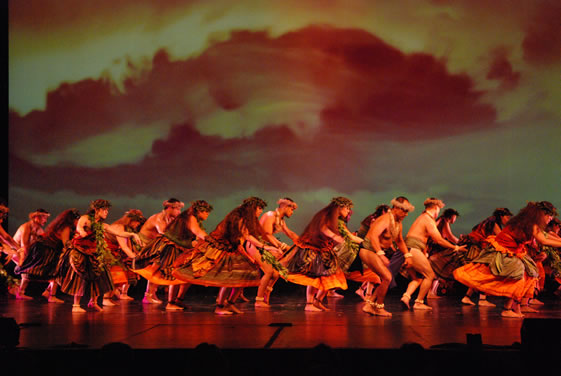
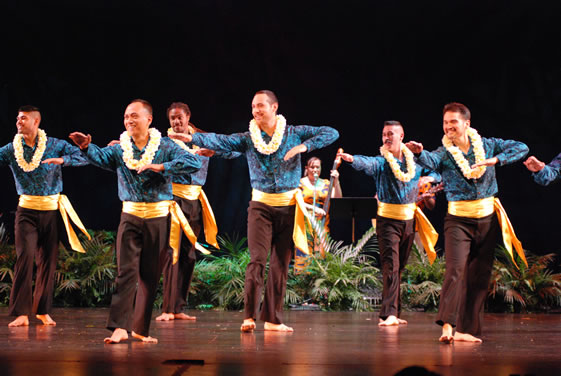
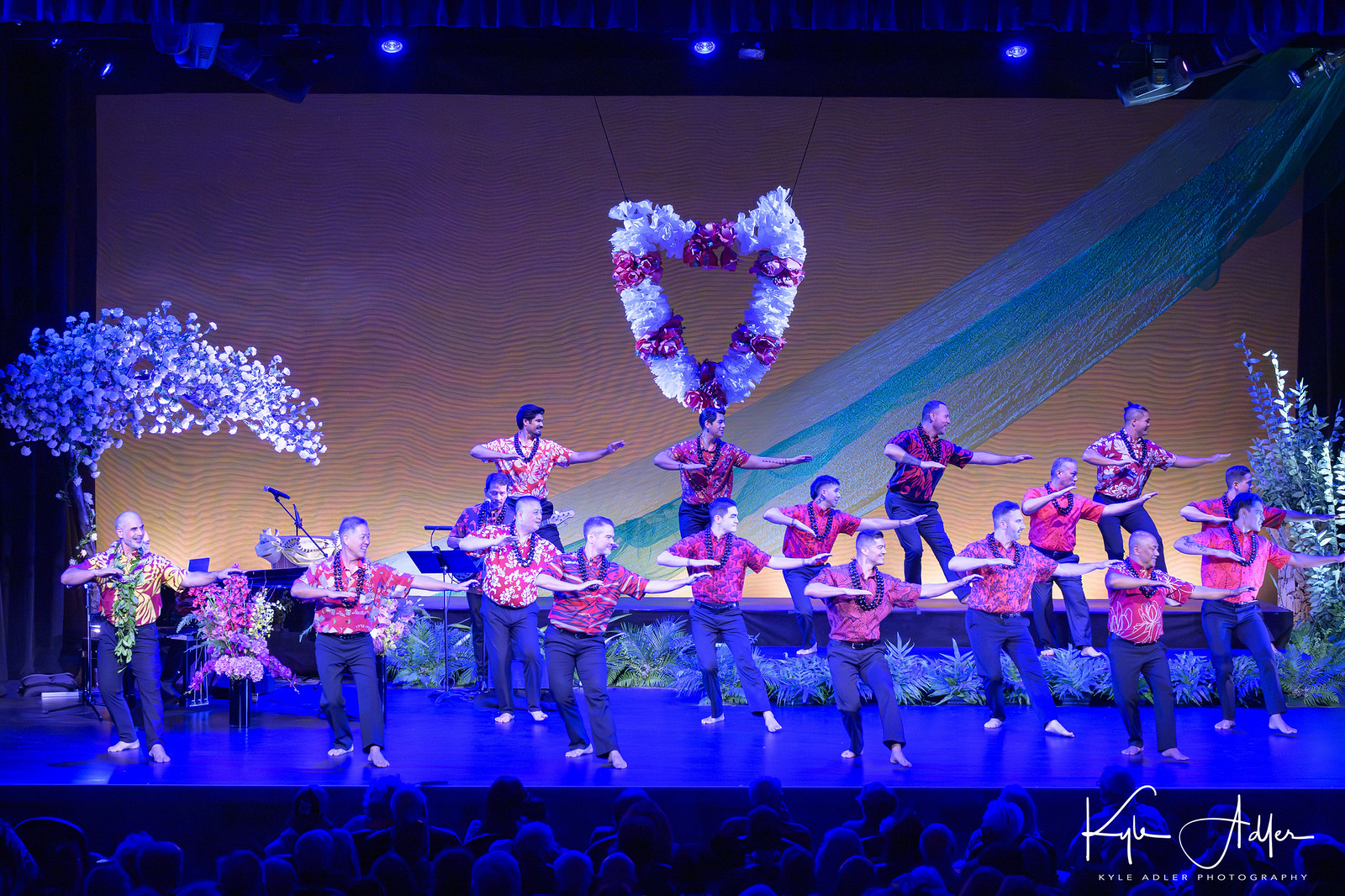
For four decades, Nā Lei Hulu i ka Wēkiu has presented an annual Hula Show in San Francisco, frequently followed by an encore performance in Hawaiʻi.
An overview of forty years of Nā Lei Hulu i ka Wēkiu.
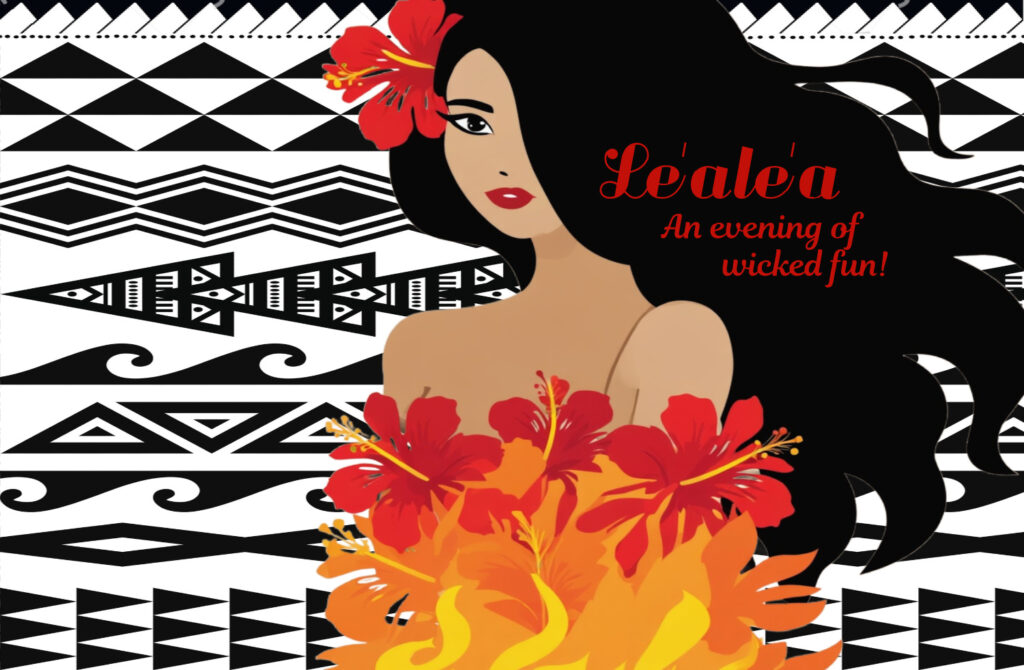
LE’ALE’A
October 17-19, 2025 | Verdi Club, San Francisco
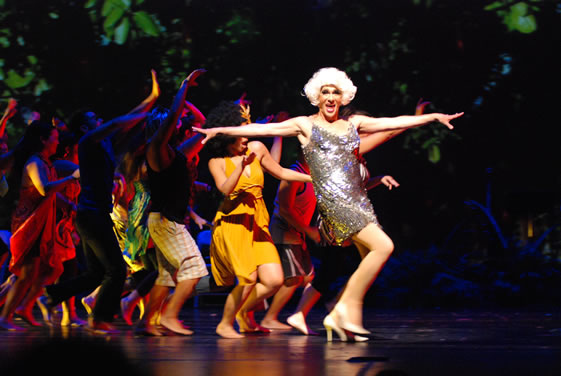
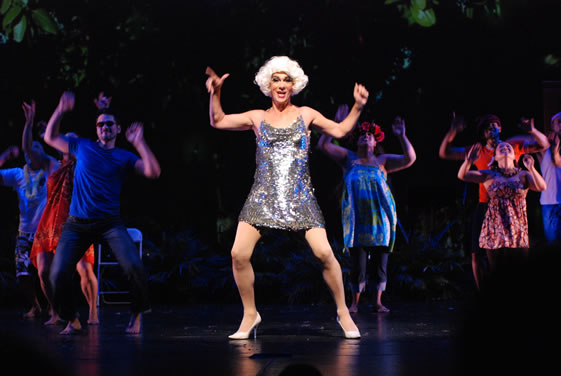
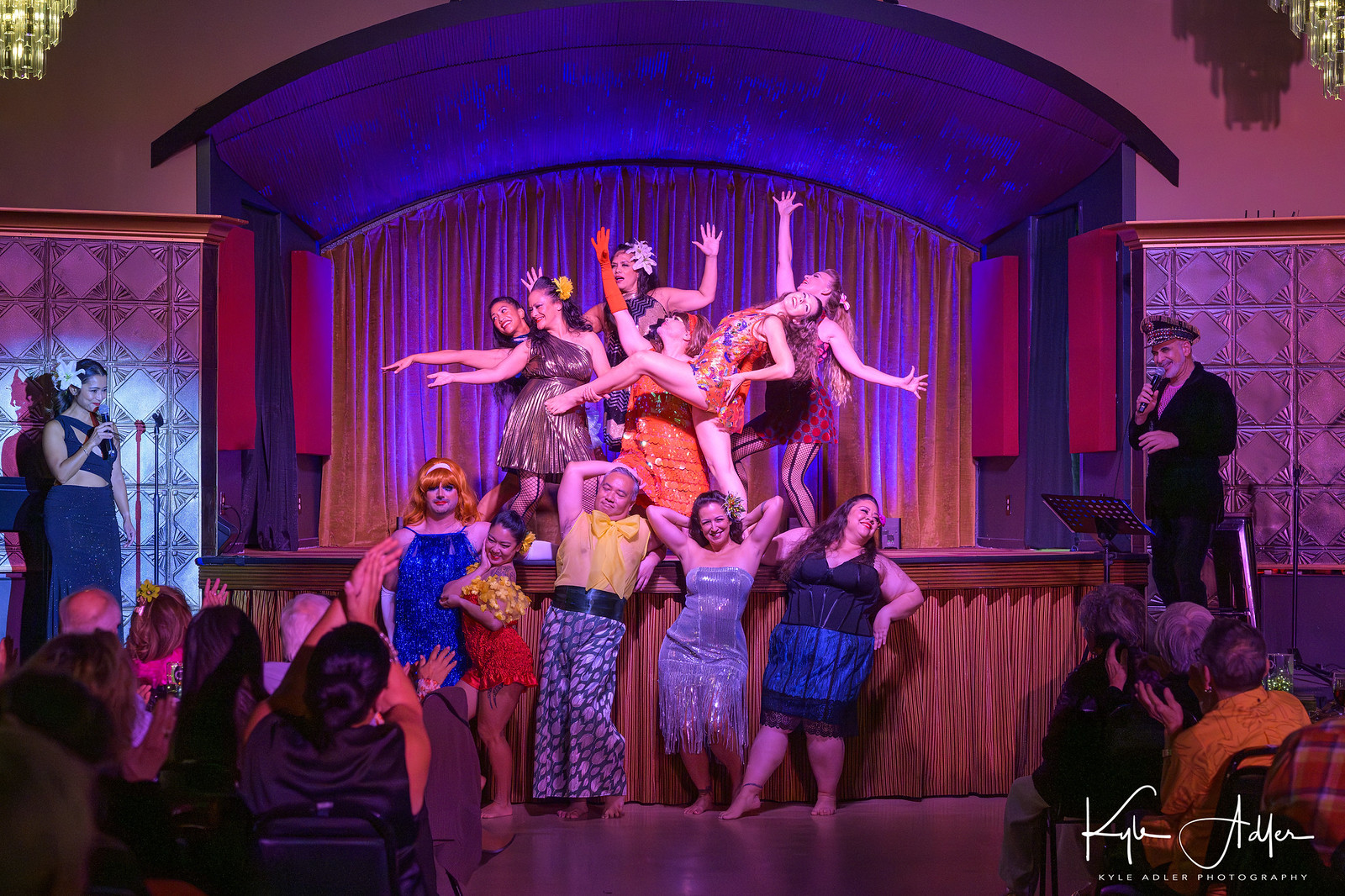
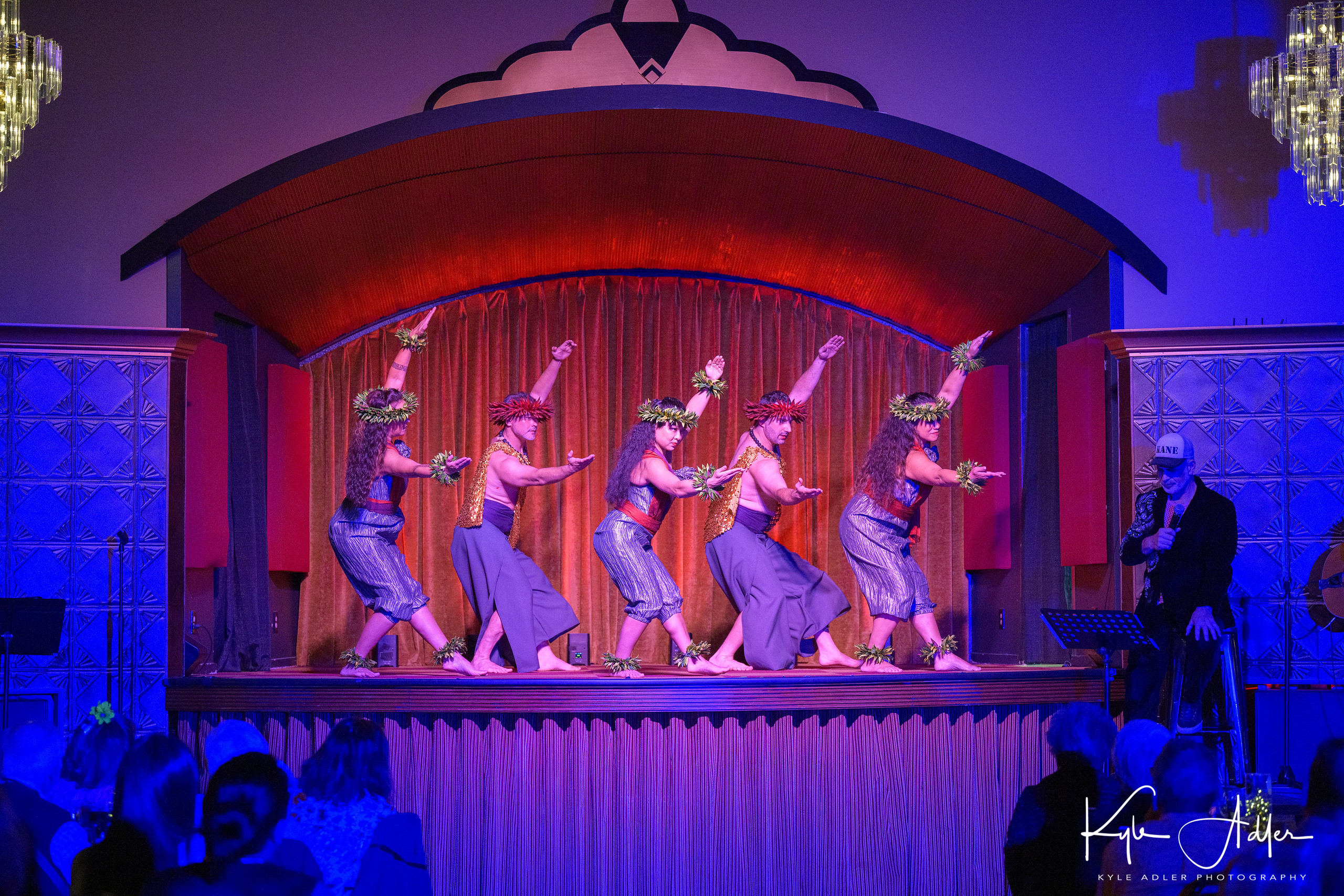
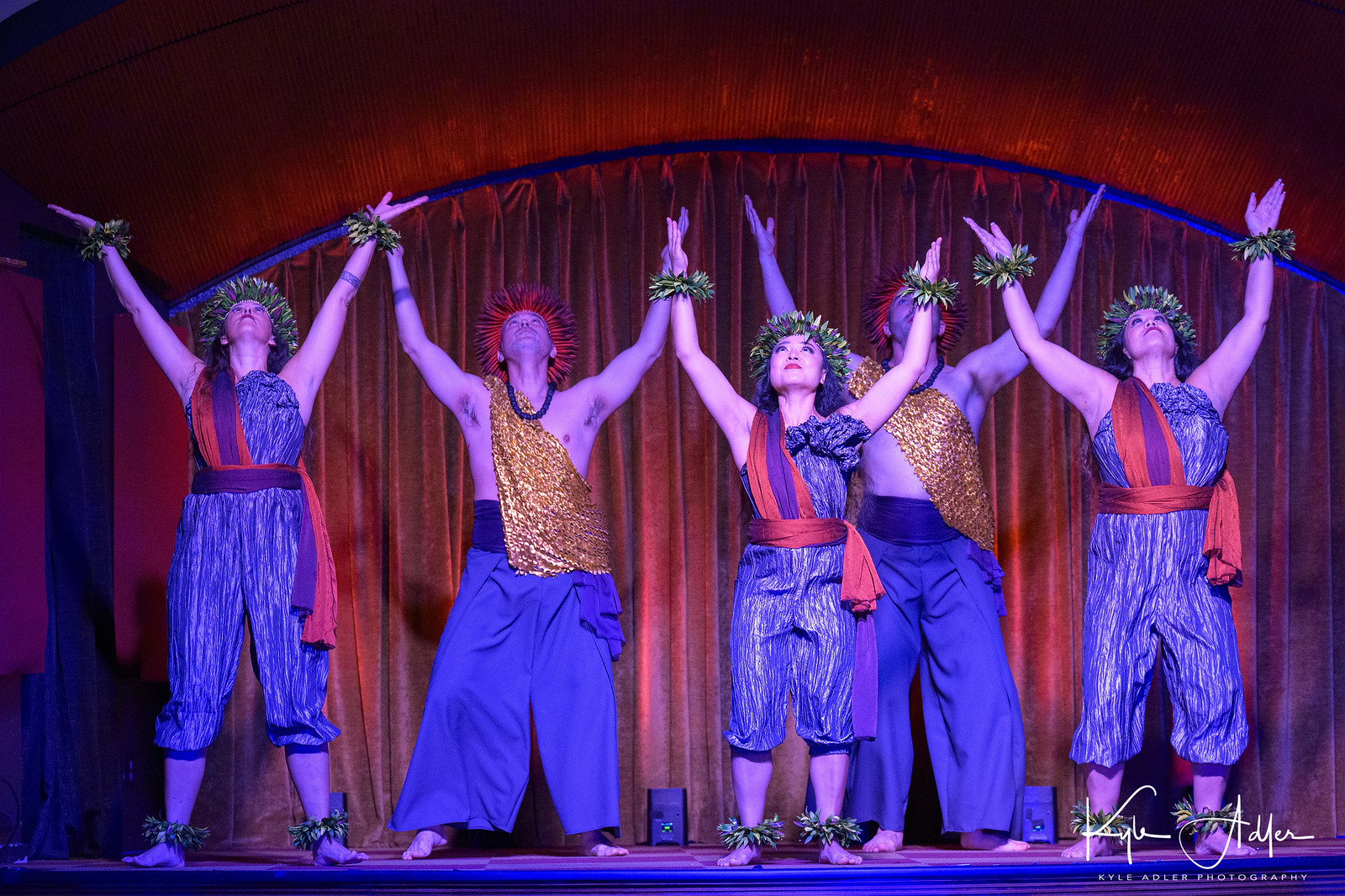
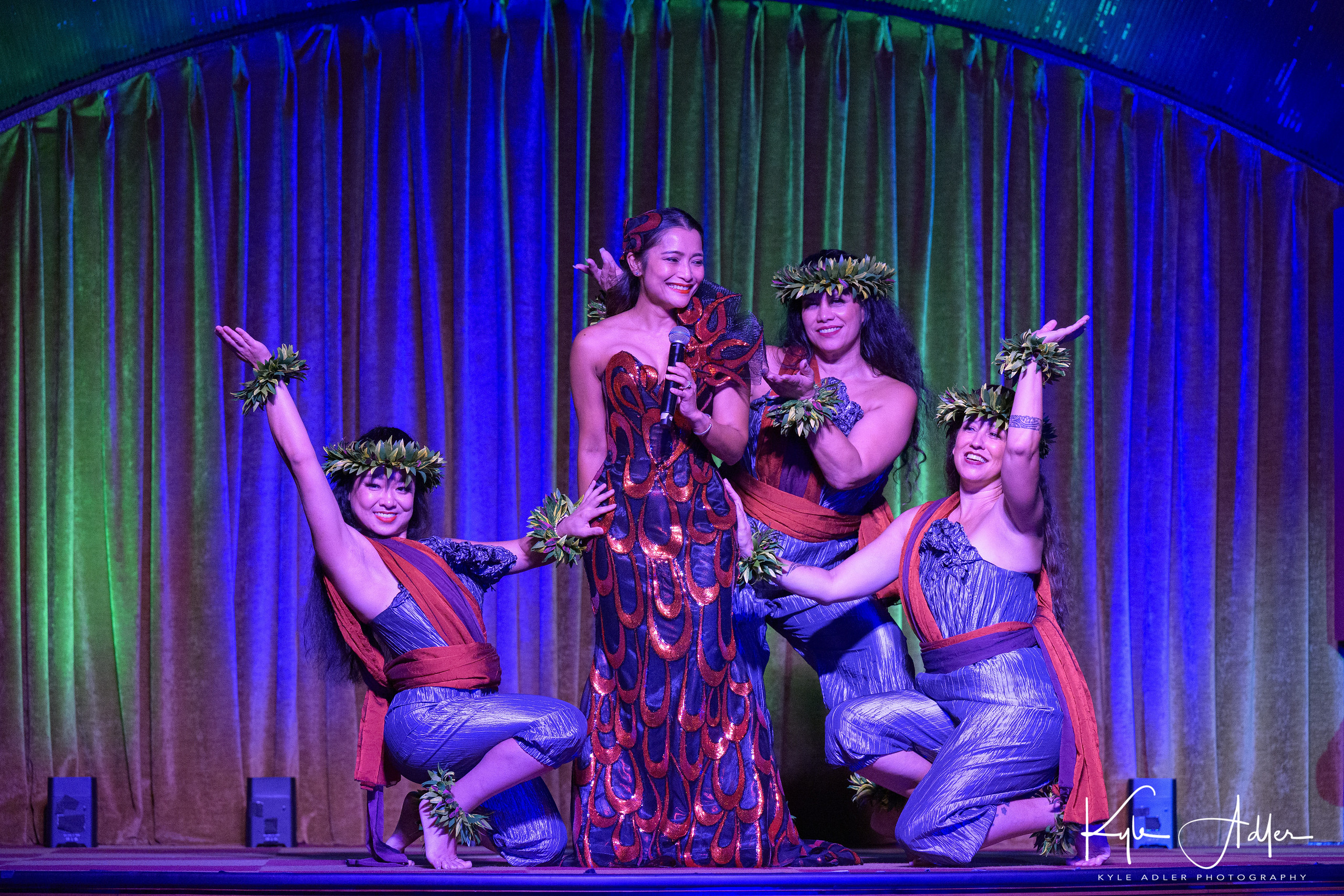
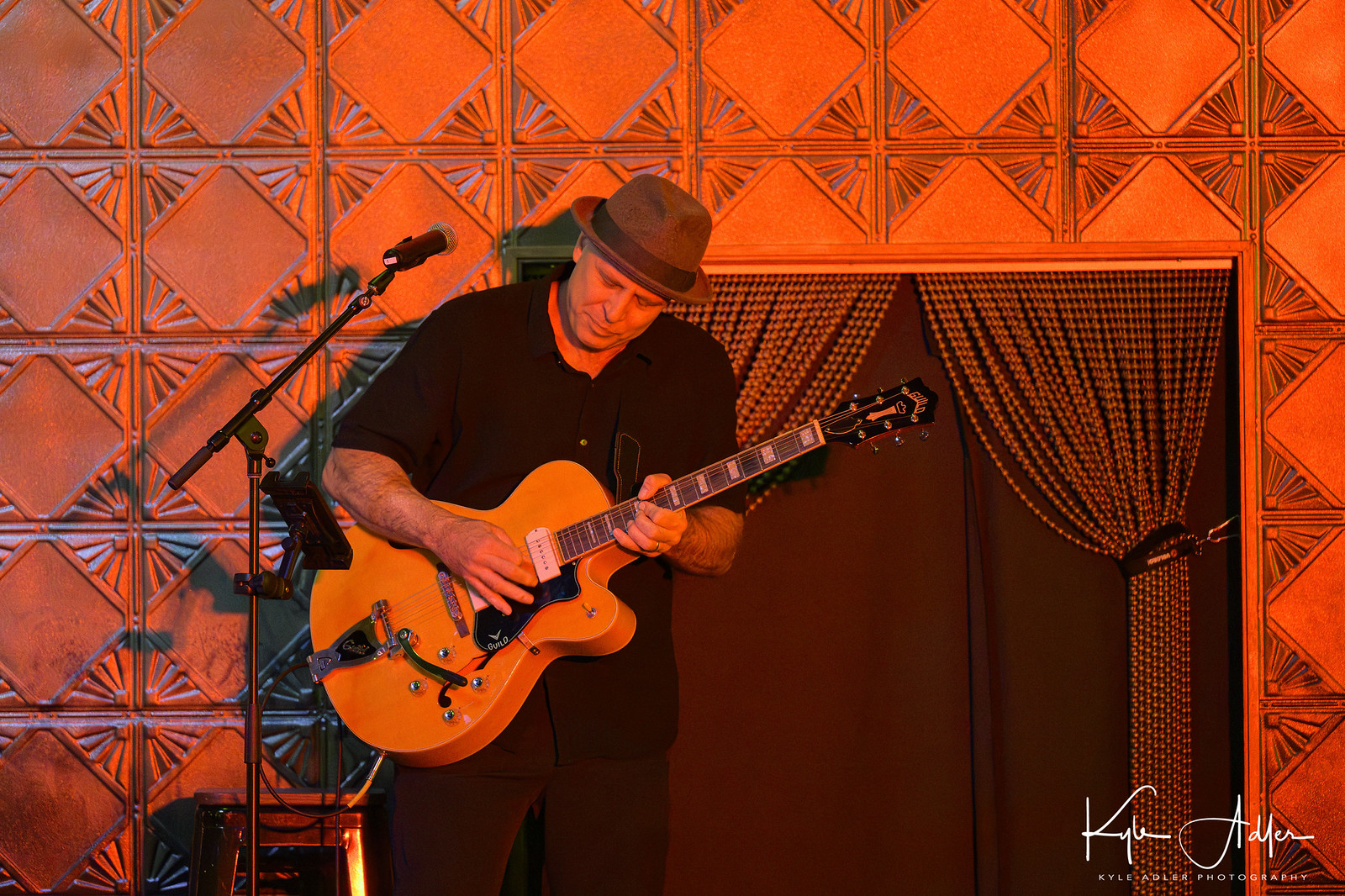
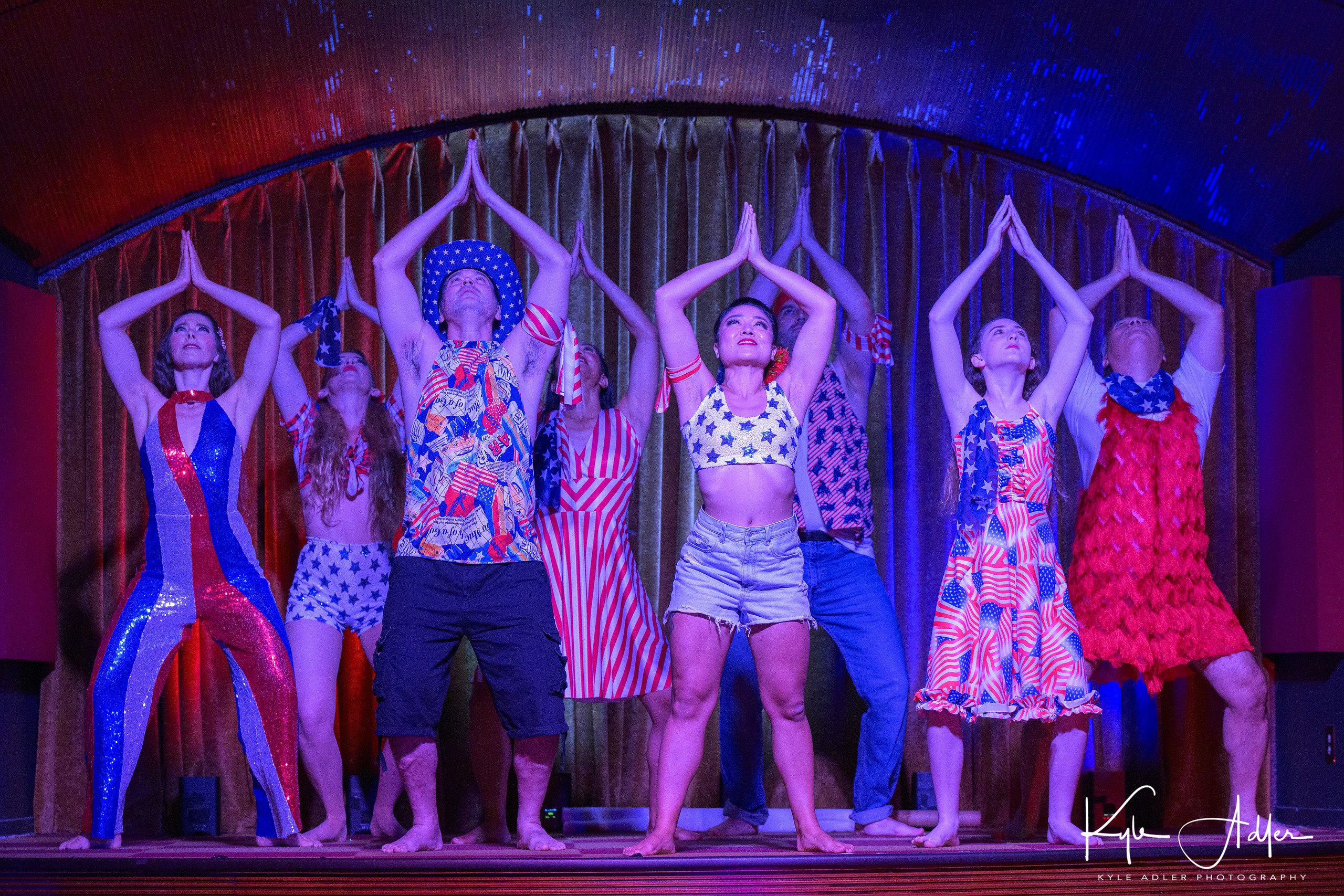
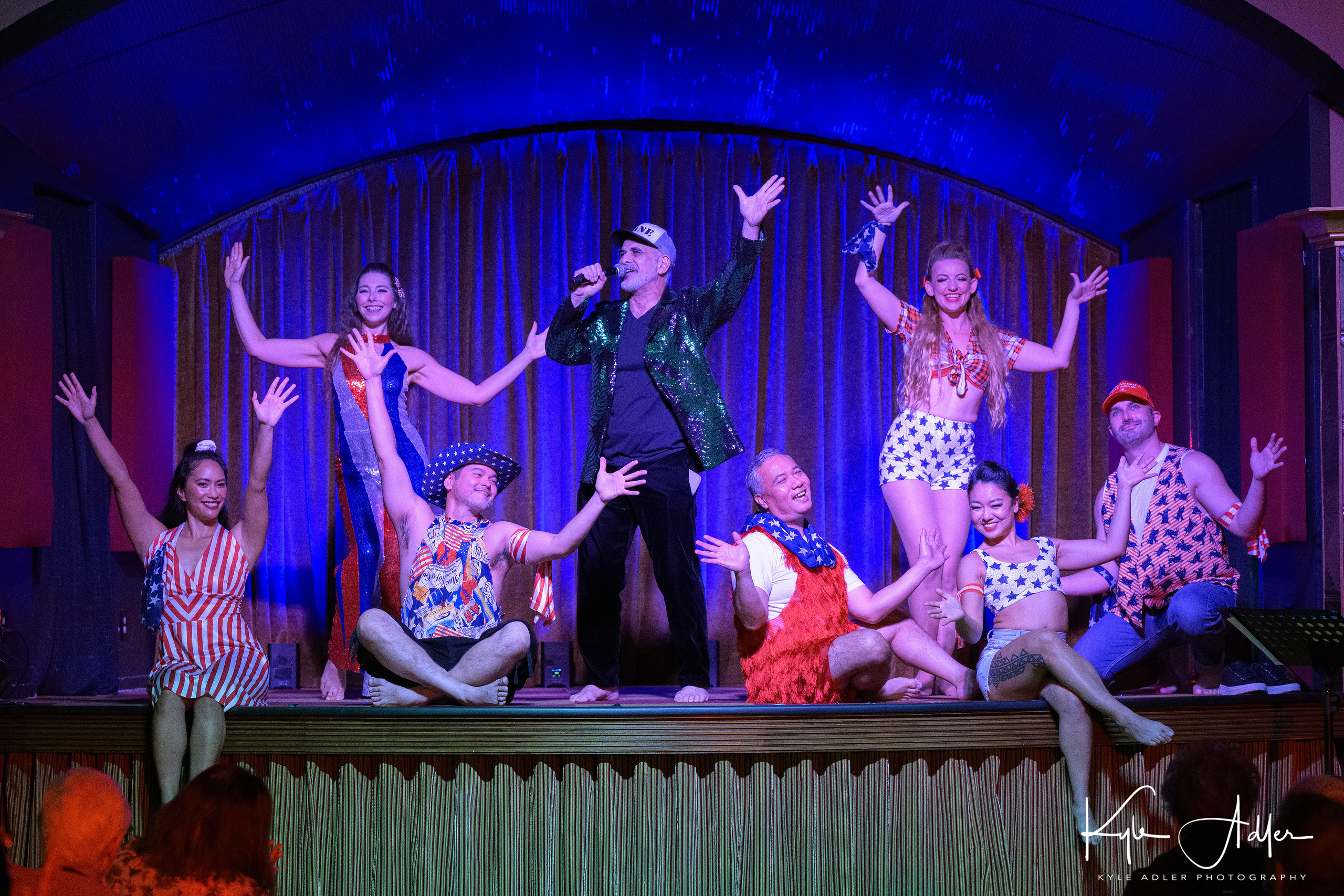
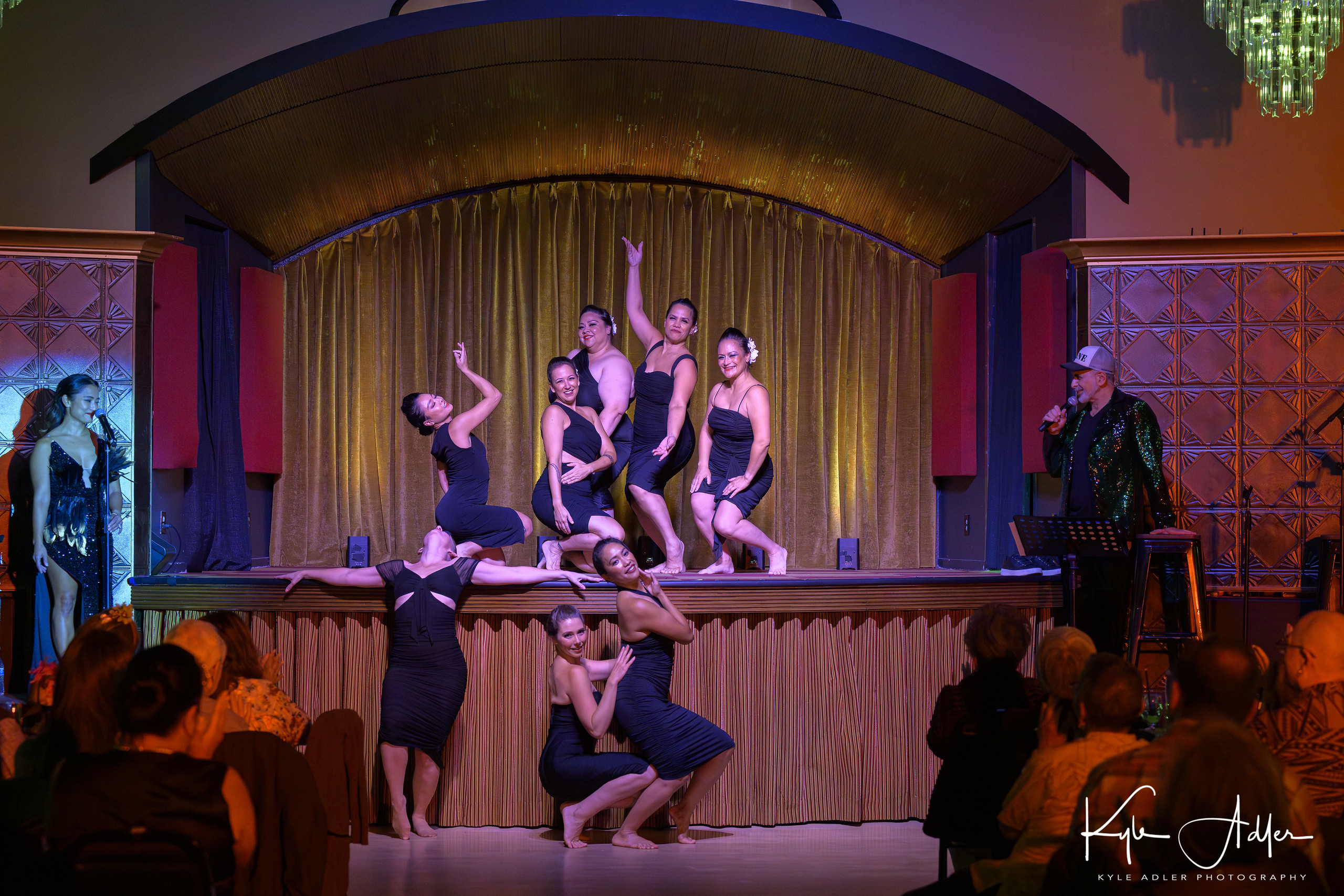
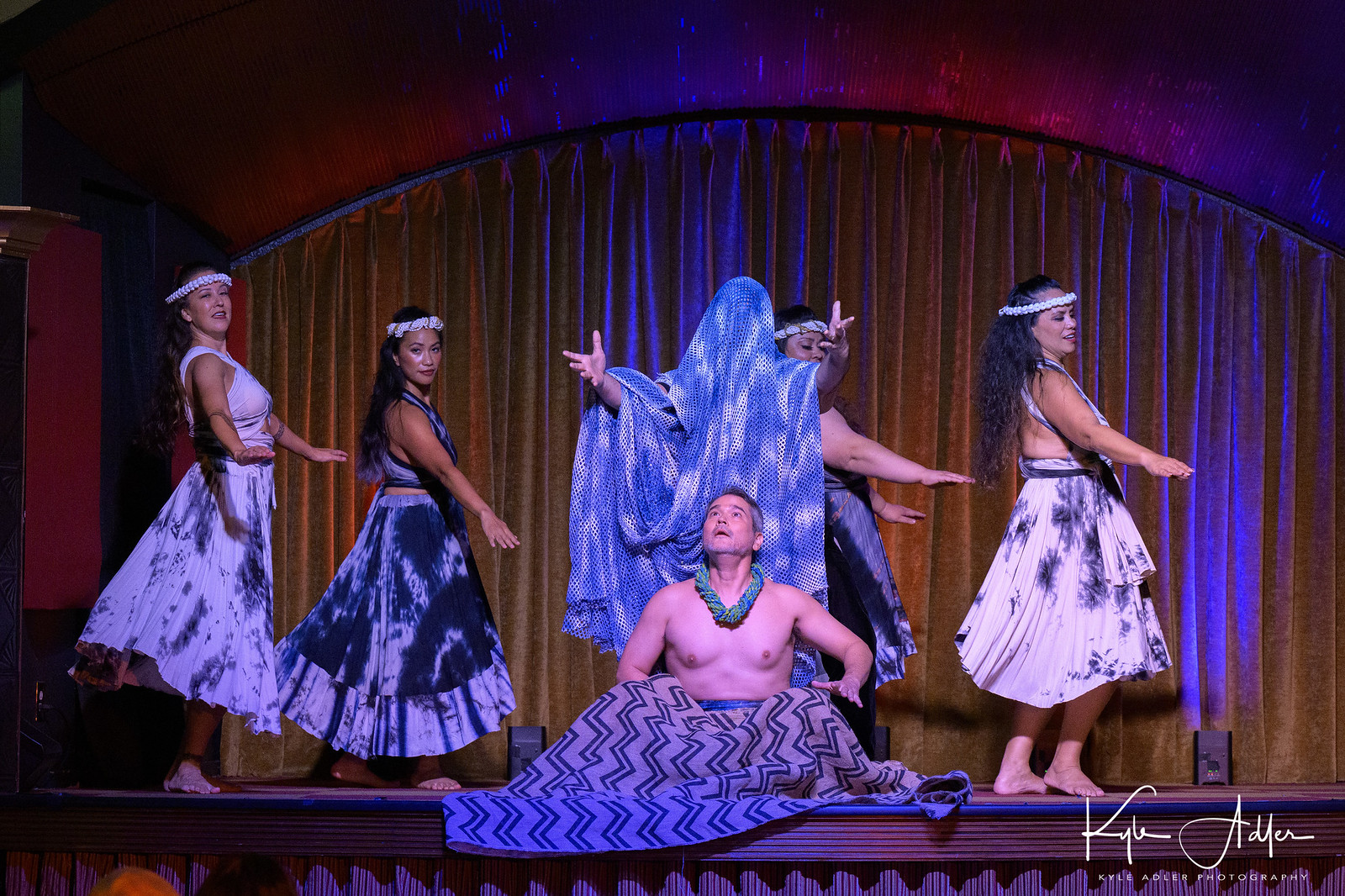
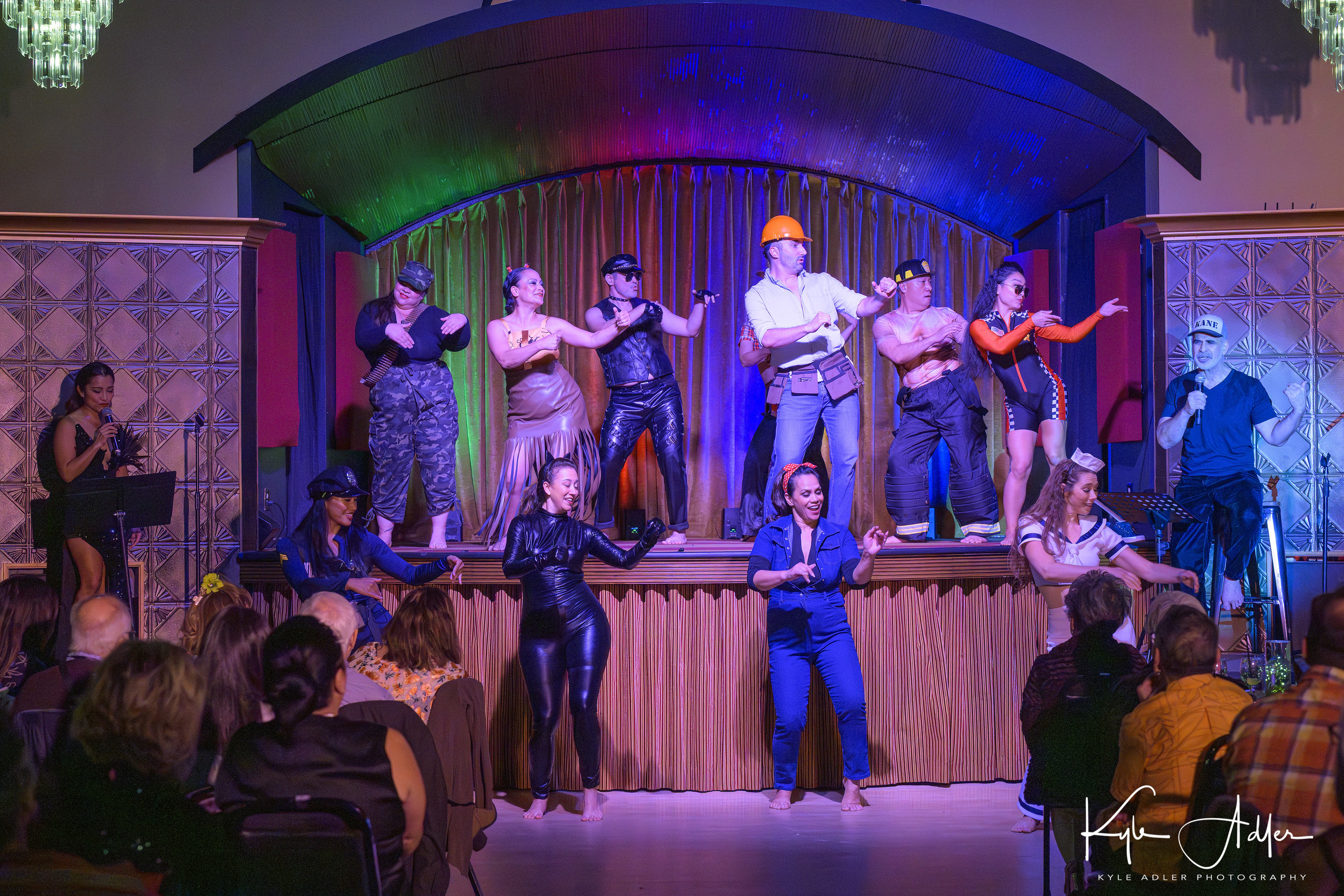
From Kaka’ako to cabaret we’re excited to have you join us for a raucous evening of unshackled merriment!
It’s the Naughty Nā Lei Hulu Show—a bawdy, titillating performance celebrating our 40th anniversary. It is an adult-themed show, so be prepared for some blue humor, spicy dancing and various indelicacies. You know you want it. We do too.
We encourage you to dress in your best late night jazzy snazzy club wear. Whatever that means to you. Be it sexy, slinky or steamy… and that goes for you too, ladies!
Warning — LE’ALE’A is not for the faint of hula heart.
SEE YOU AT THE SALACiOUS SHENANiGANS!
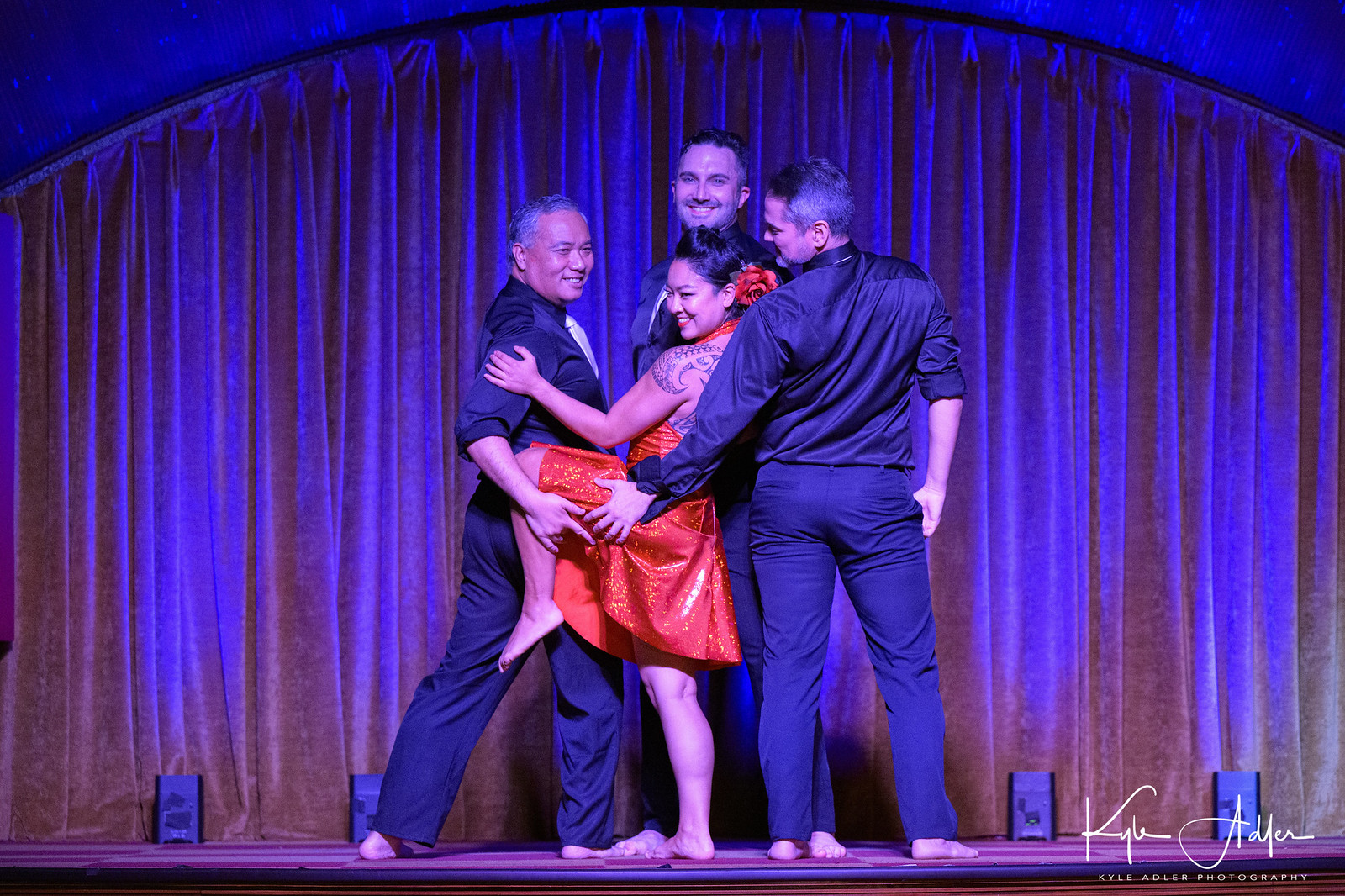
40 Years of Hula: KEAO
August 1, 2025 | Presidio Theatre, San Francisco
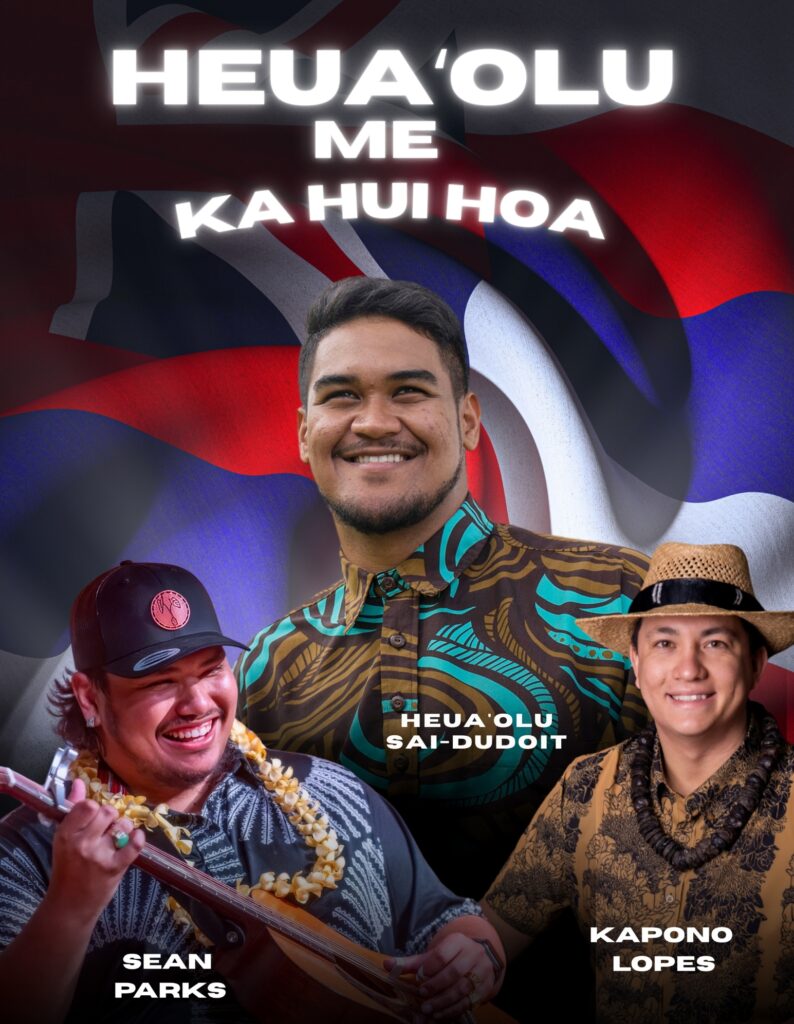
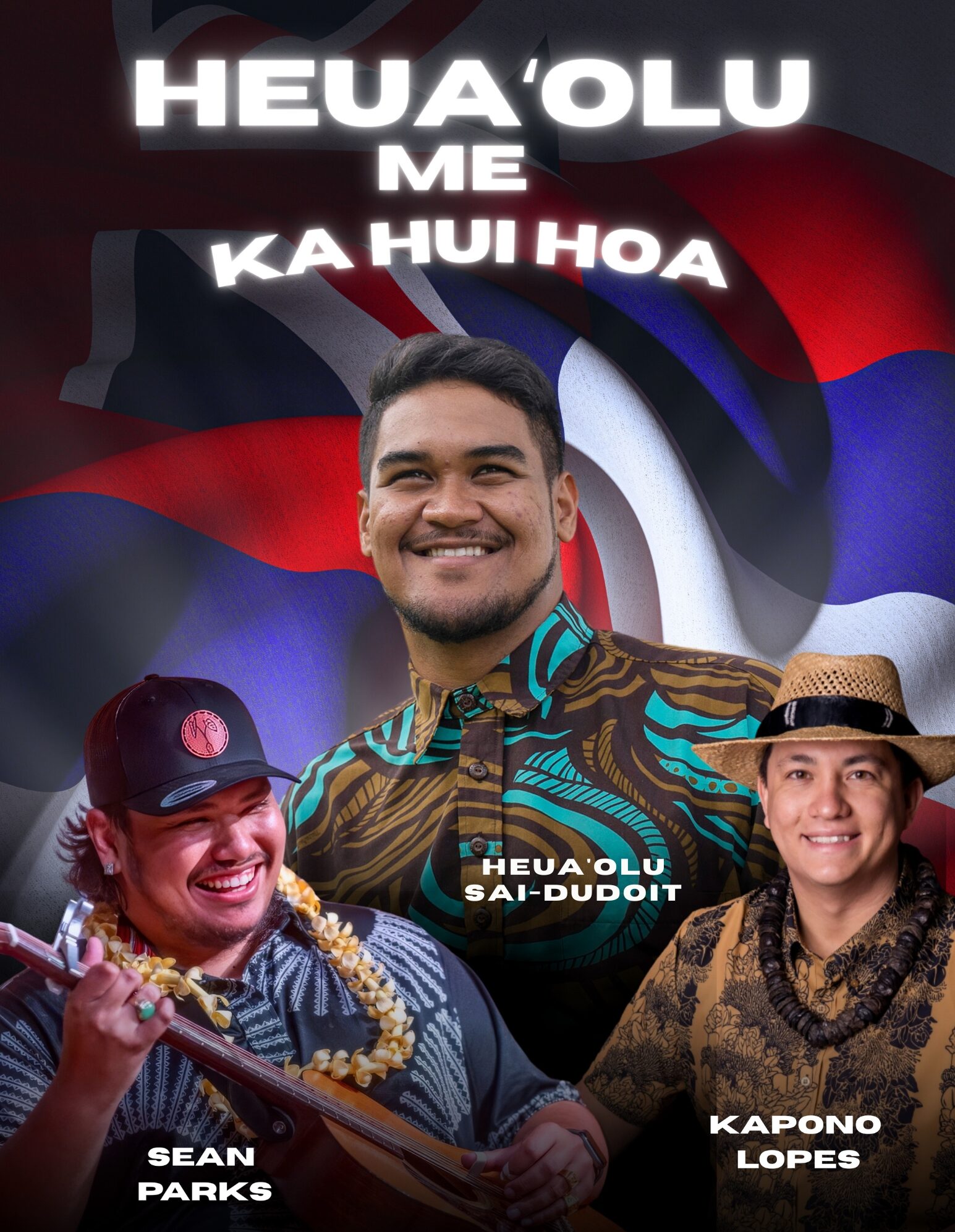
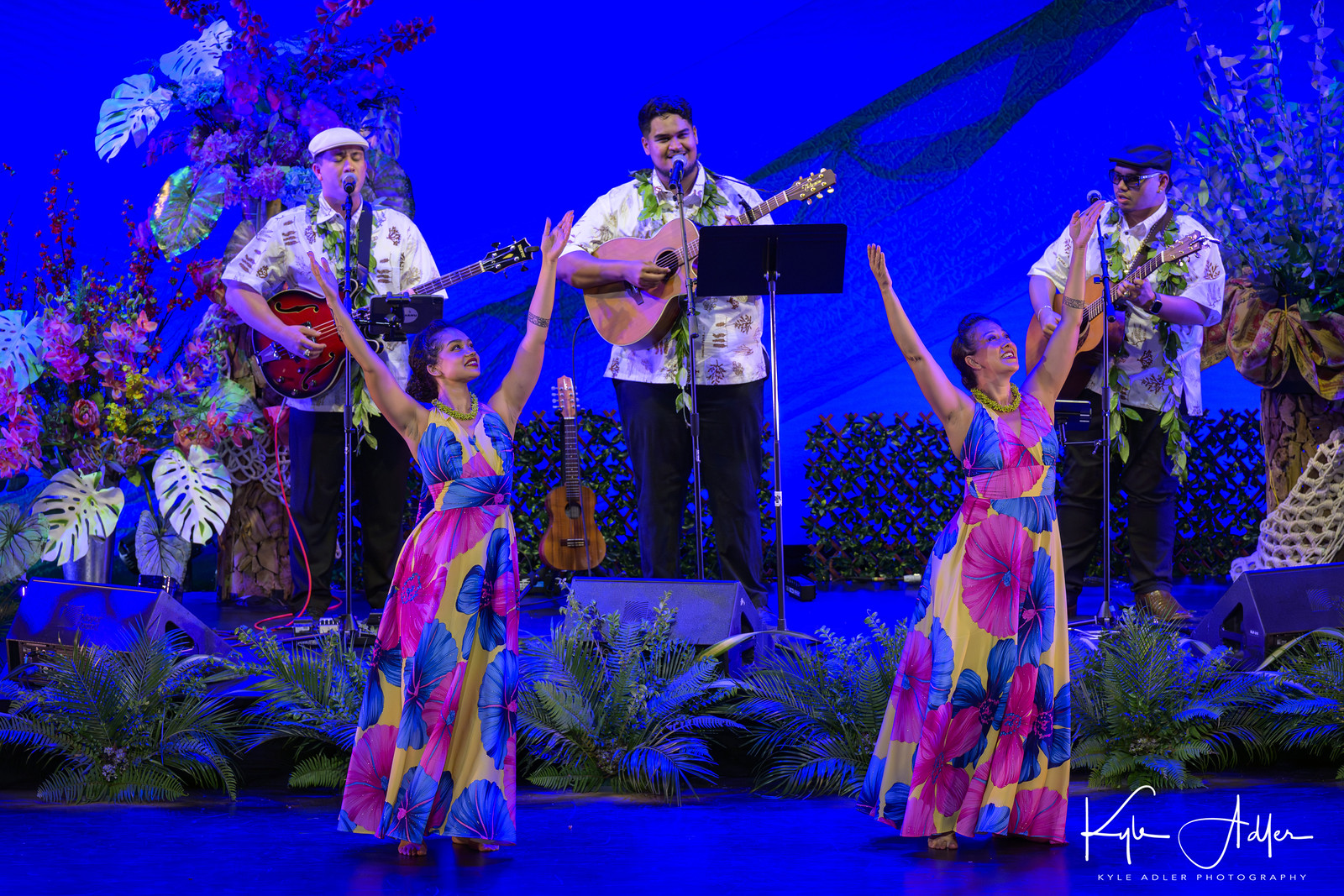
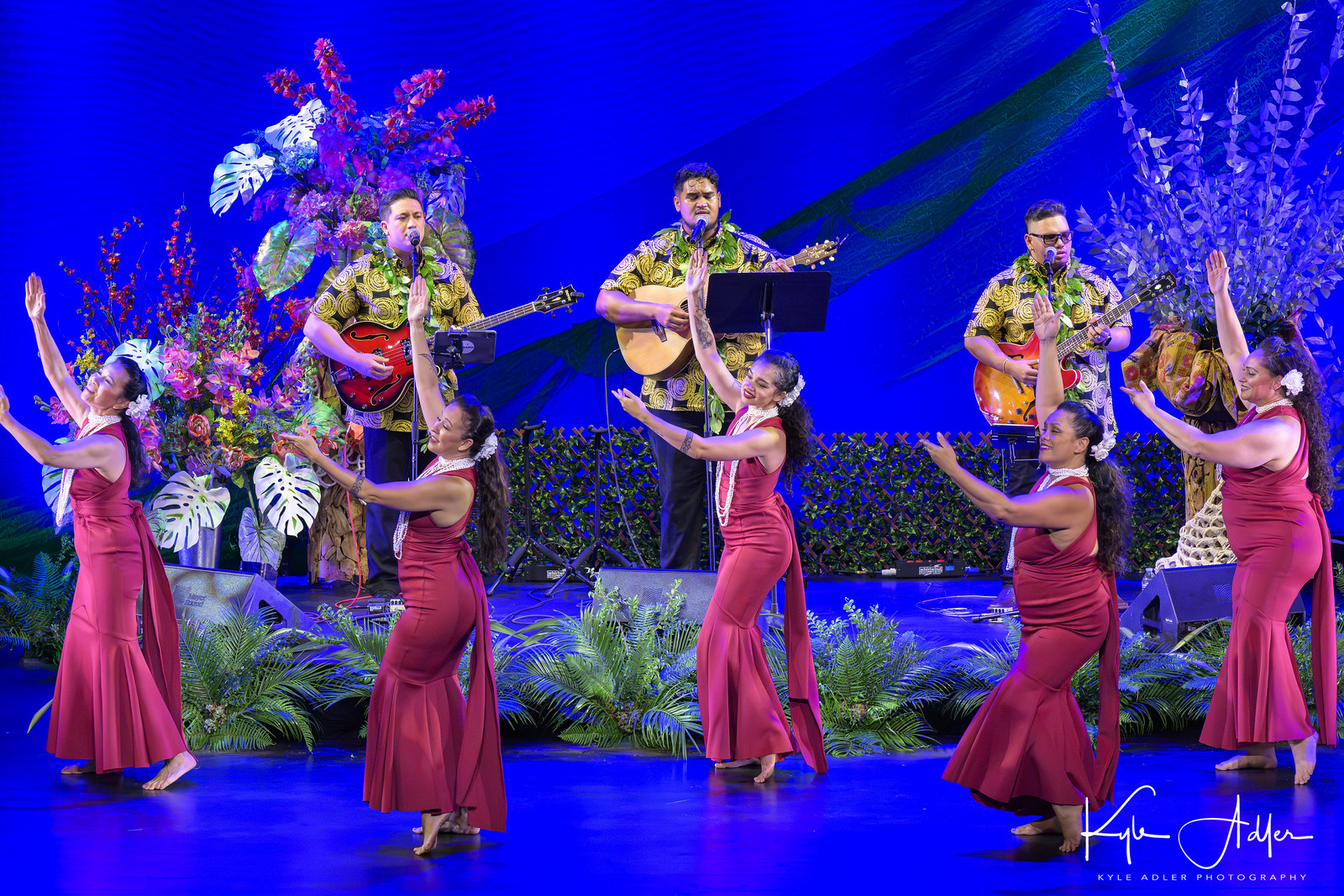
Featuring Heua Sai-Dudoit, winner of the 20th Annual Richard Ho’op’i’i Leo Ki’eki’e Falsetto Contest, Kapono Lopes, and Sean Parks.
40 Years of Hula: LEGACY
August 2, 3, 2025 | Presidio Theatre, San Francisco
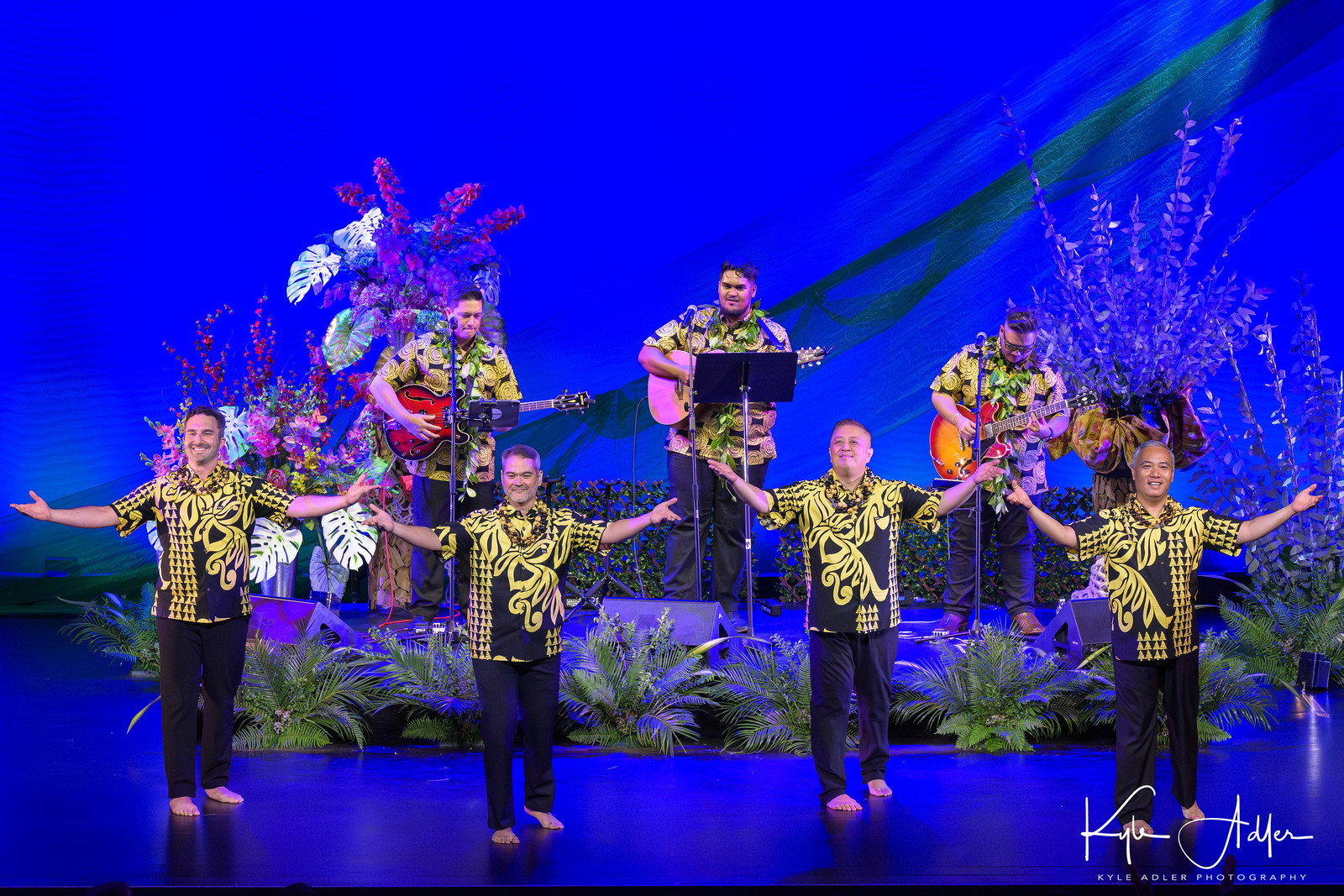
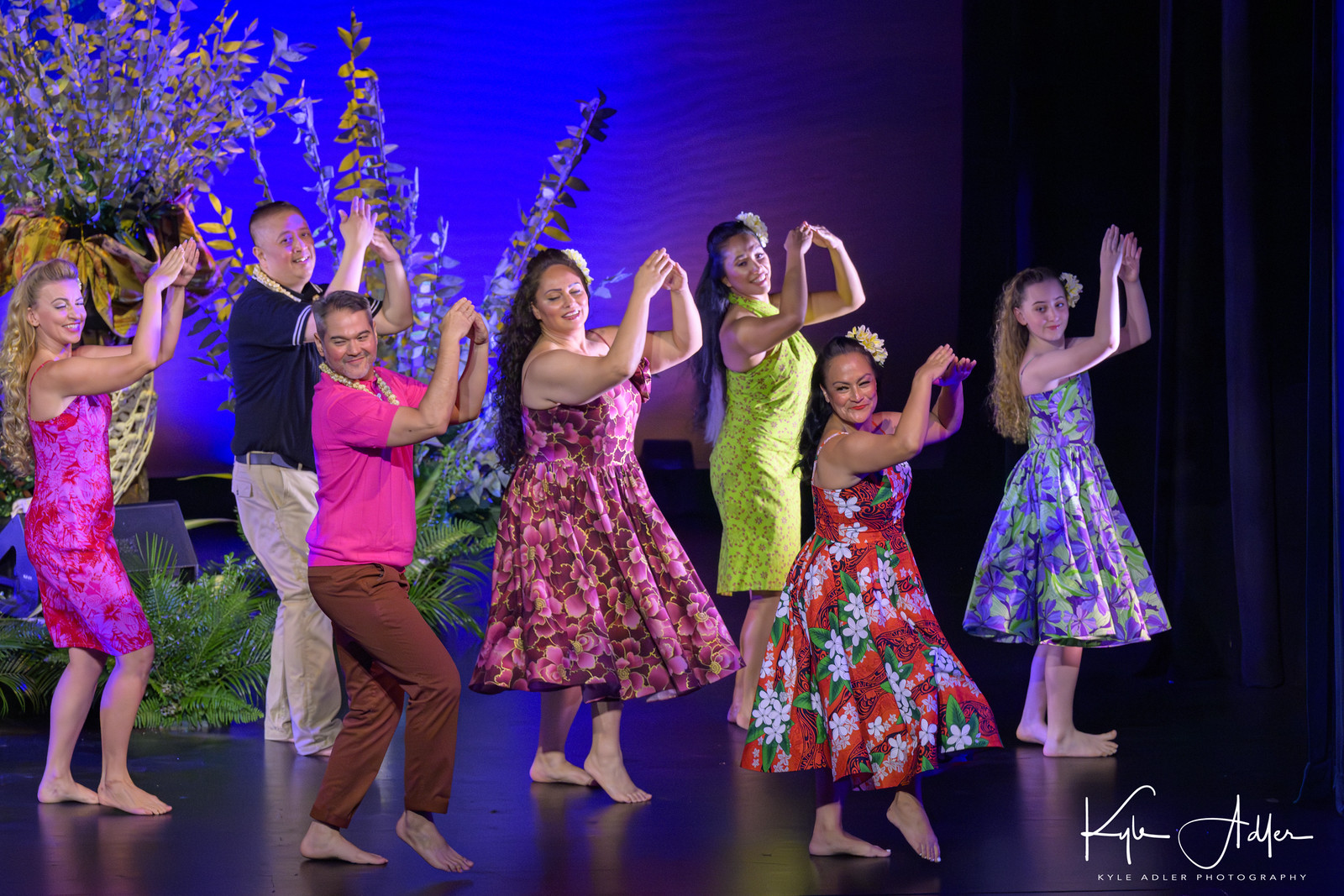
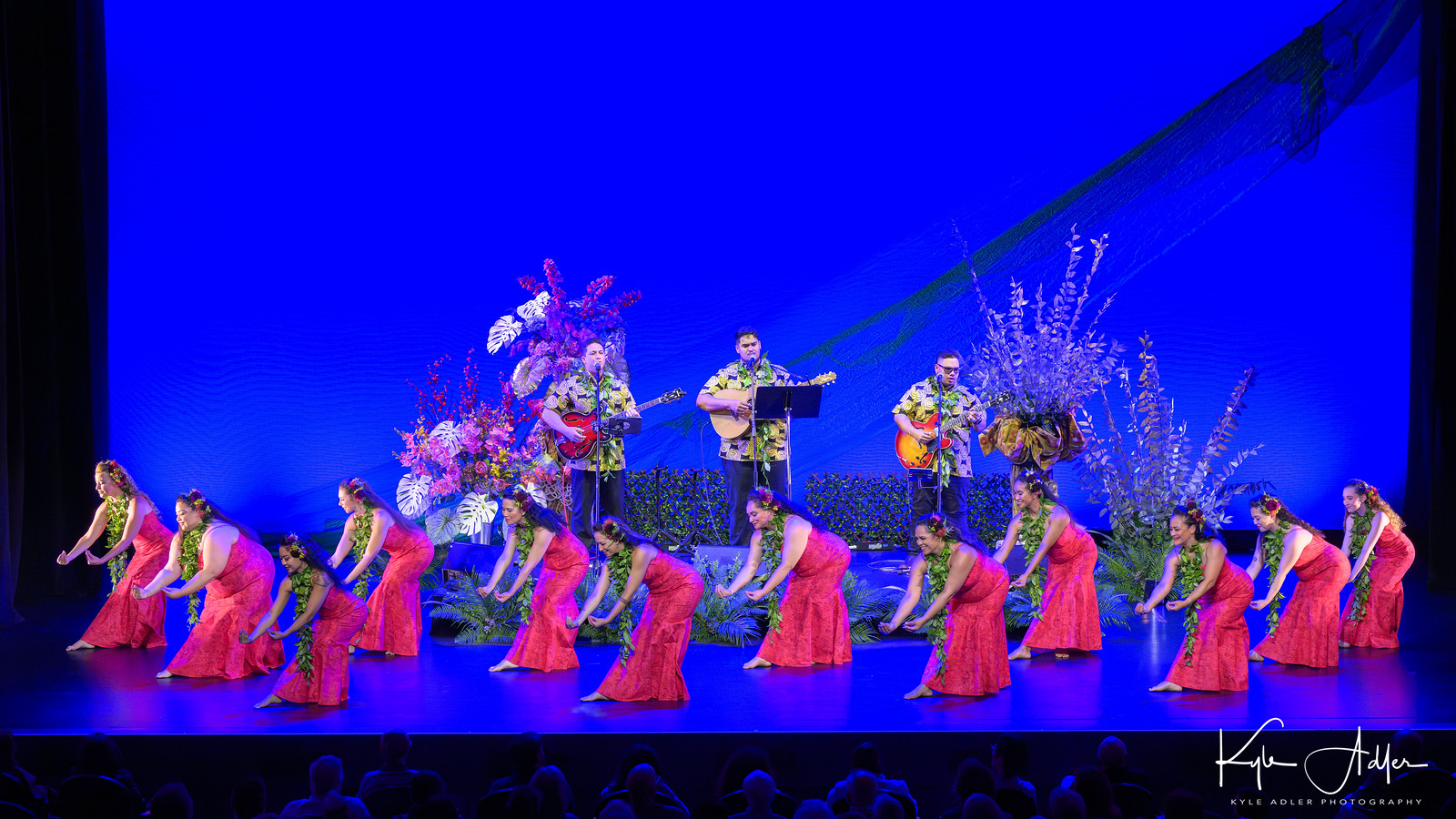
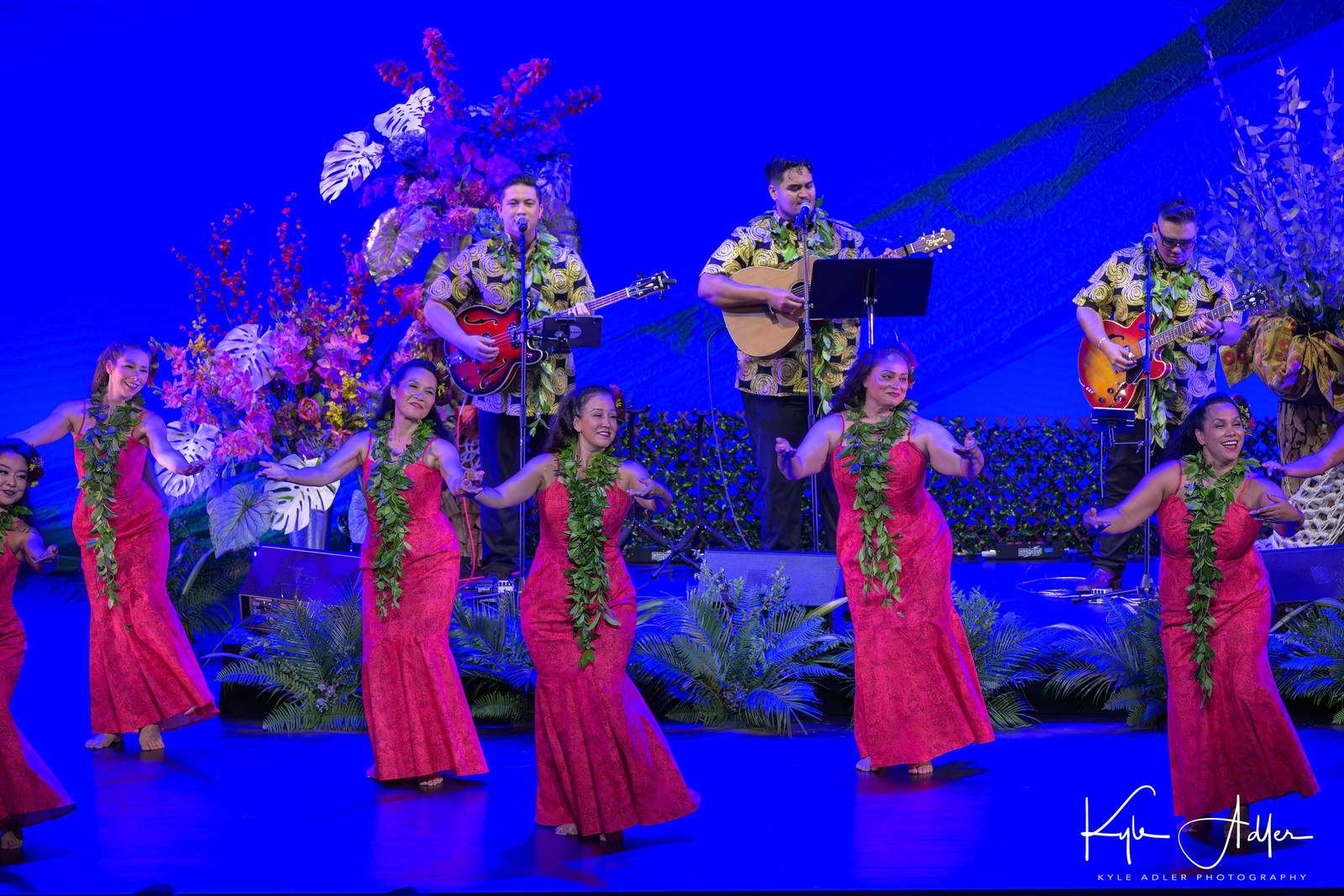
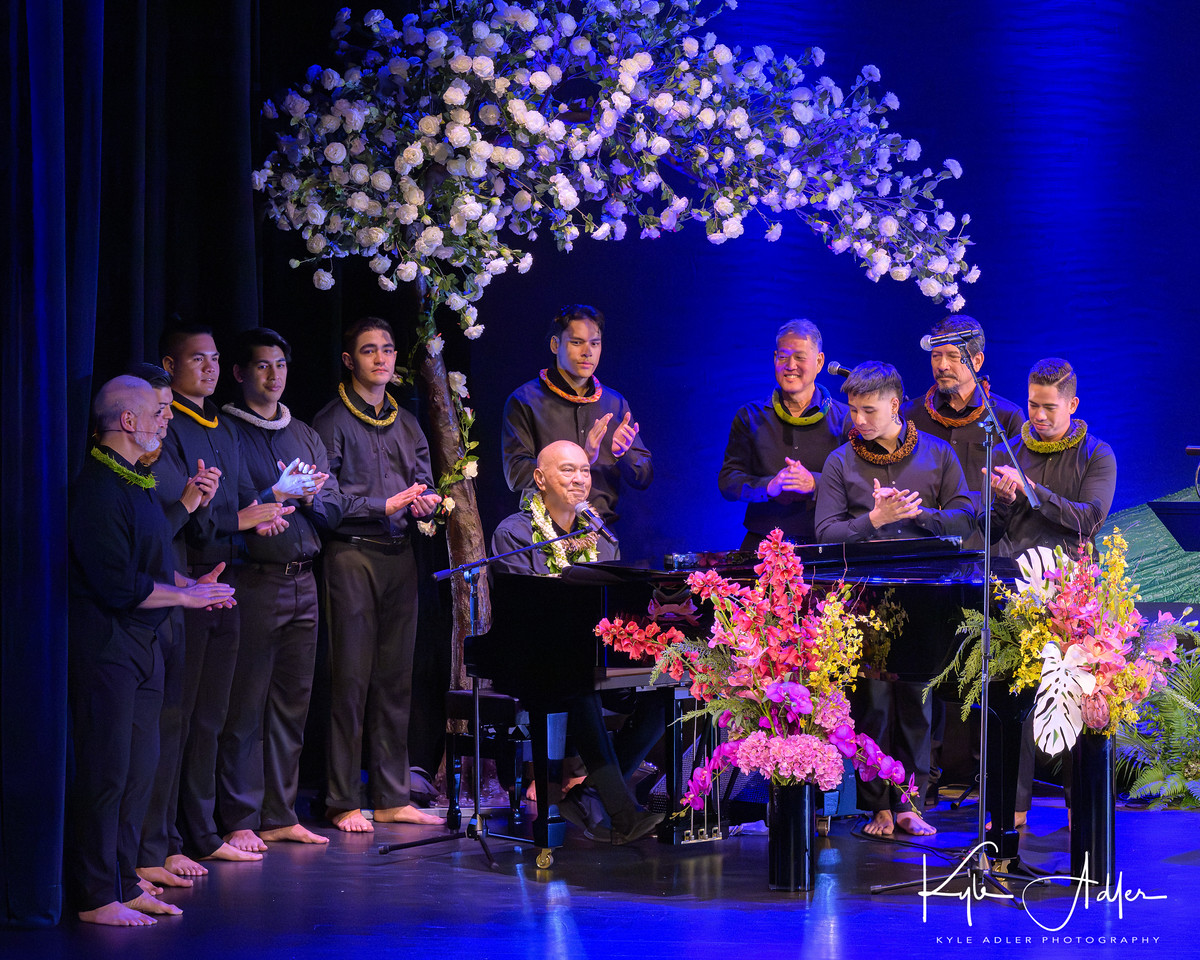
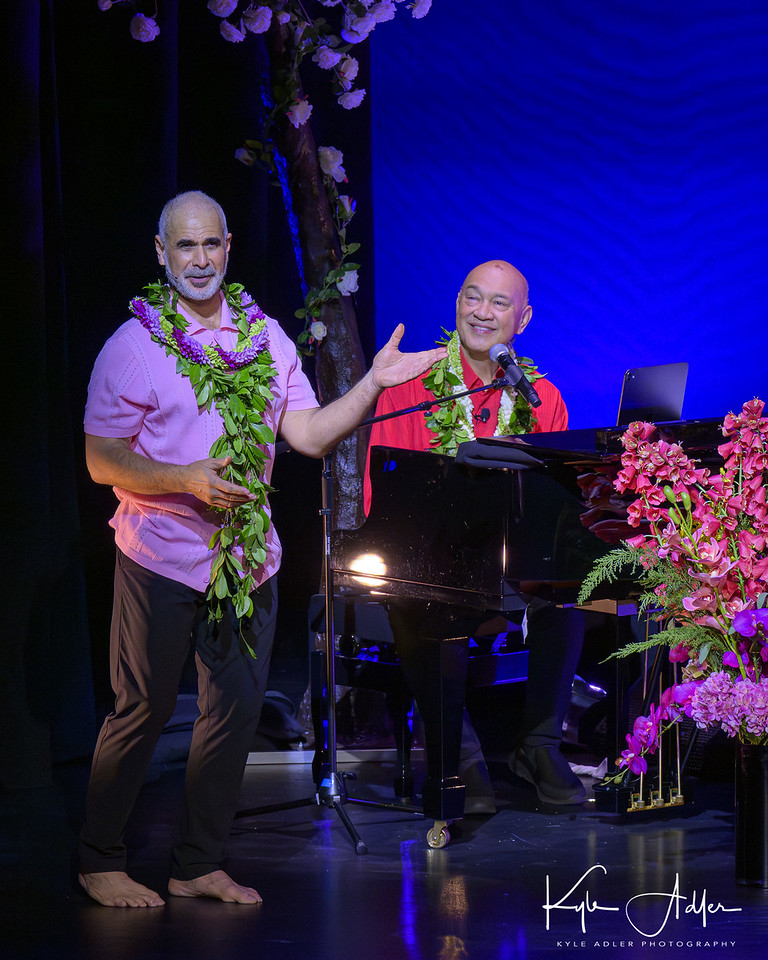
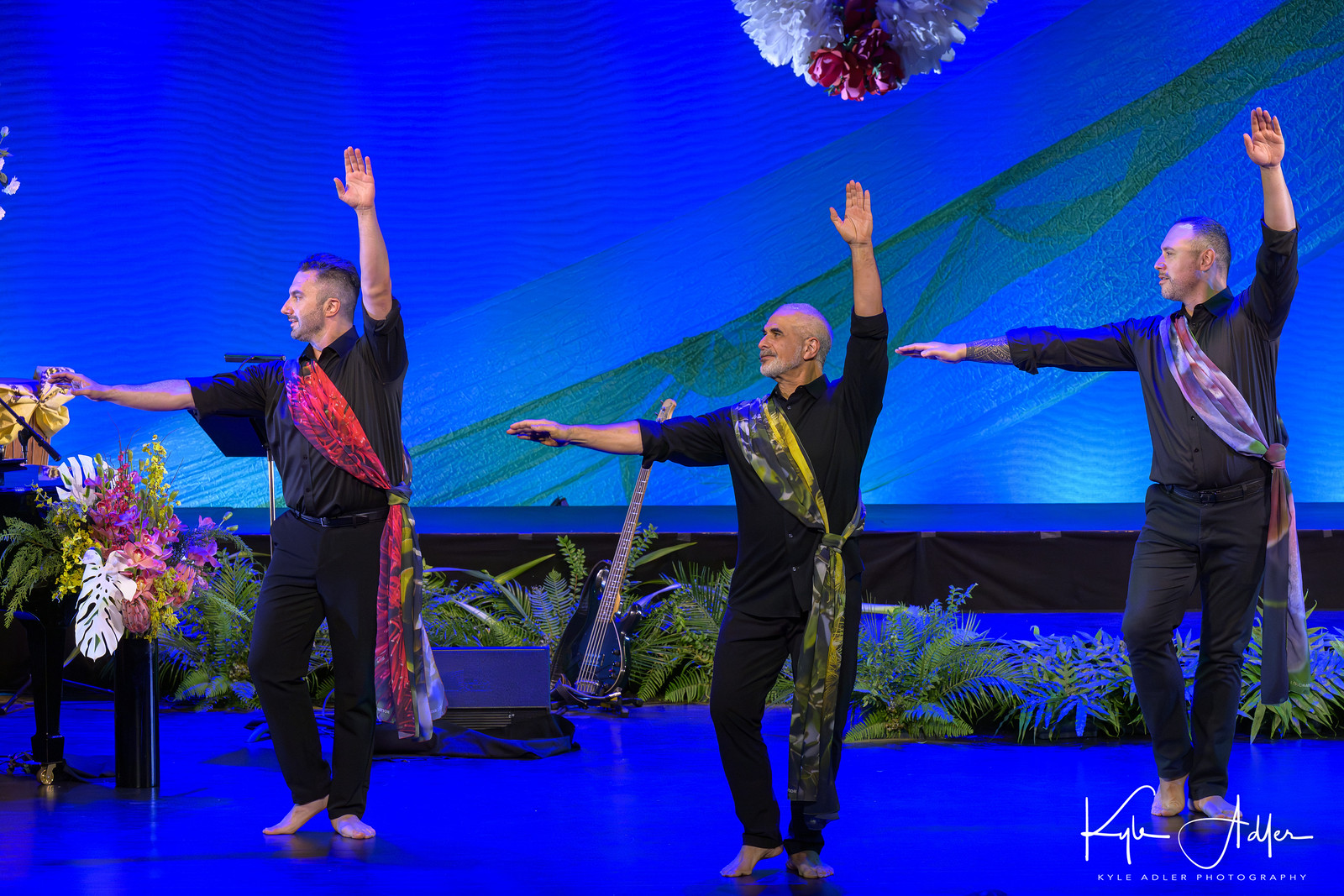
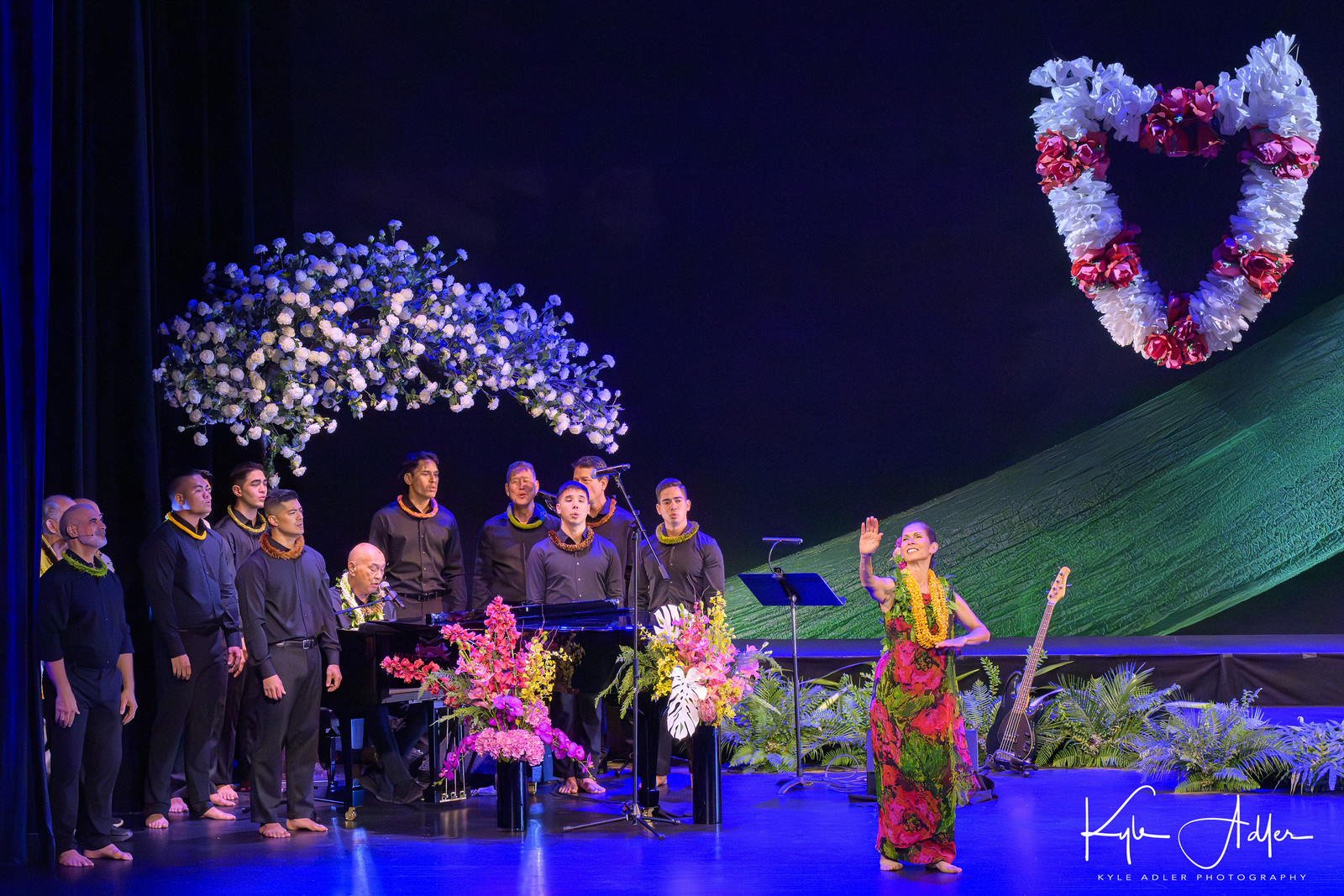
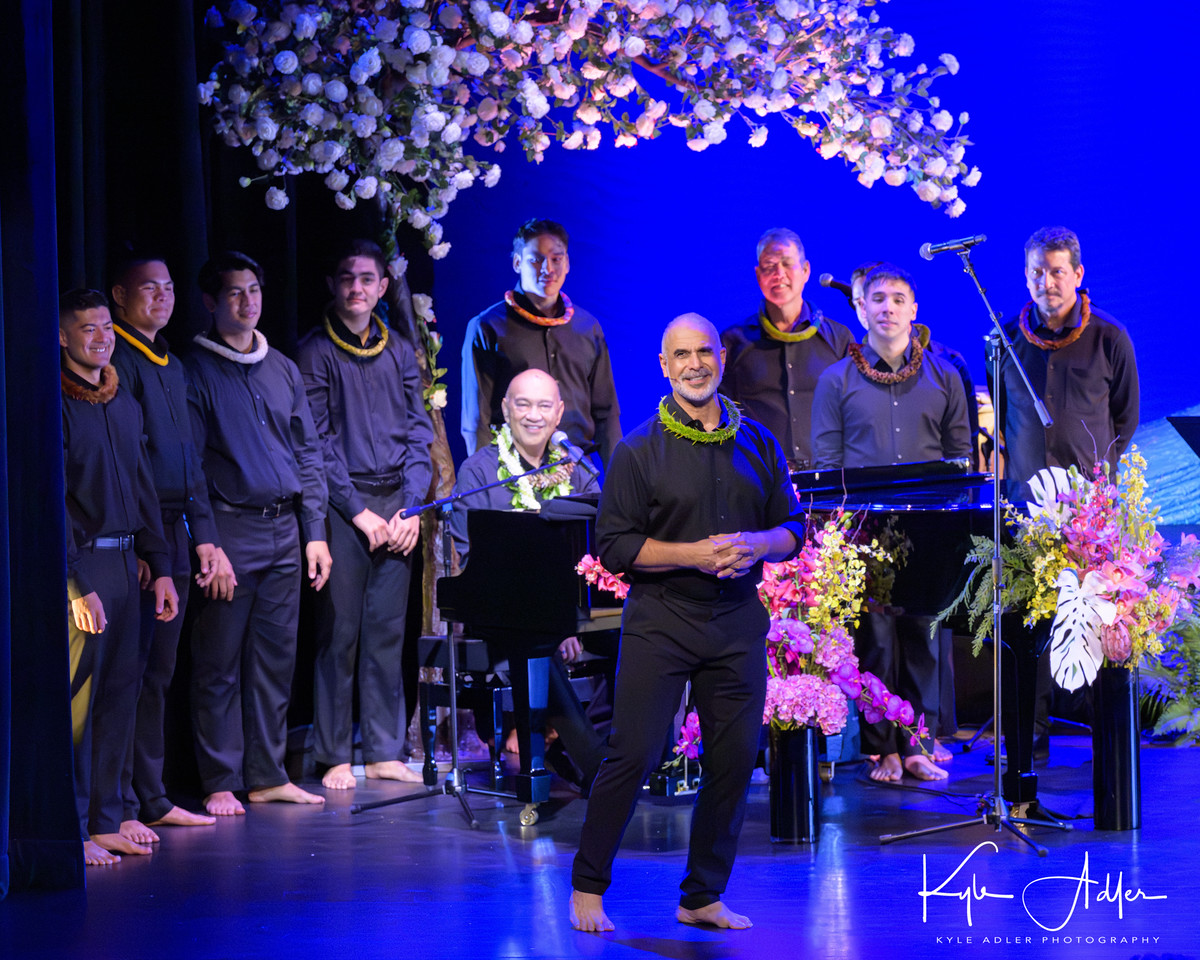
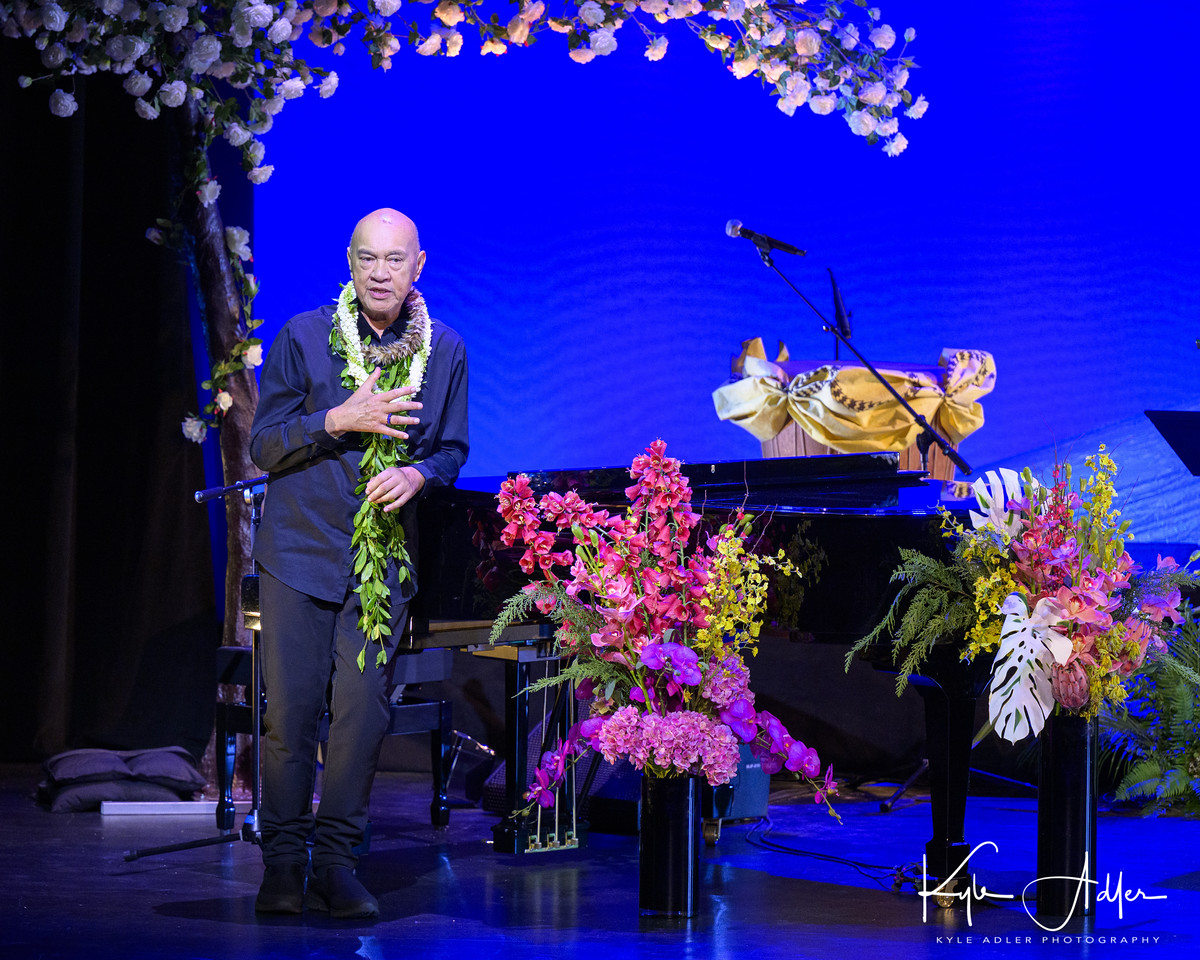
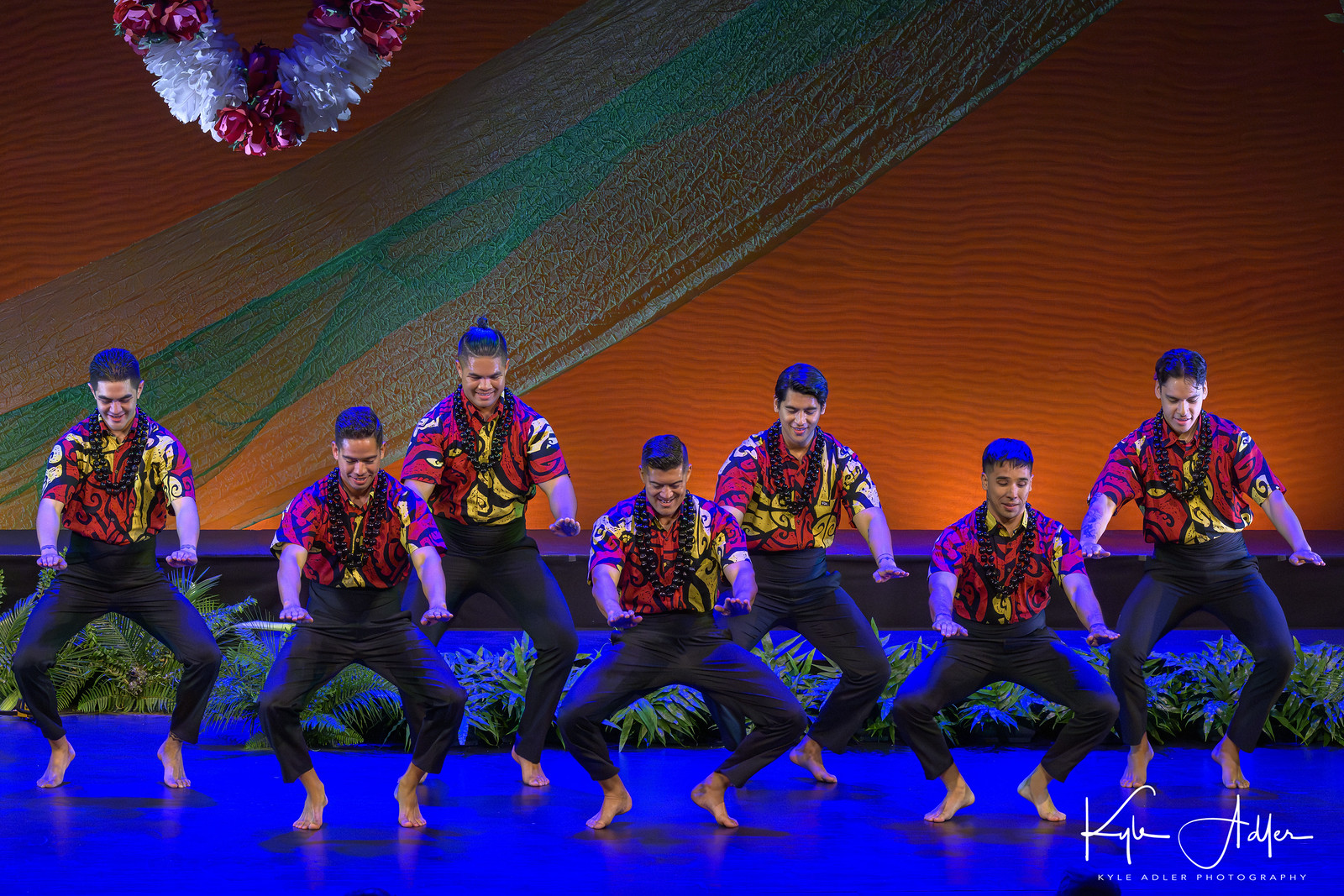
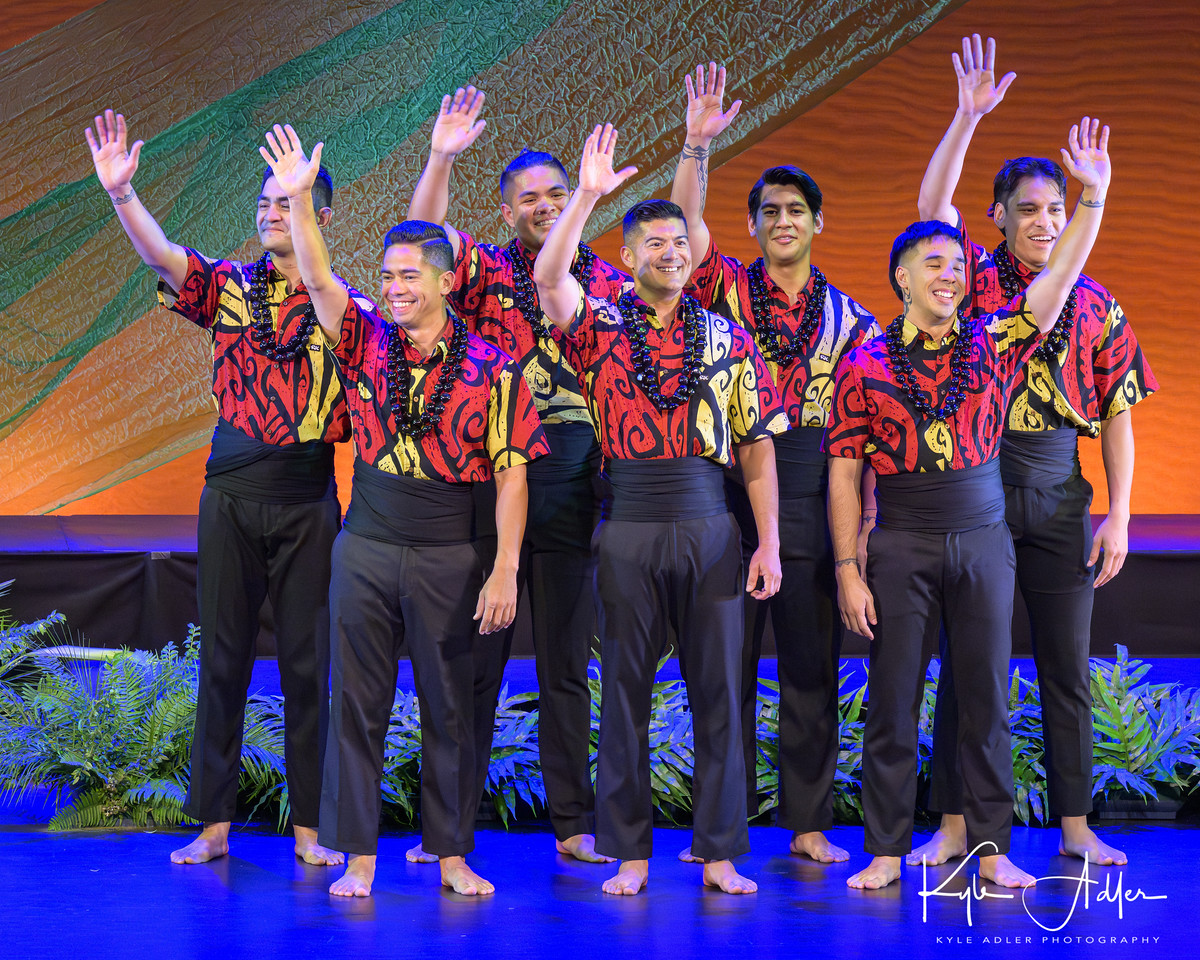
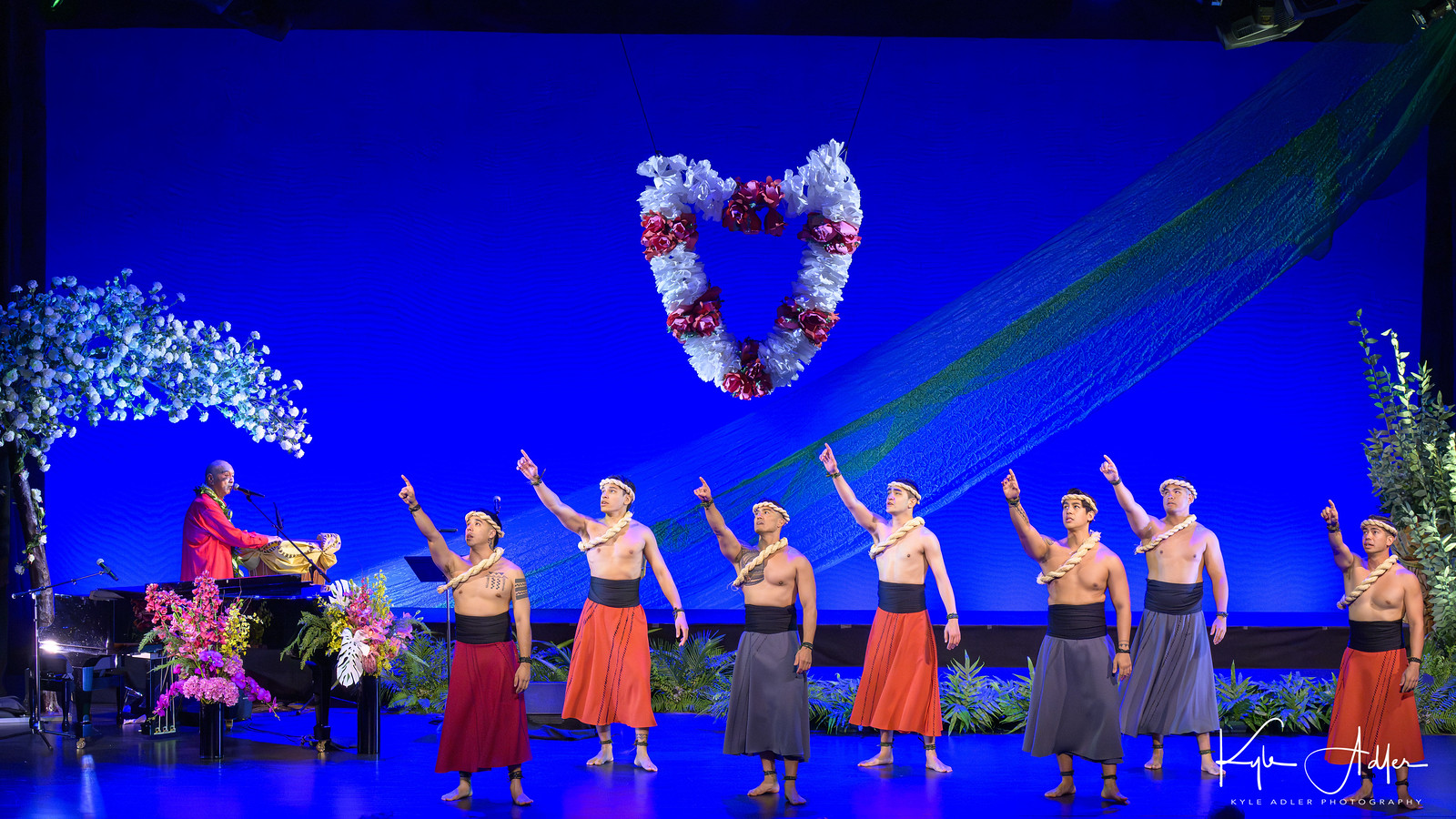
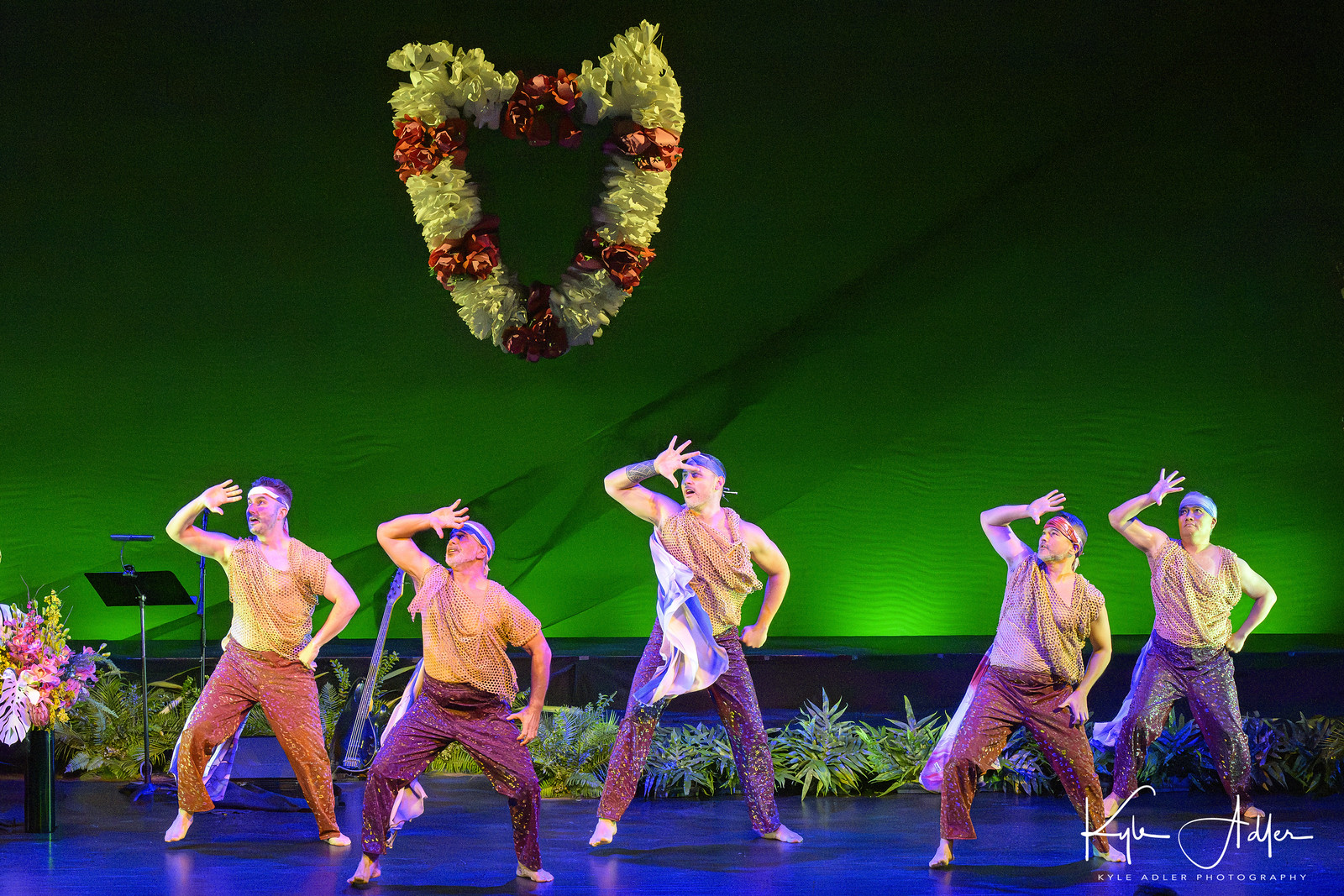
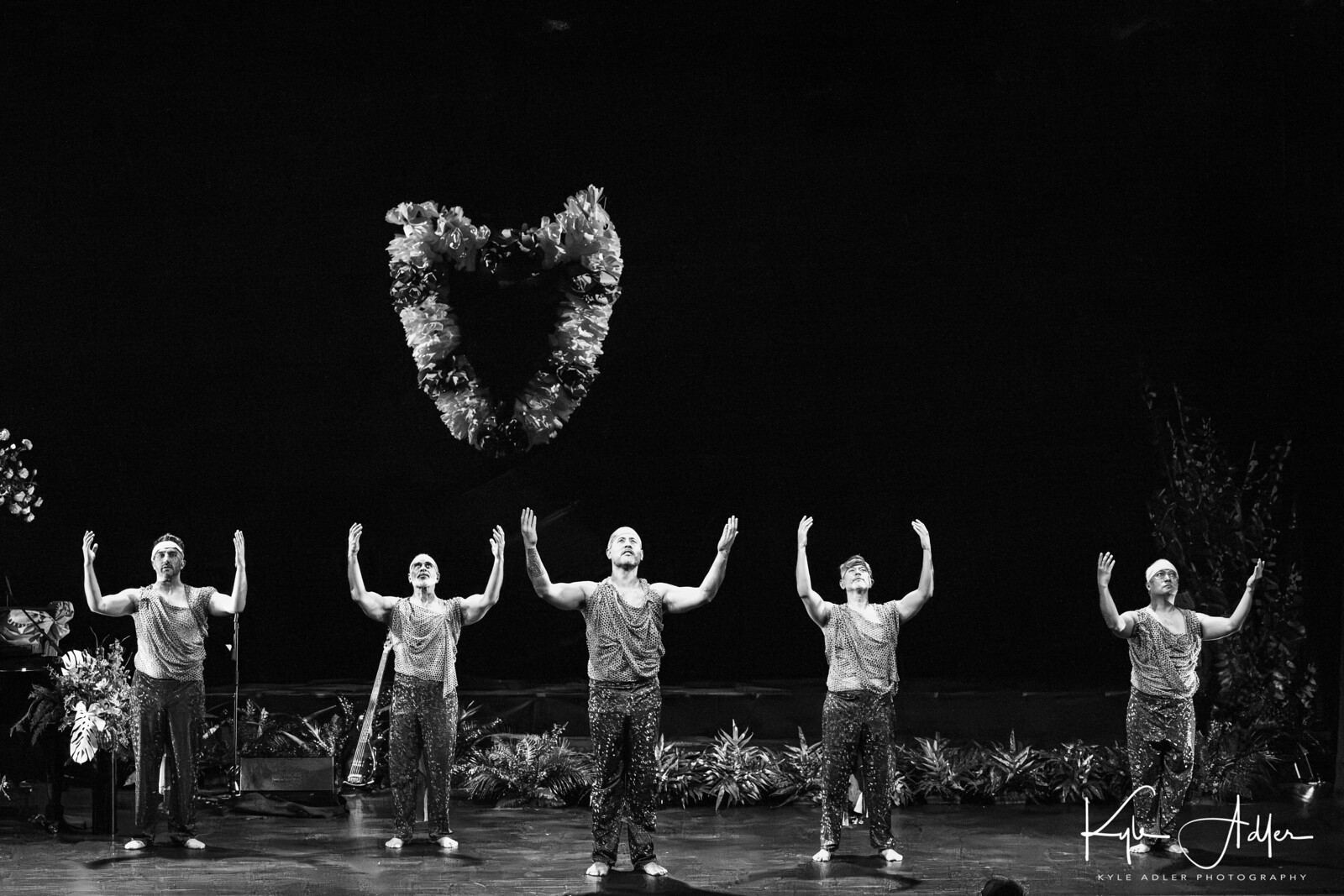
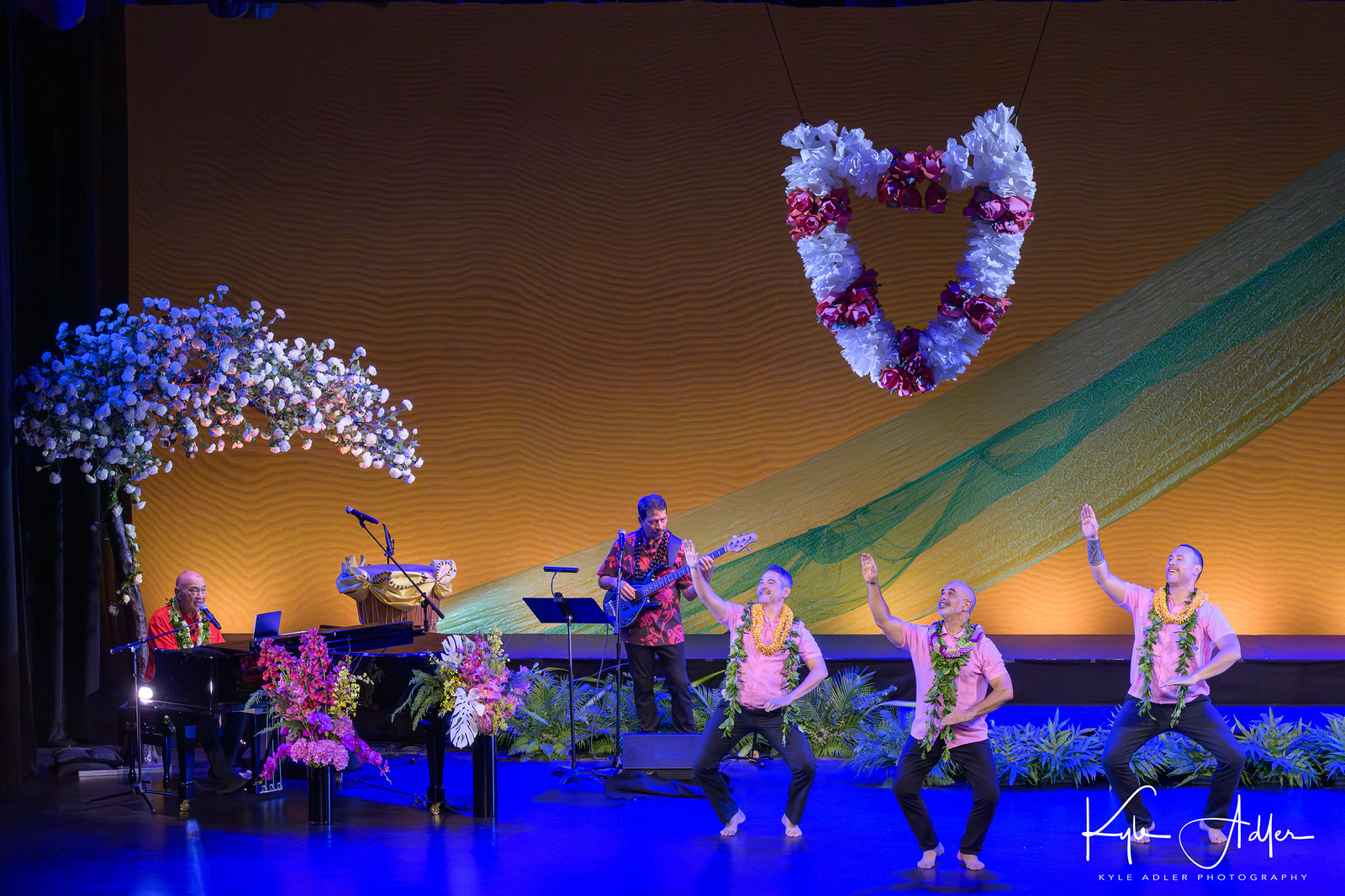
The Artistry of Men in Hula with Robert Cazimero and the men of Nā Kamalei o Līlīlehua and the men of Nā Lei Hulu.
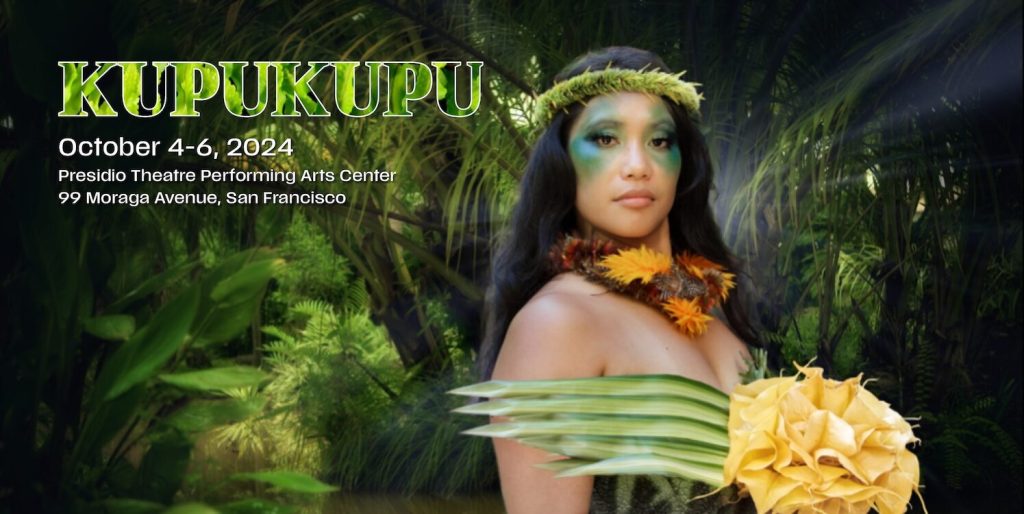
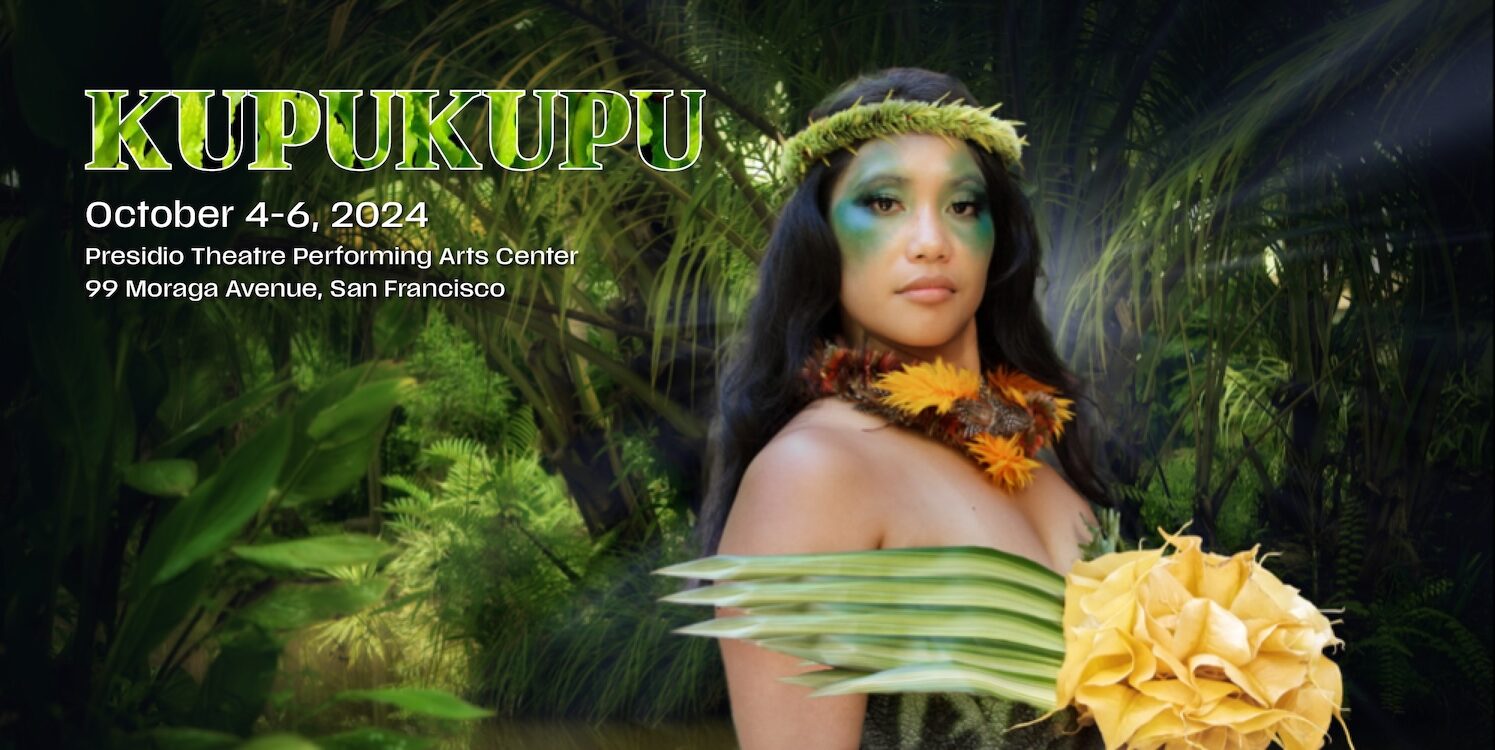
KUPUKUPU
OCT 4, 5, and 6 | Presidio Theatre
Mahalo to all who made Kupukupu a resounding success!
Song List
Act One
Hānau, Kahakuikamoana
I Uka Au ē, traditional
Kona Kai ʻŌpua, Henry Wai’au
Ka Uluwehi o ke Kai, Aunty Edith Kanaka’ole
Pua Lily, Patrick Makuakāne
Kāua Nani Aʻo Hilo, Johnny Almeida
Keiki o ka ʻĀina, Maka Gallingher
Kuʻu Sweetie Baby, Makuakāne
The Long Way Home / He Hawaiʻi Au, Scarlet Eskildsen / Ron Rosha & Peter Moon
Ode to Junior Boy, Bobby Gentry, Makuakāne
Act Two
Maikaʻi Kauaʻi, traditional
Comedown, Joesef
Times Like These, Foo Fighters
Something’s Happening in Waiʻanae, Makuakāne
Maile Sisters, S.N. Hale’ole, Makuakāne
Popsicle Toes, Michael Franks
ʻAuhea Wale Oe e ka Ua Noe, Solomon Huihui, Makuakāne
He Maʻi for My Next Door Neighbor, Makuakāne
Kiʻekiʻe, Alaumoe, Makuakāne
Iā ʻOe e ka Lā, Nāhinu
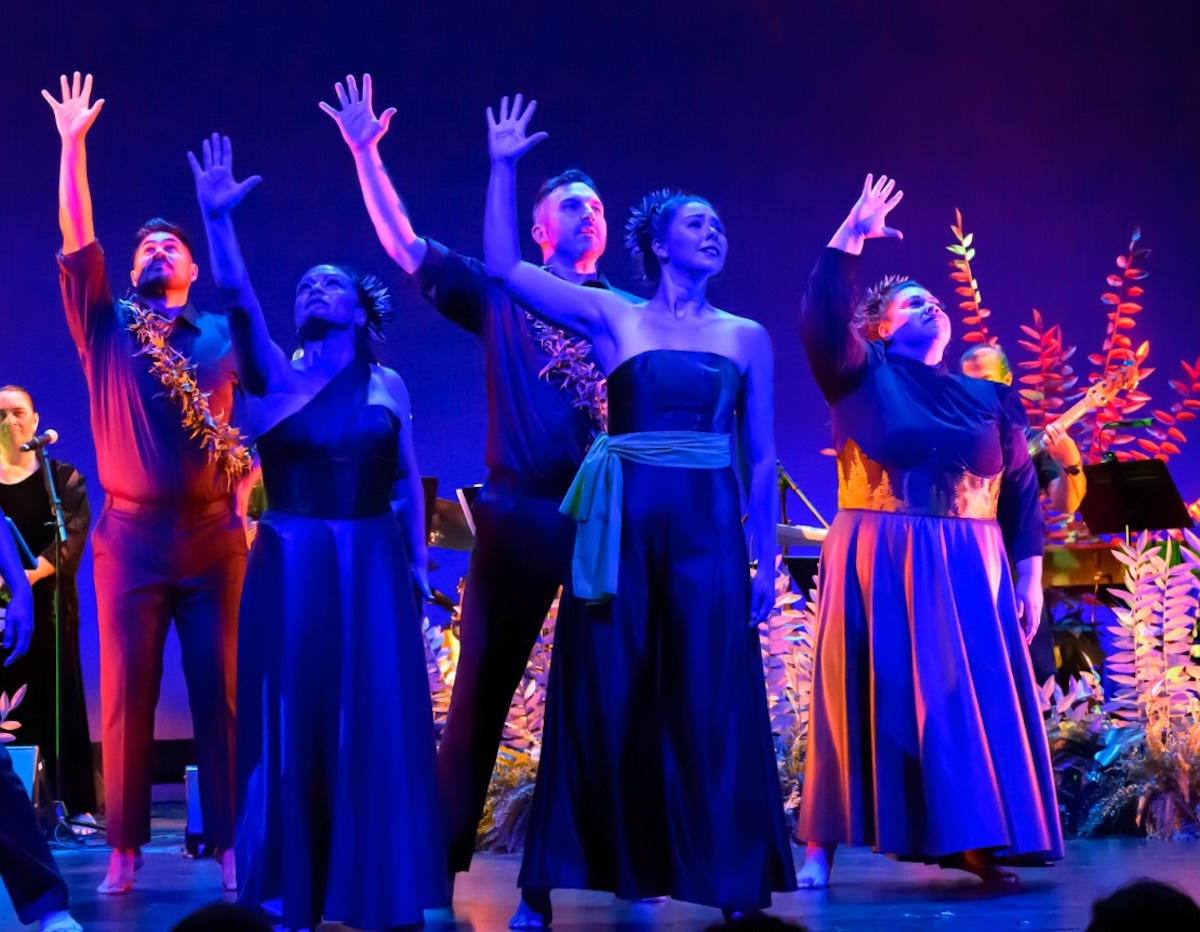
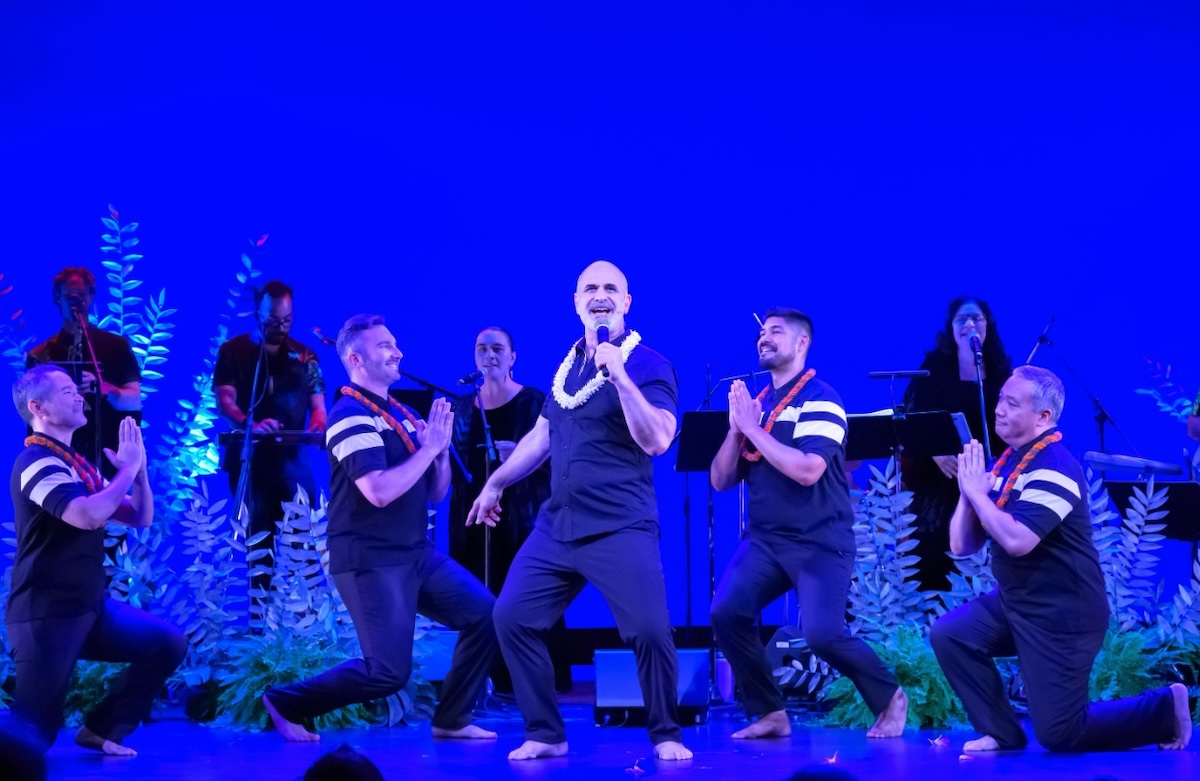
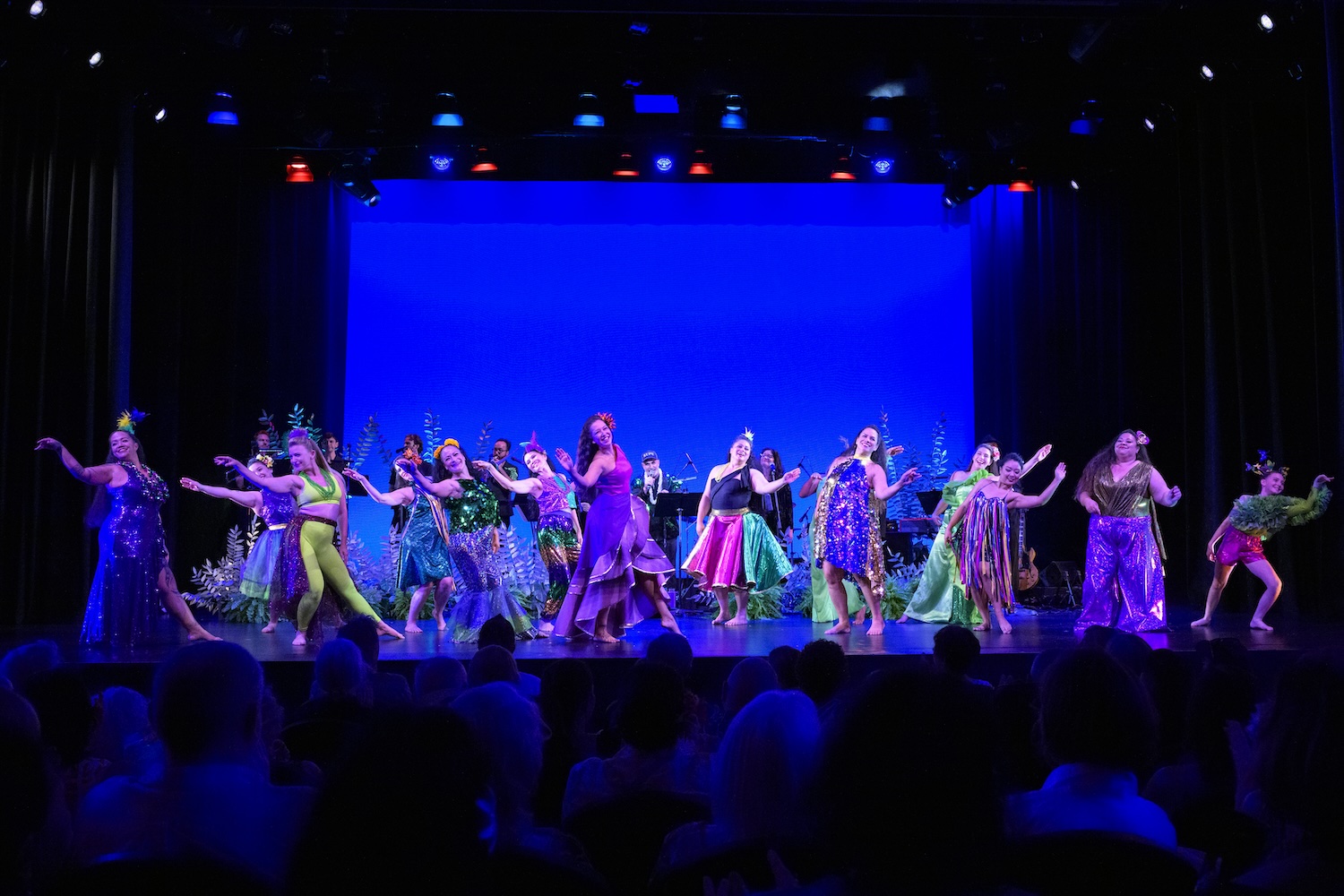
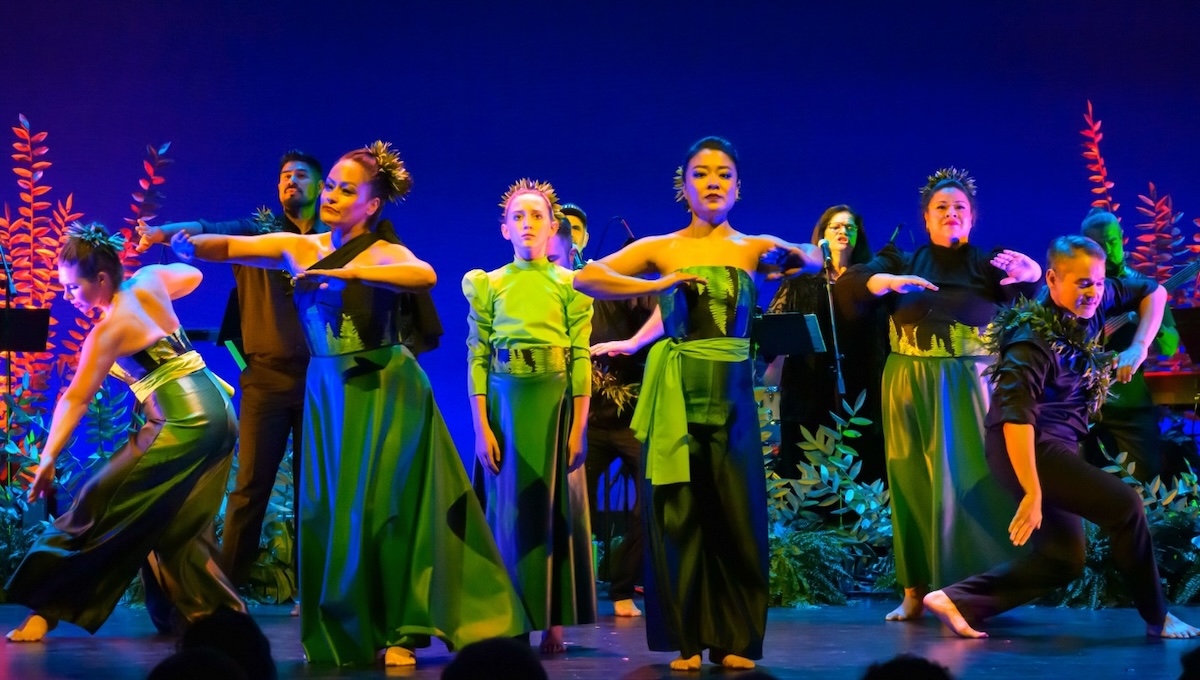
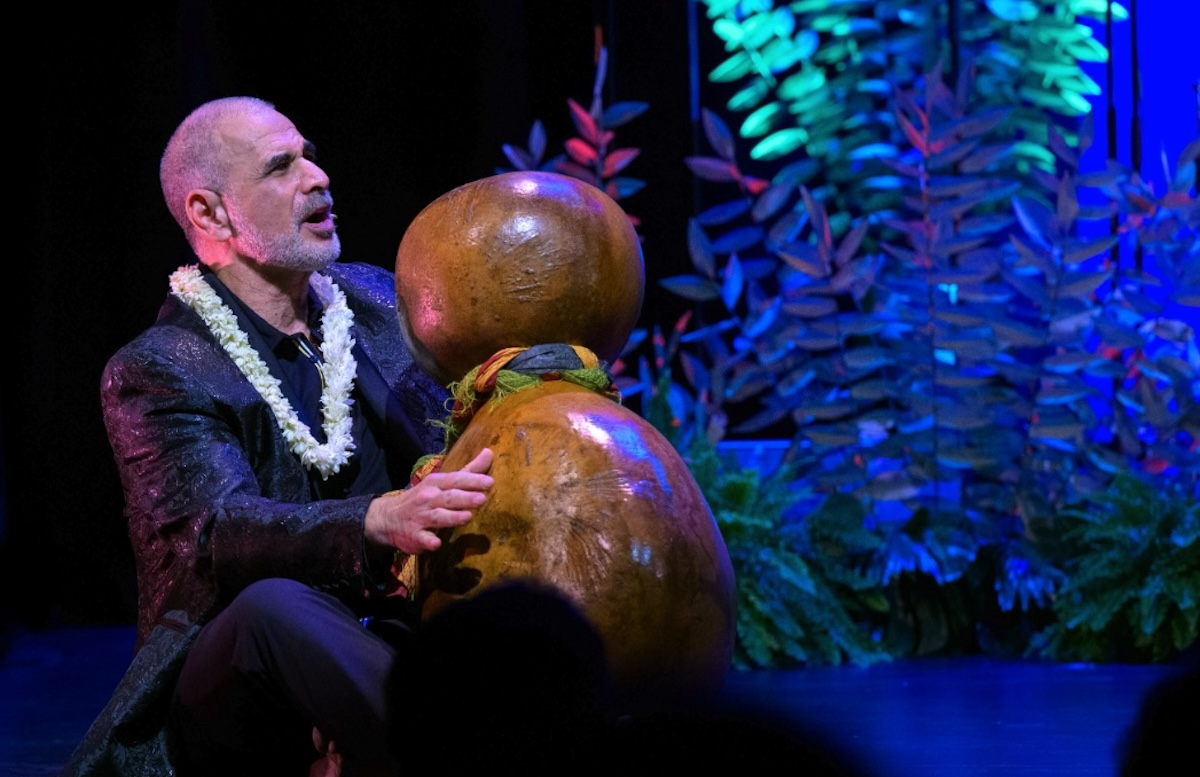
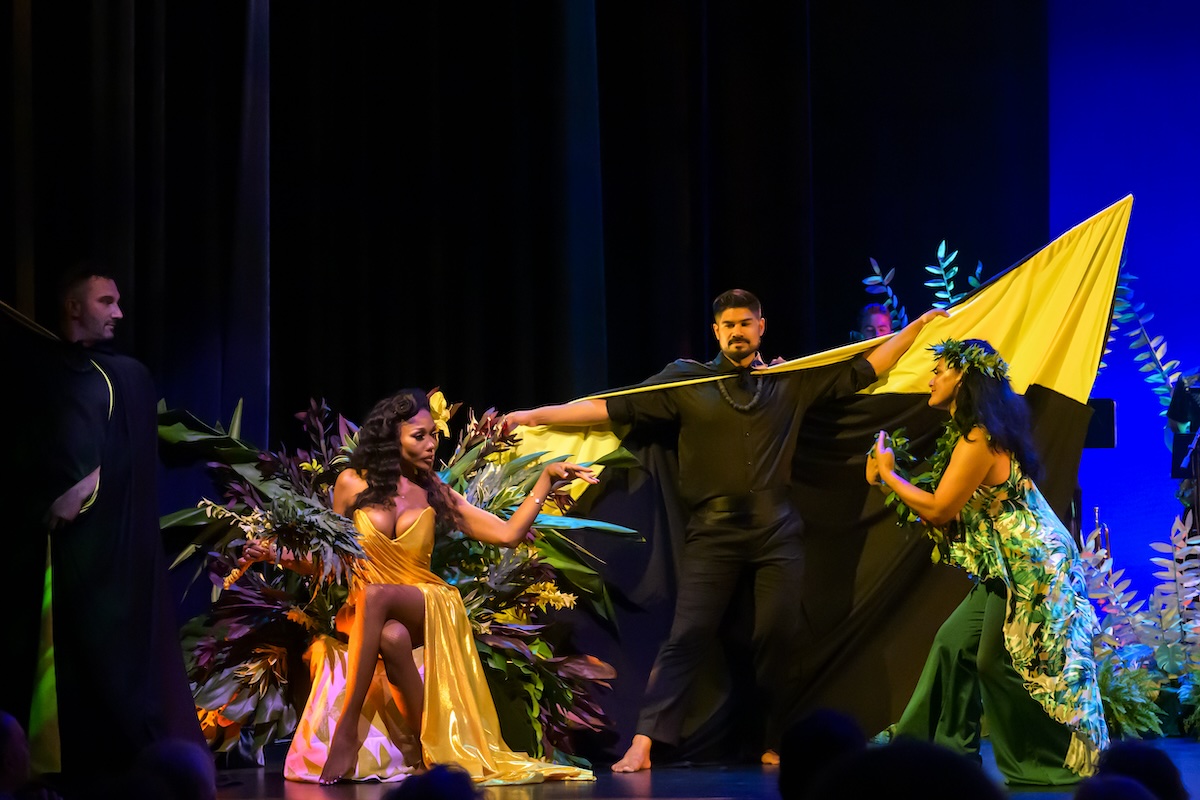
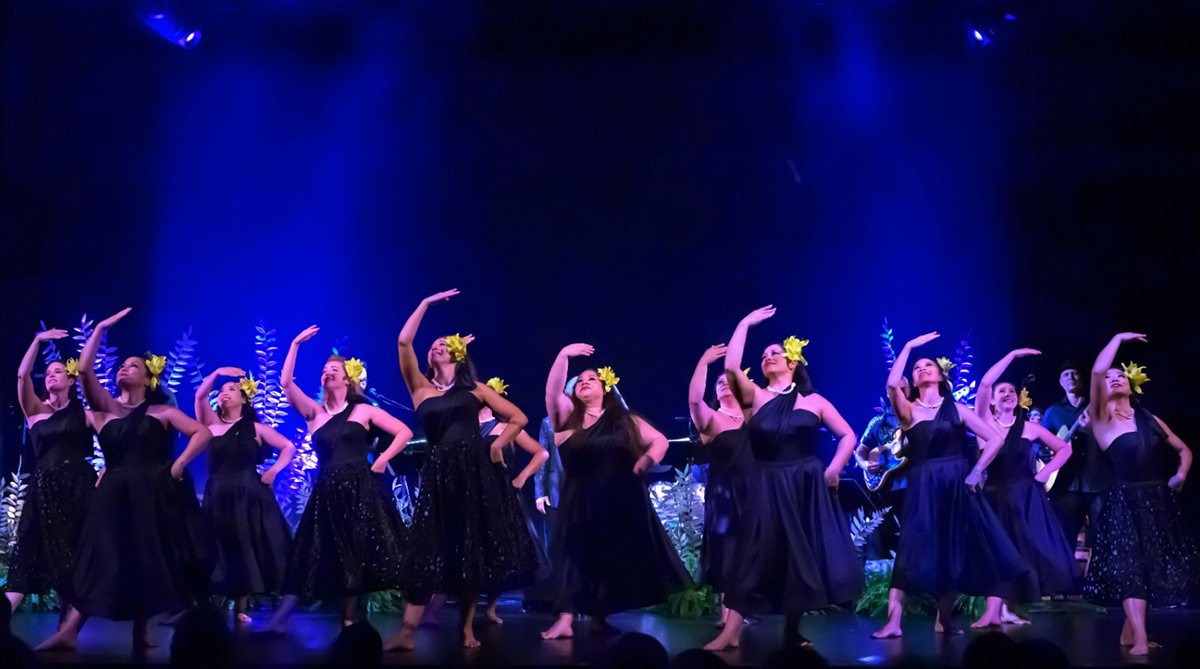
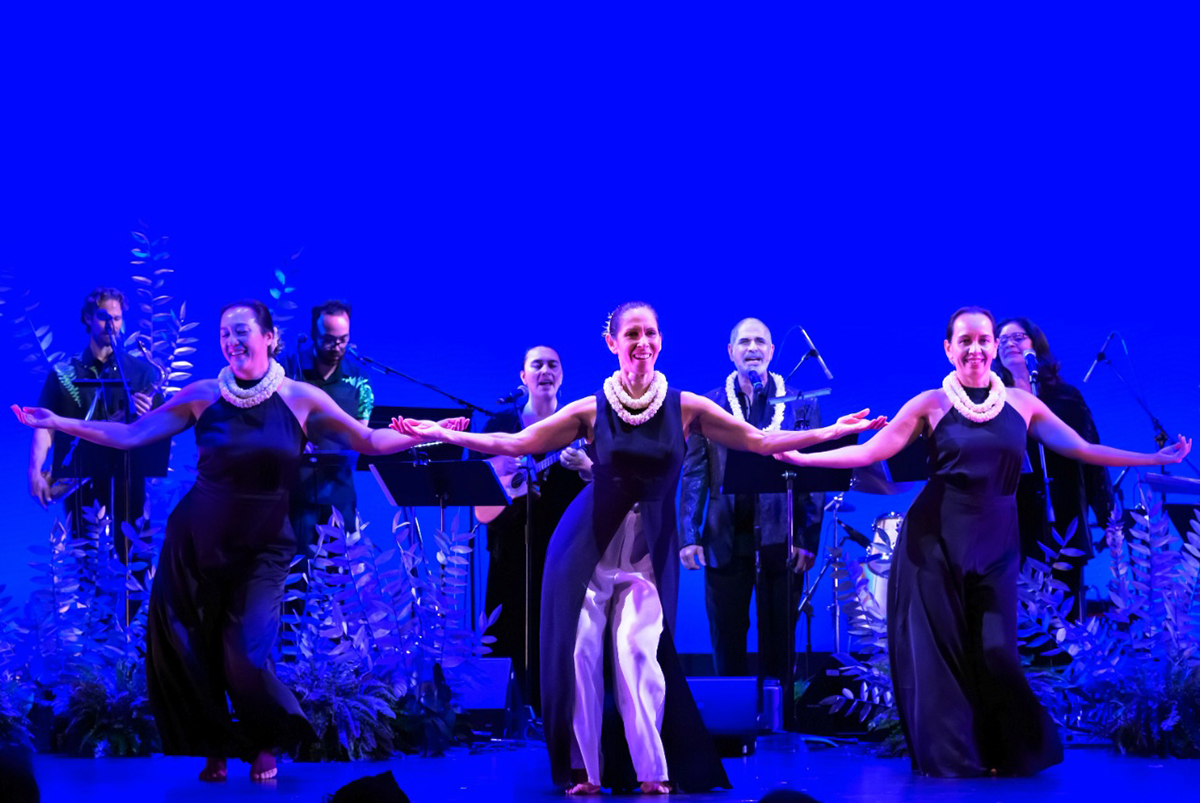
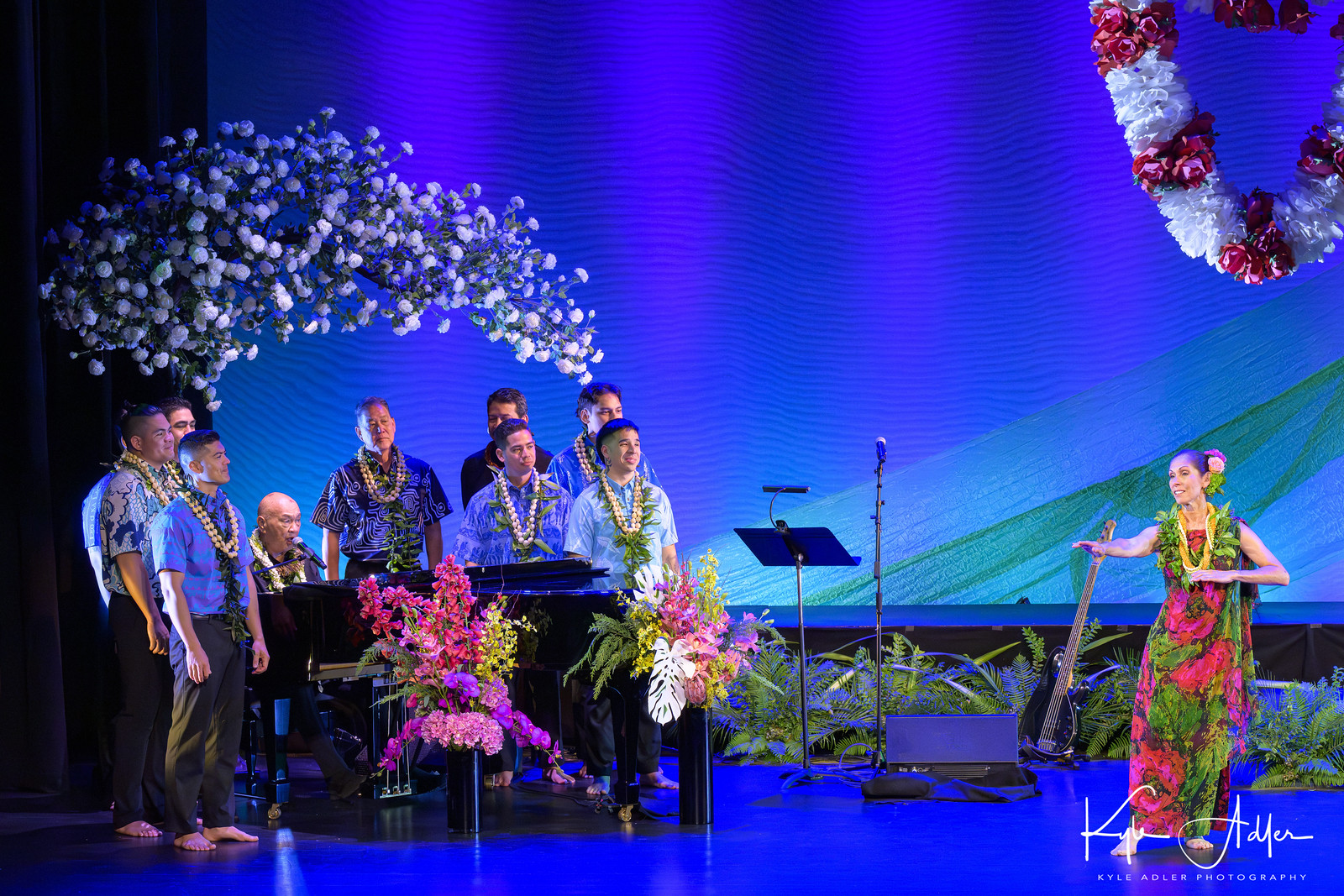
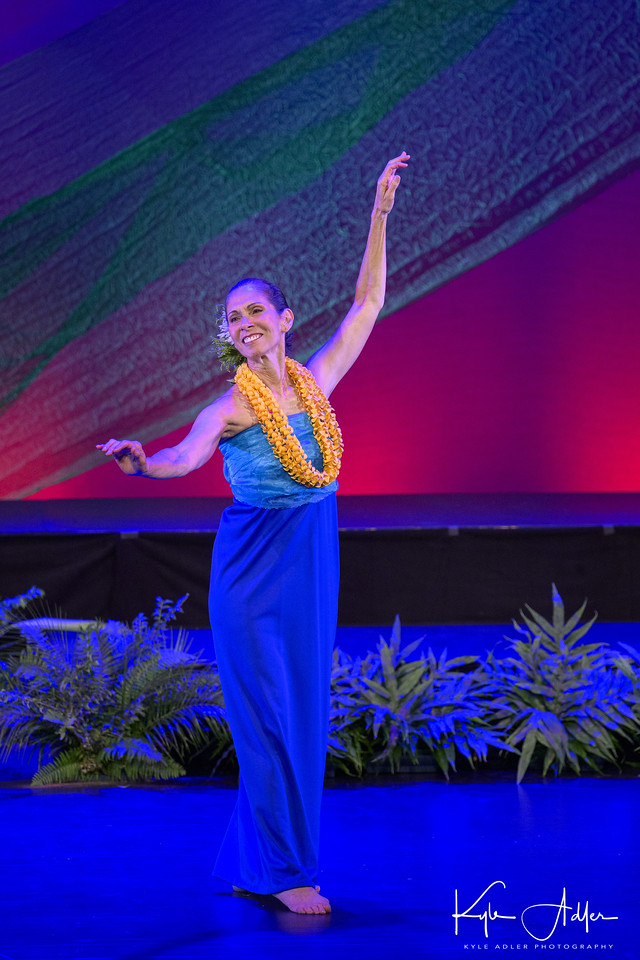
Performance photos by Kyle Adler Photography
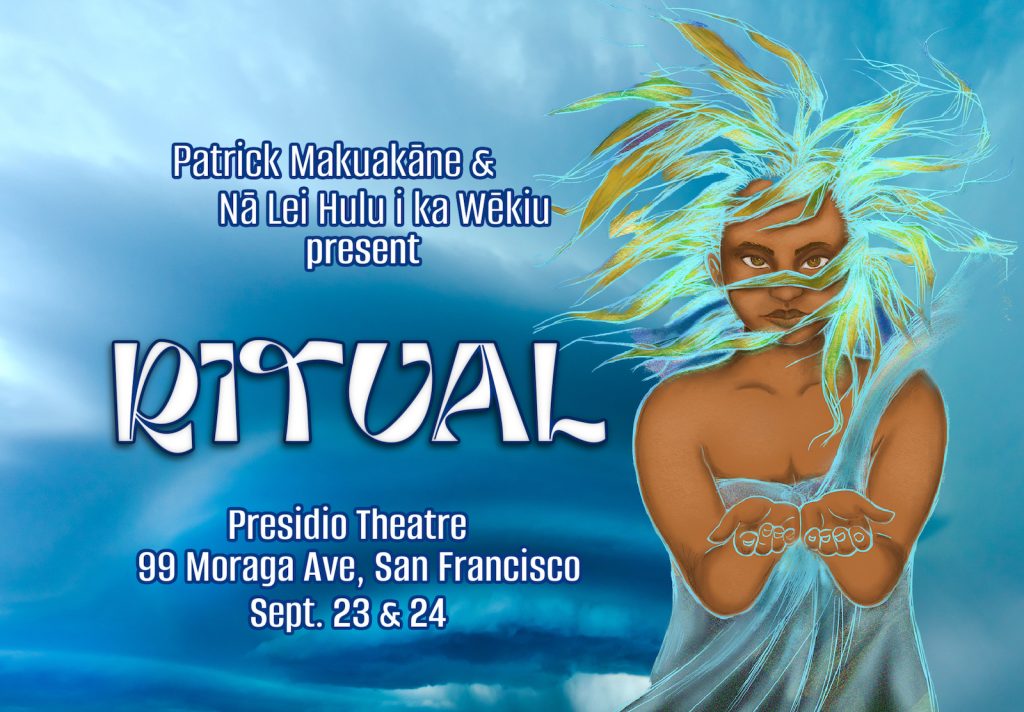
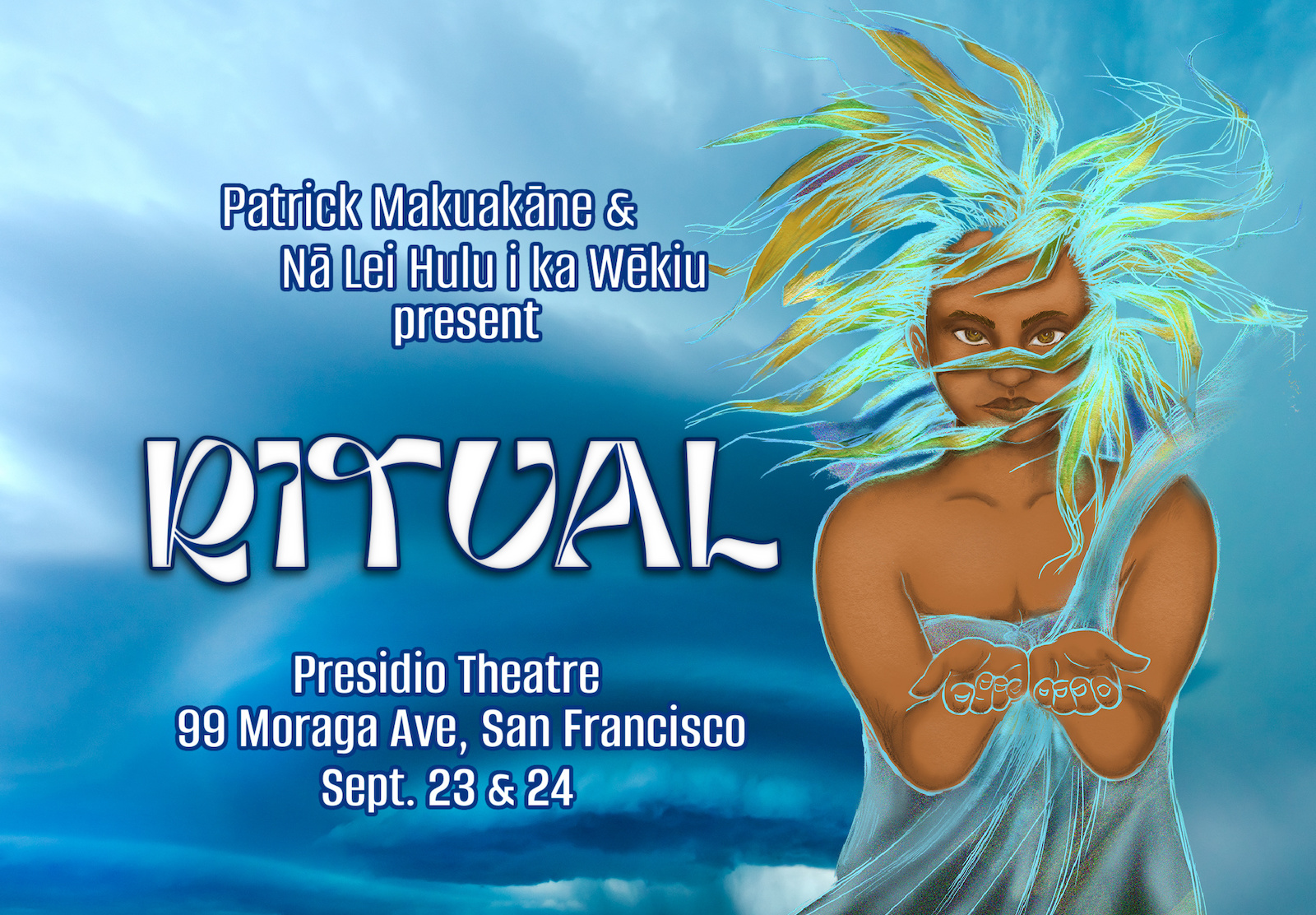
Ritual
September 23 & 24, 2023 | Presidio Theatre, 99 Moraga Ave., San Francisco
We welcome audiences to Presidio Theatre for the premiere of RITUAL.
We use ritual to create meaning in our lives, to connect, to grieve, to assuage, to transcend, to hula. In the shade of the Presidio, we embody rituals that transmigrate the soul of an ancestor to an ‘aumakua. We send a legend to heaven. We eat, drink, then get busy and together create a new god.
Let our epiphany transpire.
Audio Inspirations for Ritual
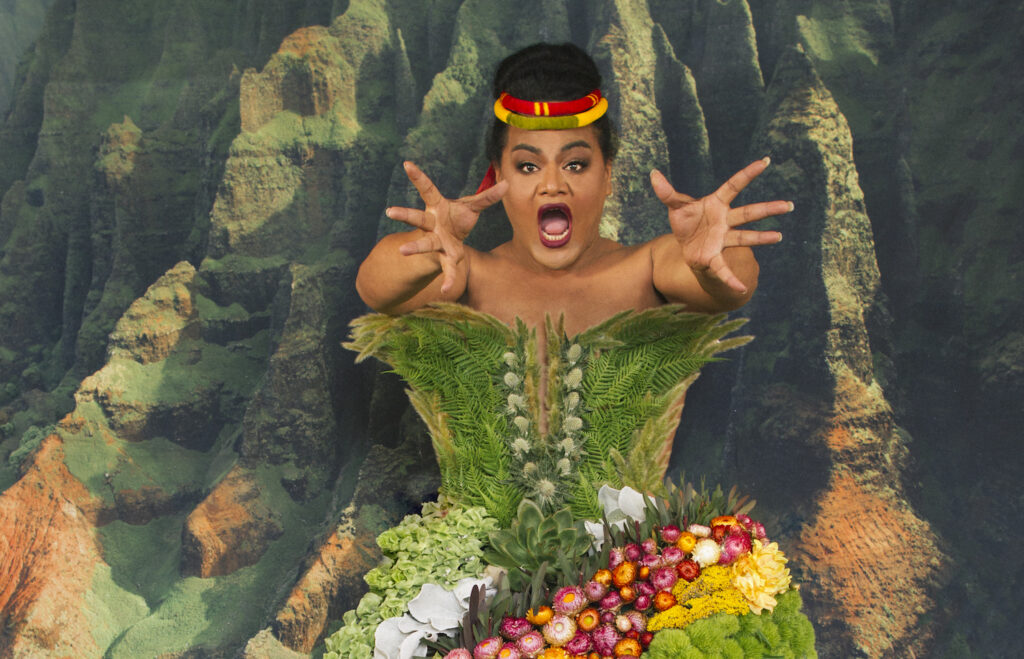
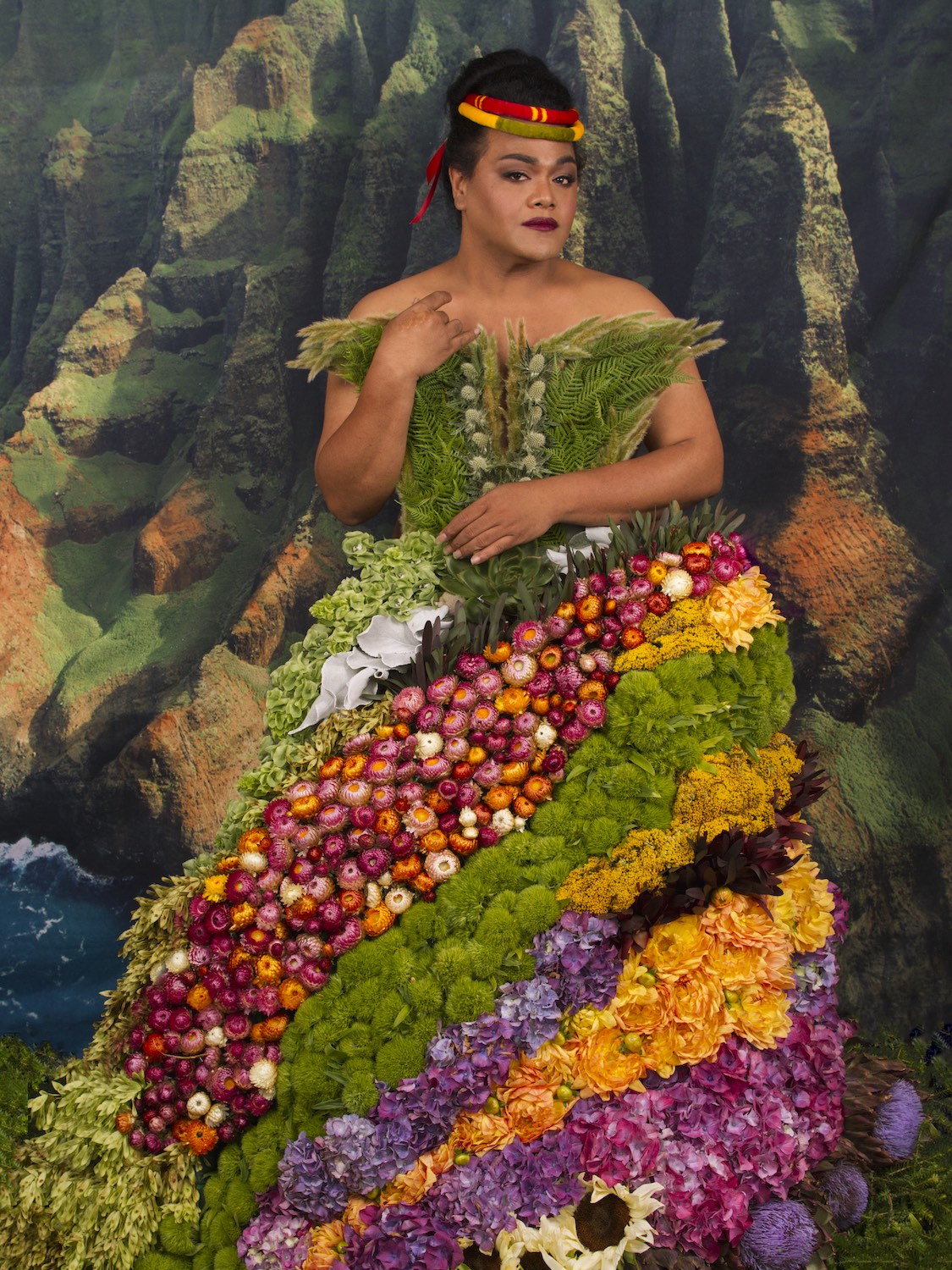
MĀHŪ
October 23 – 24, 2022 | Palace of Fine Arts Theatre Theatre, San Francisco
March, 2023 | Leeward Community College, Honolulu
When The Conversation last talked with Kumu Hula Patrick Makuakāne, he was preparing a project featuring the legend of Hiʻiaka. But the pandemic hit and that got put back on the back burner, though it may be released later this year.
But the other project that Makuakāne had in mind was the hula production “Mahu,” which was to be staged in 2020. He was happy to report that it will debut in October at the San Francisco Palace of Fine Arts Theatre. The Conversation talked to Makuakāne about what to expect.
Click here for more information. Tickets for the show went on sale Thursday. It will feature guest artists Hinaleimoana Wong-Kalu, Kuini, and Kaumakaʻiwa Kanakaʻole.
This interview aired on The Conversation on Aug. 11, 2022. The Conversation airs weekdays at 11 a.m. on HPR-1.

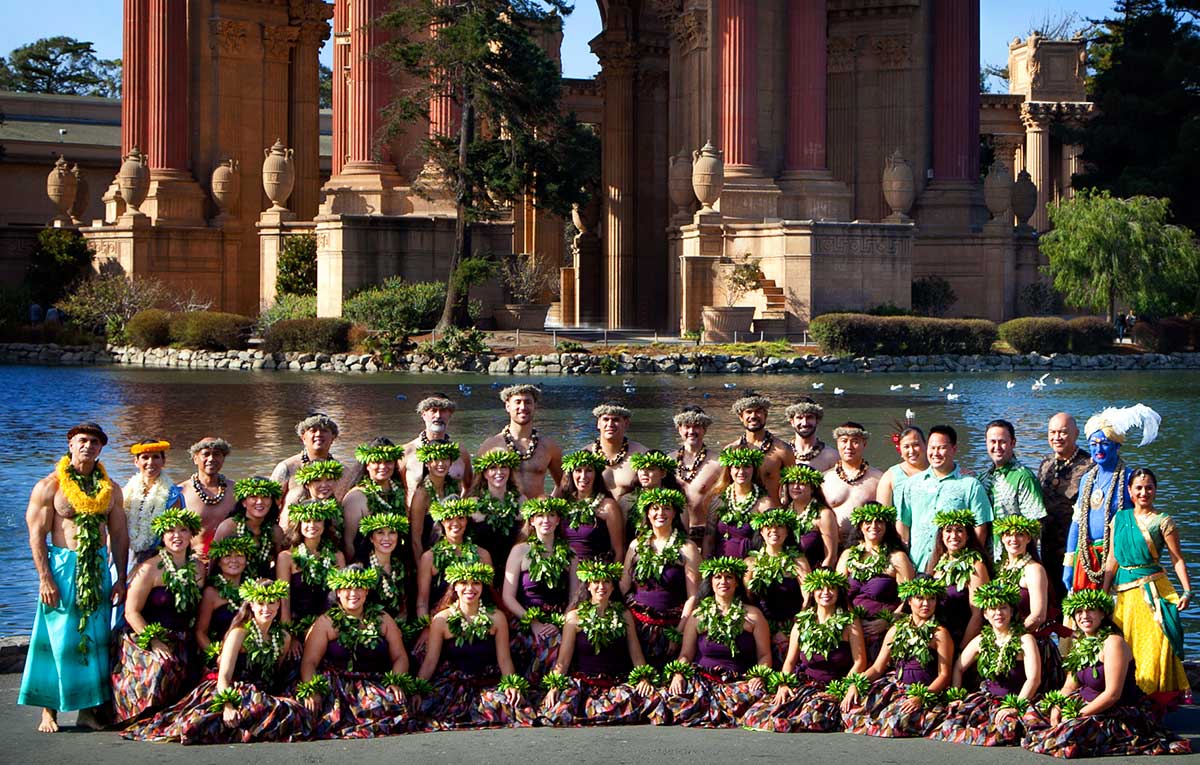
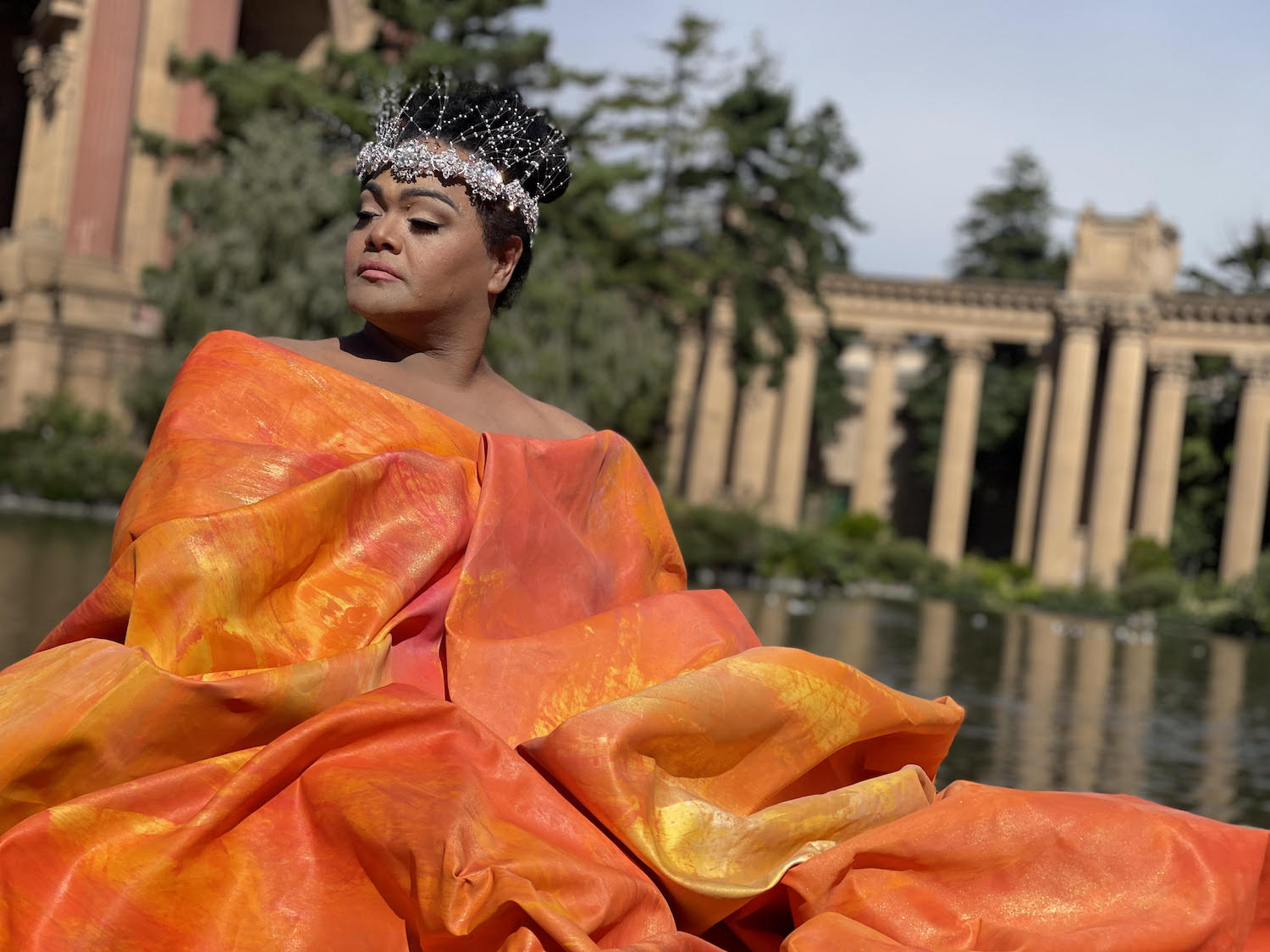
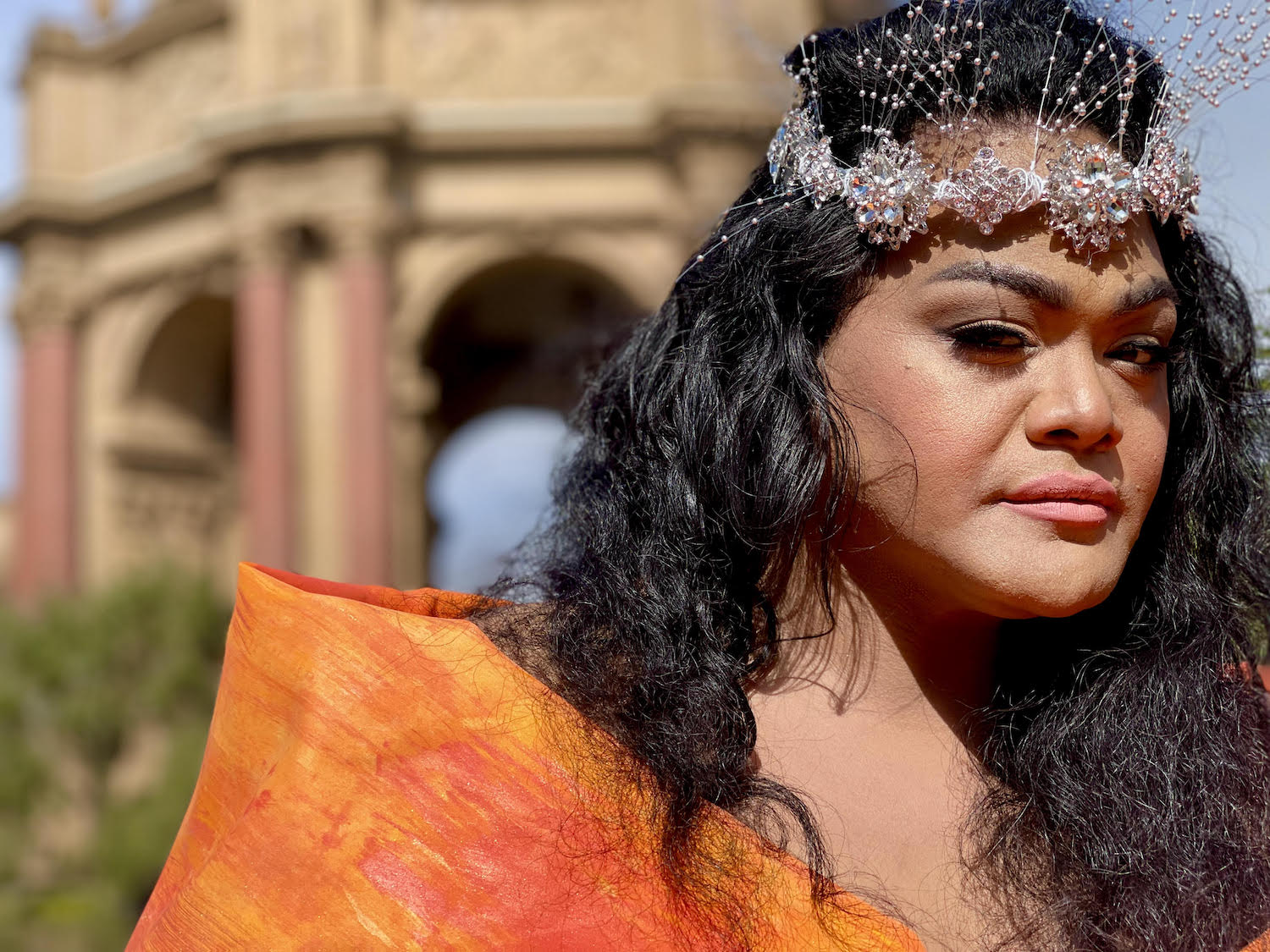
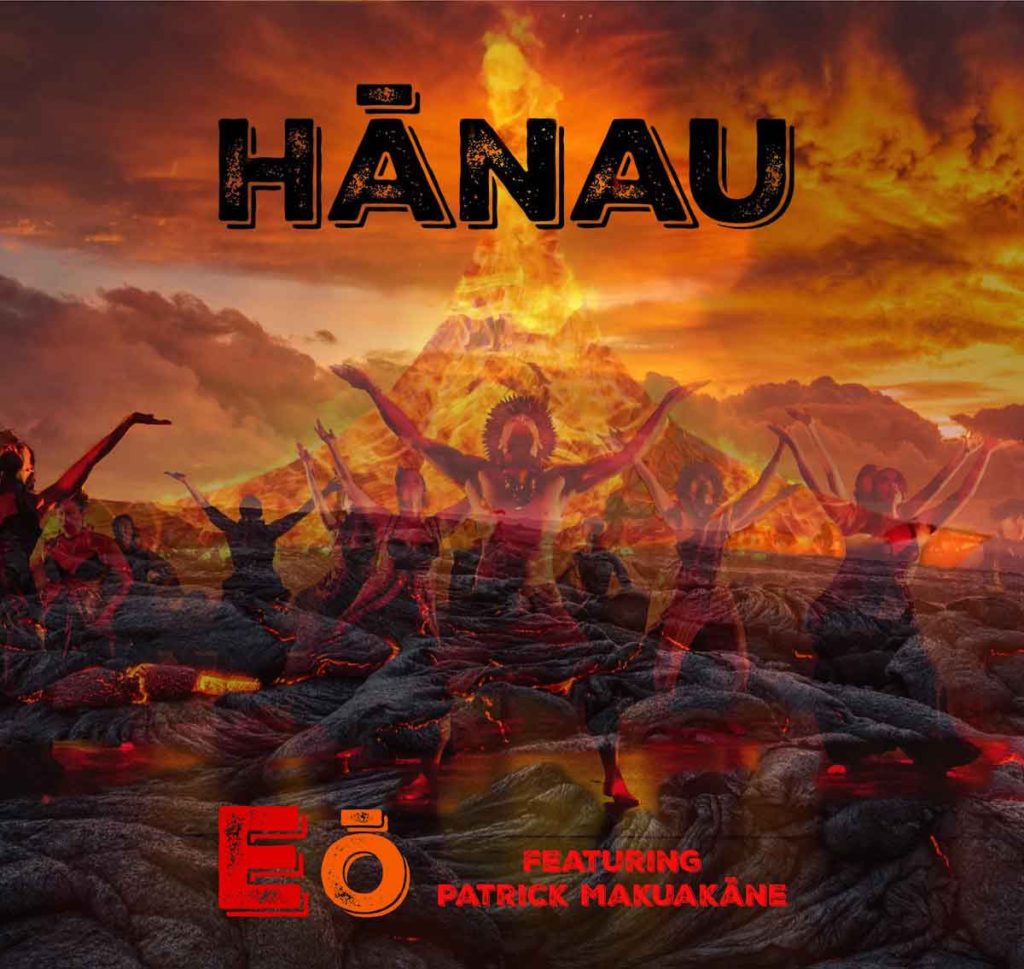
Hānau – Birth of a Nation
Na Lei Hulu’s virtual 2021 show features newly choreographed pieces that run the gamut from kahiko to auana to hula mua (traditional to modern to innovative). Filmed in San Francisco and in Hawai’i, this new production also includes special appearances by guest artists!
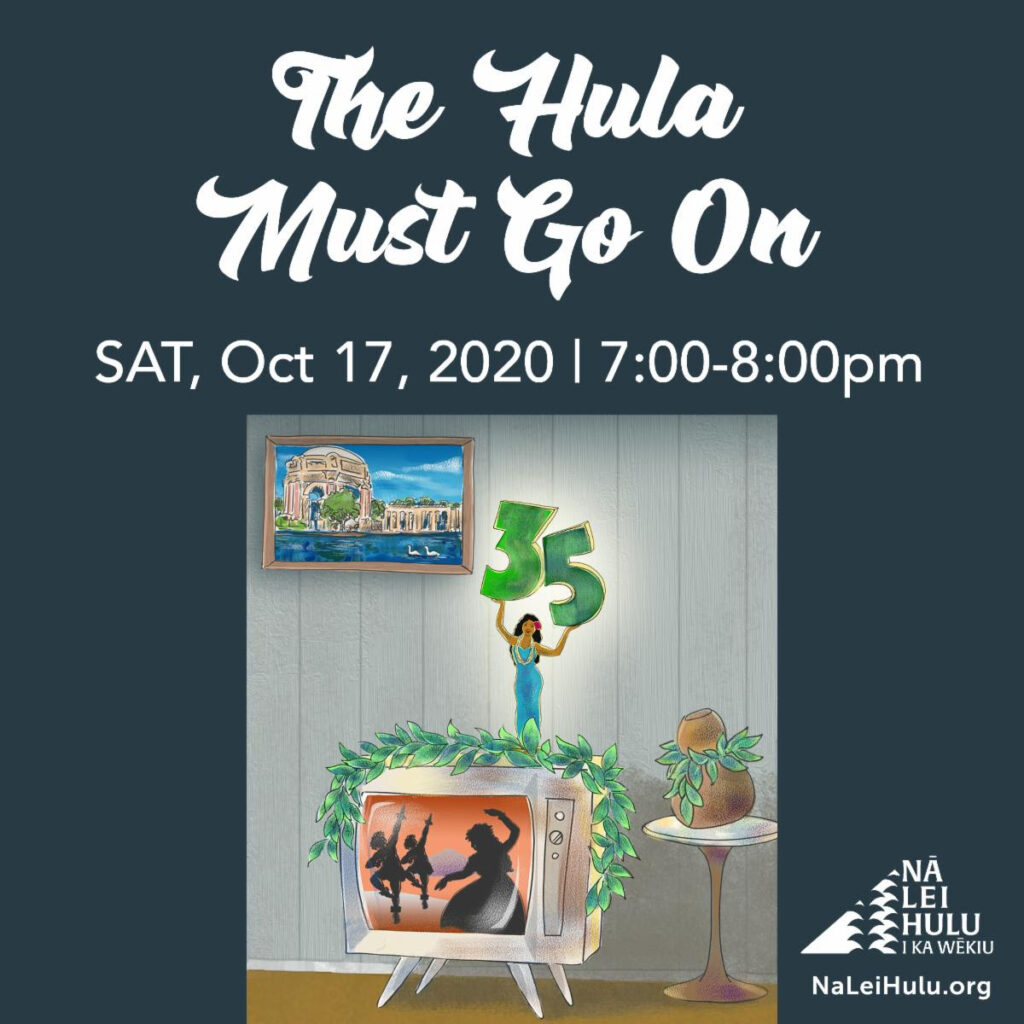
The Hula Must Go On
October 17, 2020 | Virtual
Celebrating our 35th Anniversary with livestream surprises, specially created content, and some of your favorite hulas
The Hula Show: Kahulanui and Hoʻike Nui
October 2019 | Palace of Fine Arts, San Francisco
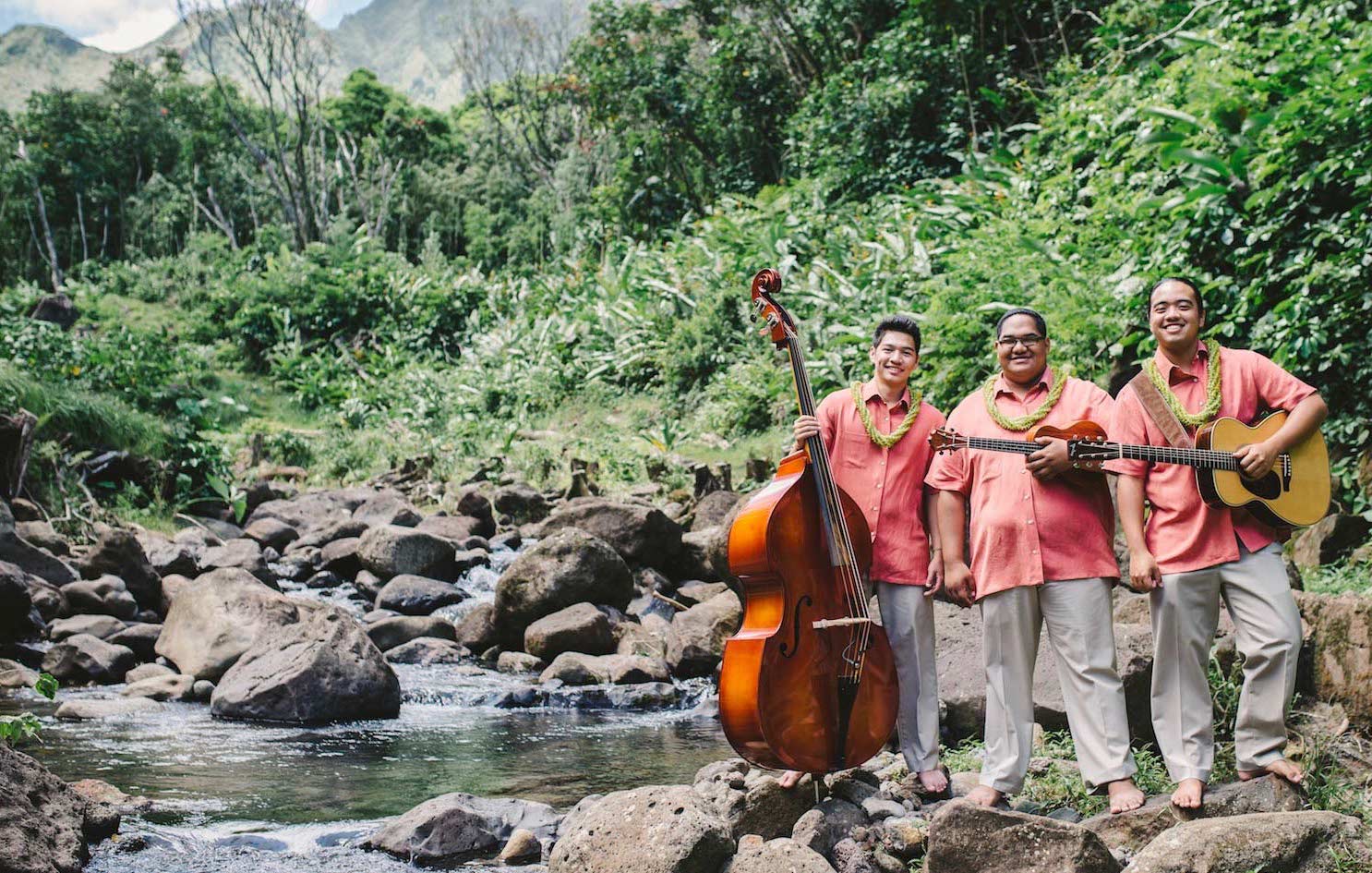
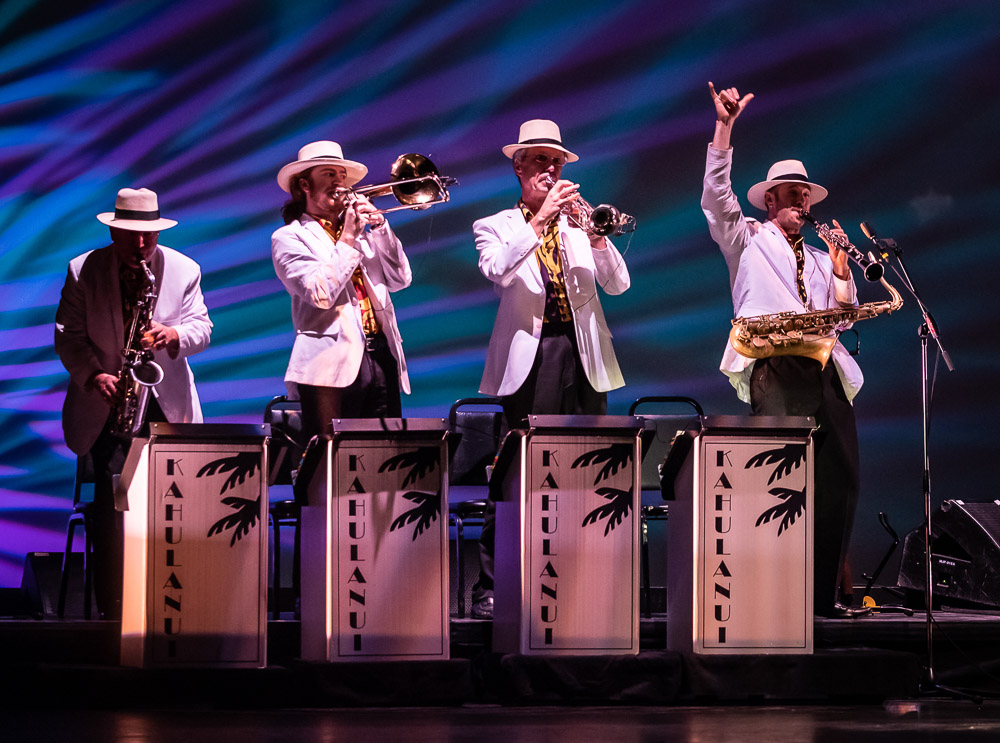
Two weekends of music and hula!
October 19-20 Hawaiian swing band Kahulanui with Nā Lei Hulu.
October 26-27 Hōʻike Nui featuring Nā Lei Hulu students, accompanied by the award-winning sounds of Keauhou

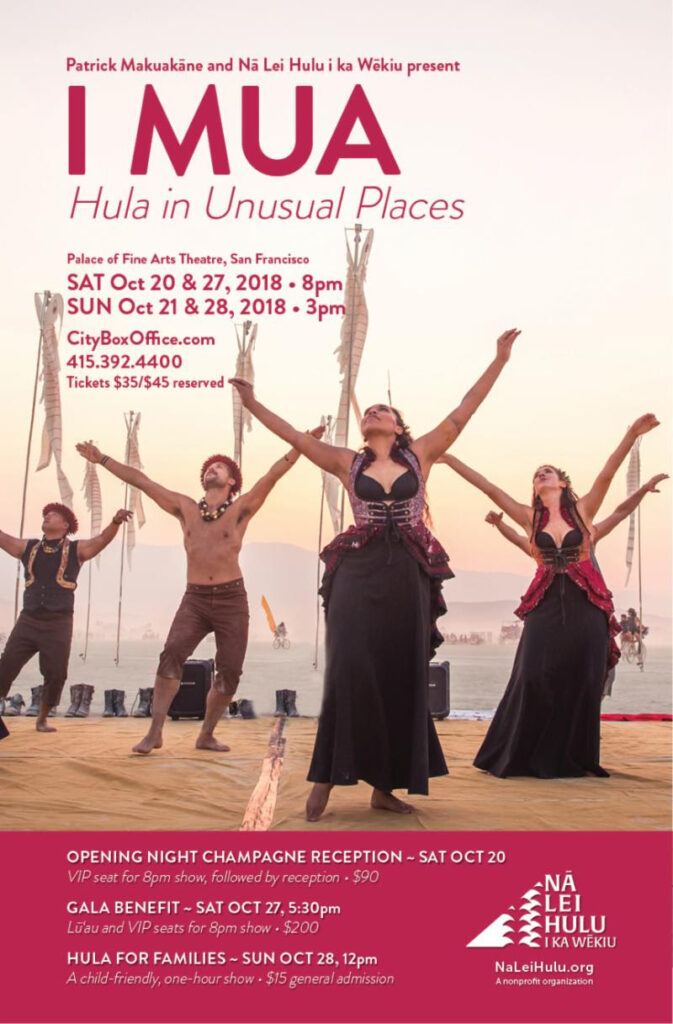
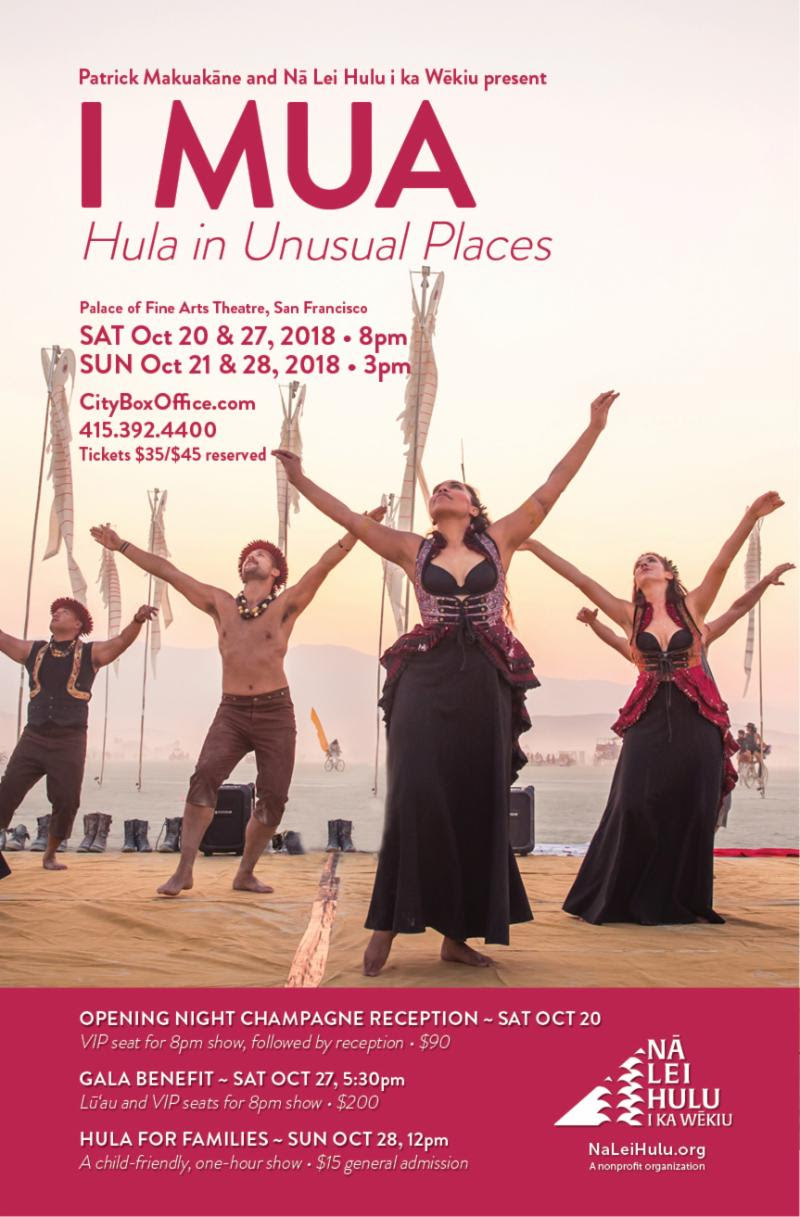
I MUA: Hula in Unusual Places
October 20 – 28, 2018 | Palace of Fine Arts, San Francisco
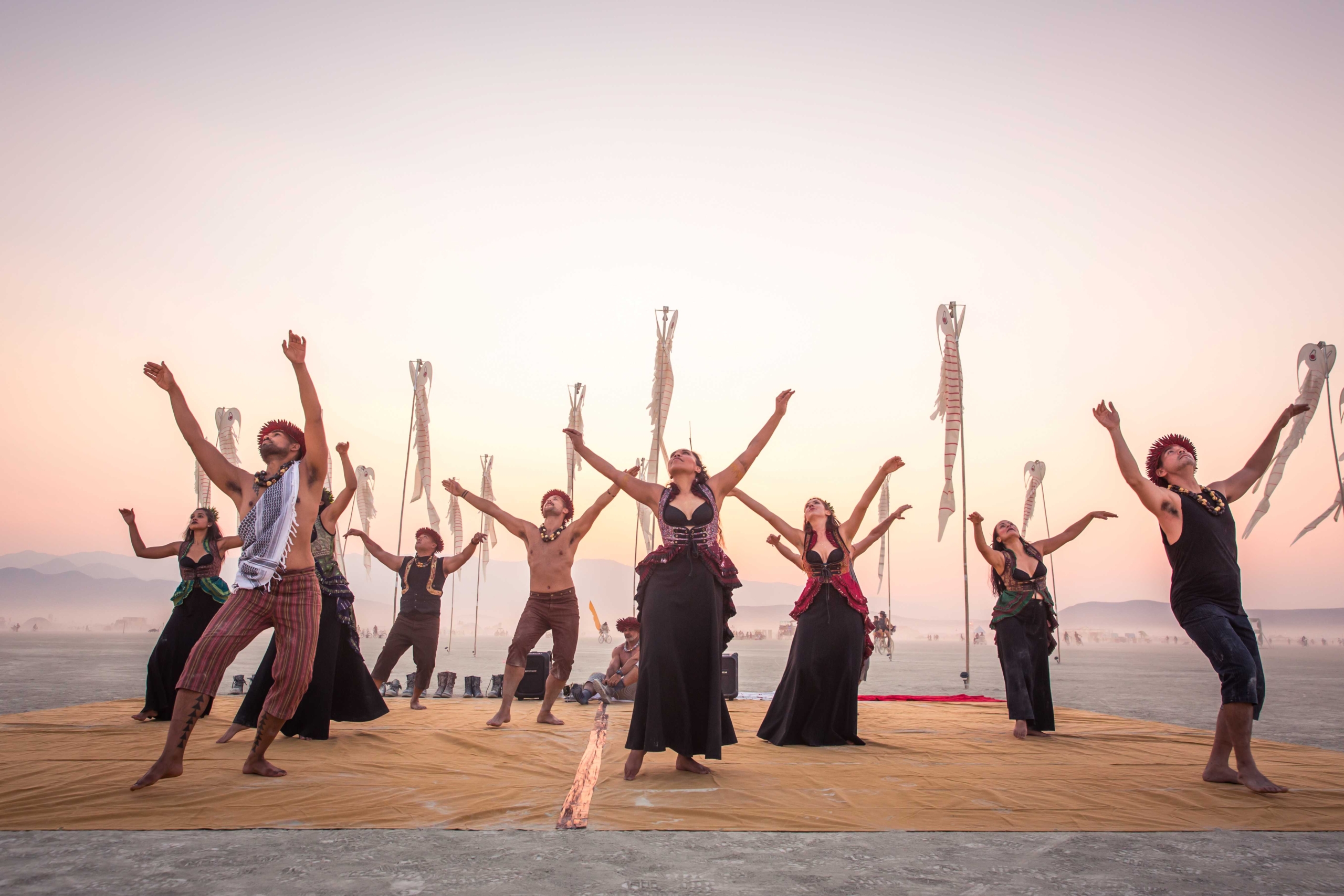
“I MUA – Hula in Unusual Places” which takes you to the desert, behind bars, to the streets of New York City, and to one of the grandest stages in San Francisco.
DATES:
Saturday, October 20 8:00 PM
Sunday, October 21 3:00 PM
Saturday, October 27 8:00 PM
Sunday, October 28 12:00 PM (Hula for Families)
Sunday, October 28 3:00 PM
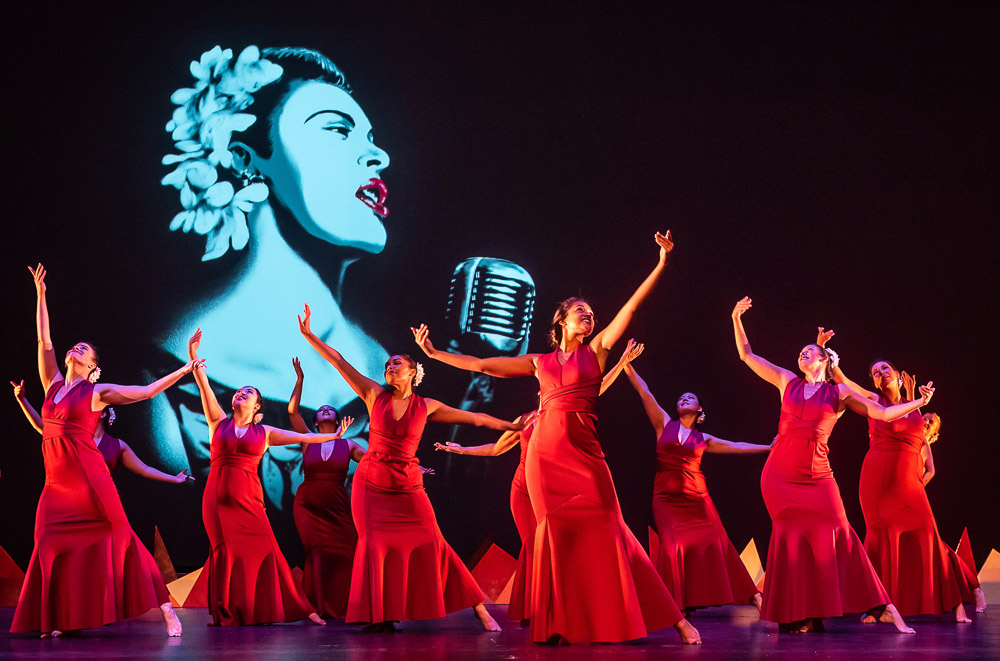
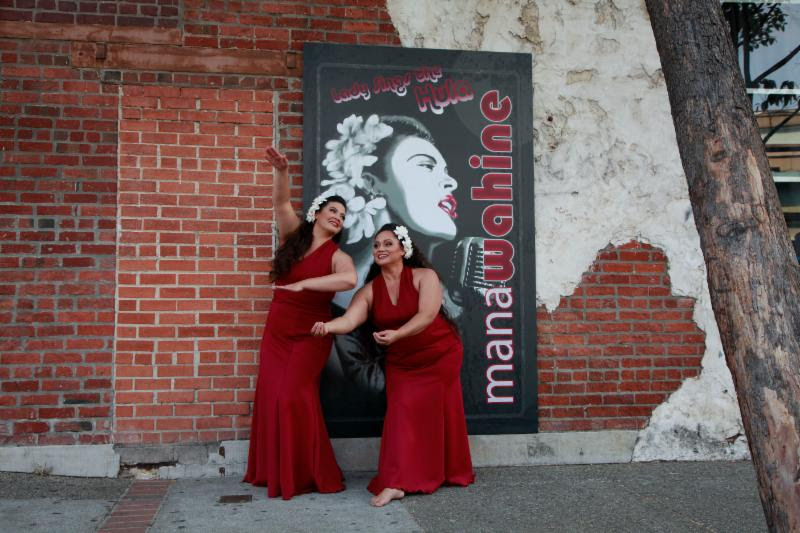

Hula Guyz
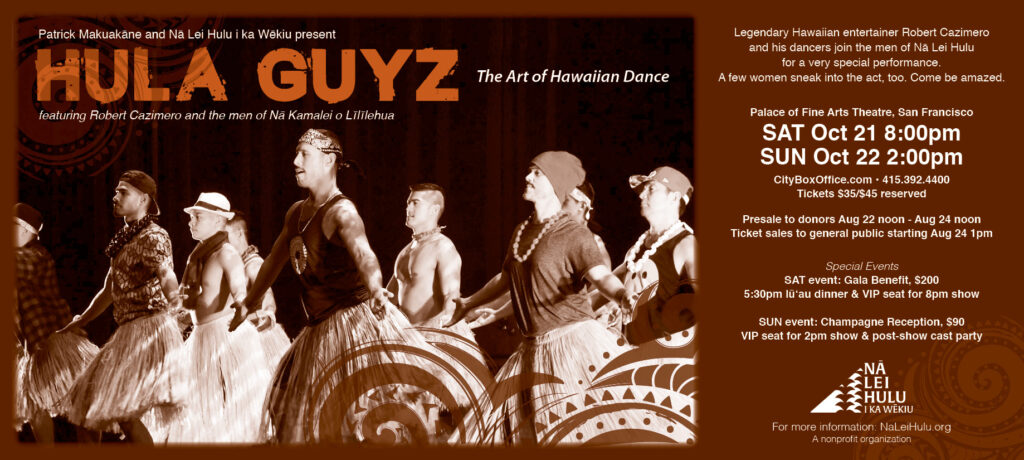
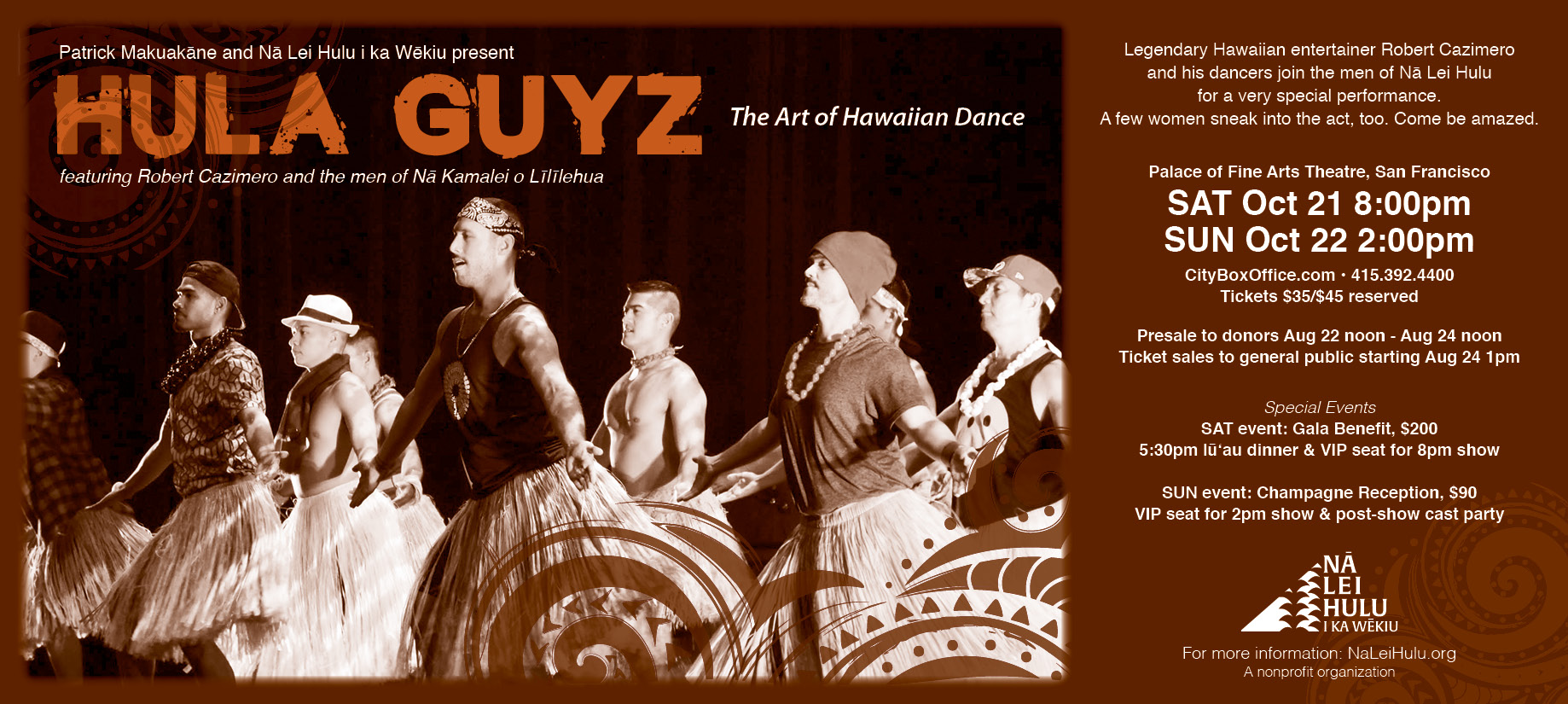
October 21, 2017 | Palace of Fine Arts Theatre, San Francisco
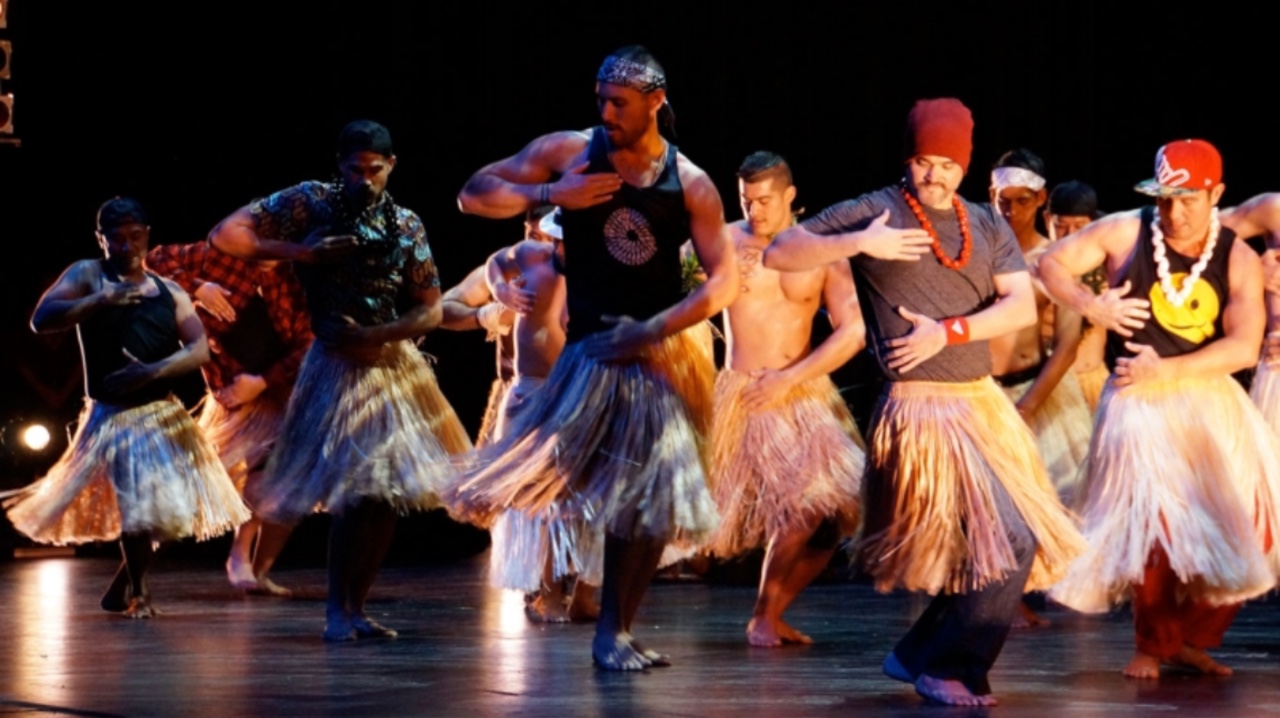
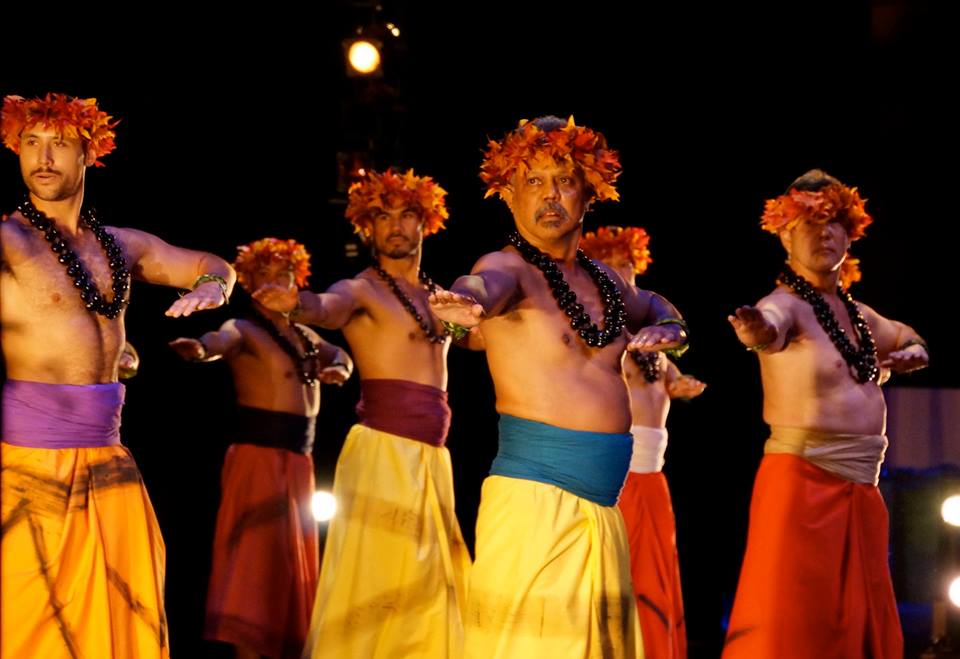
Featuring Robert Cazimero and the men of Nā Kamalei of Līlīlehua. Legendary Hawaiian entertainer Robert Cazimero and his dancers join the men of Nā Lei Hulu for a very special performance.
The Natives are Restless
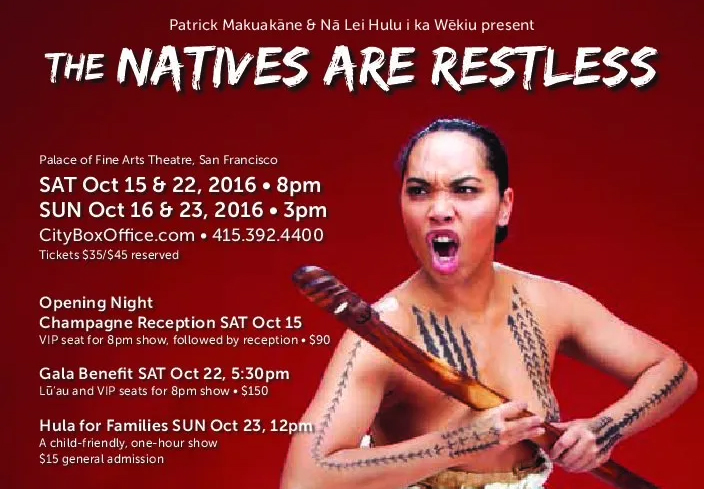
October 15 – 23, 2016 | Palace of Fine Arts Theatre, San Francisco
Sat Oct 15 Natives @ 8pm
Sun Oct 16 Natives @ 3pm
Sat Oct 22 Gala Event starts @ 5:30pm; Natives @ 8pm
Sun Oct 23 Hula for Families Show @ 12 Noon
Sun Oct 23 @ Natives 3pm
A Nā Lei Hulu favorite returns to the stage, reimagined
When The Natives Are Restless debuted in 1996, some audience members walked out. Some respected authorities on hula were just uncomfortable with Kumu Patrick Makuakāne’s dramatic break from tradition. But many dance critics could tell that they had witnessed something ascendant.
The Los Angeles Times praised the skill of the company and the inventiveness of its “visionary leader.” Dance professor Angeline Shaka calls Natives “a hula performance with teeth,” one that forces audiences “to confront the painful (and ongoing) repercussions of Hawai‘i’s history of contact and colonization.”
Those teeth haven’t released their grip over the past twenty years. Makuakāne’s hālau
has performed Natives again and again since its bold debut. Each time it has evolved slightly. This year, Makuakāne is moved to bring Natives back, conceiving the show more
dramatically than ever before.
He’s left certain dances intact, changed others, and added an entirely new second act to address the political and cultural issues now burning slowly through the islands like a finger of Pele’s fire.
Act I
Natives begins with a booming voice cutting through the darkened theater. In a disgusted tone, a man repeats missionaries’ real words about the Native Hawaiians—quotes that Makuakāne found in their journals. “Can these be human beings? [They are] almost naked savages…haters of God and inventors of evil things. The hula is a devil’s nest.”
The curtain opens onto a stunning tableau of two dozen bare-breasted and elaborately tattooed women of all ages, shapes, and sizes, sitting regally on stage. Resplendent in bustled skirts, they perform a seated hula with delicacy and beauty. The soft lights glance off their undulating arms and bare backs.
The voice that just boomed through the theater, decrying the “devil’s nest” of hula,
conveys anger and vindictiveness. But the women are the embodiment of grace. The
disjunction settles on each audience member differently. Let’s just say that few come out on the side of the missionaries.
Makuakāne’s anger at reading the missionaries’ journals sparked the creation of “Salva
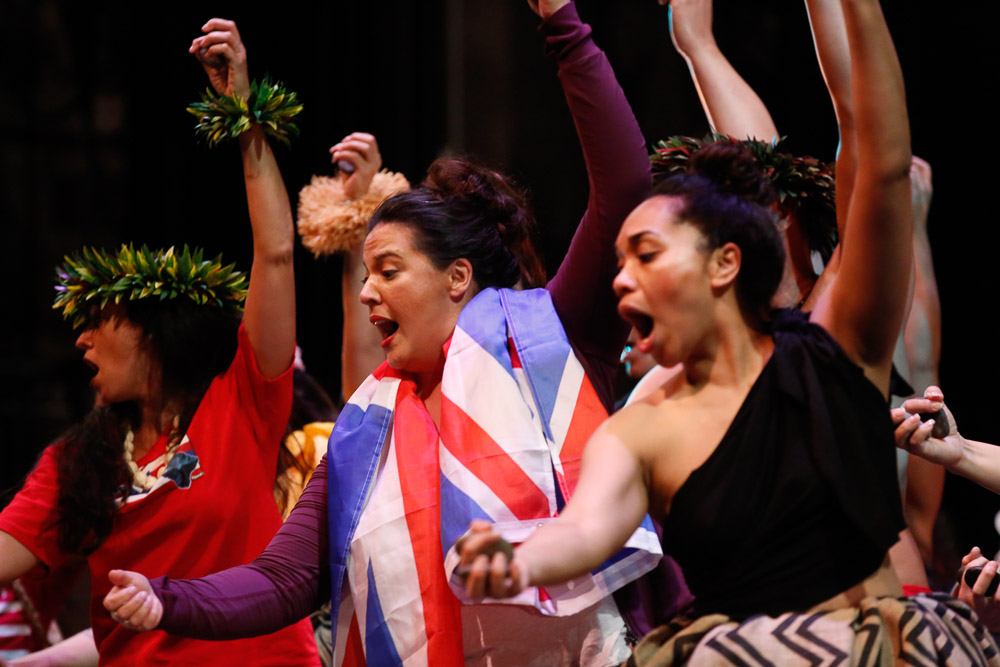
Mea,” the centerpiece of The Natives Are Restless. The relentless rhythms of the song, by the British band Faithless, were the perfect soundtrack for a rebellion that had roots in his childhood. “I appreciate the rituals and the symbols of Catholicism—the singing, the clanging of bells, the incense. But the precepts? The dogma? Forget it!”
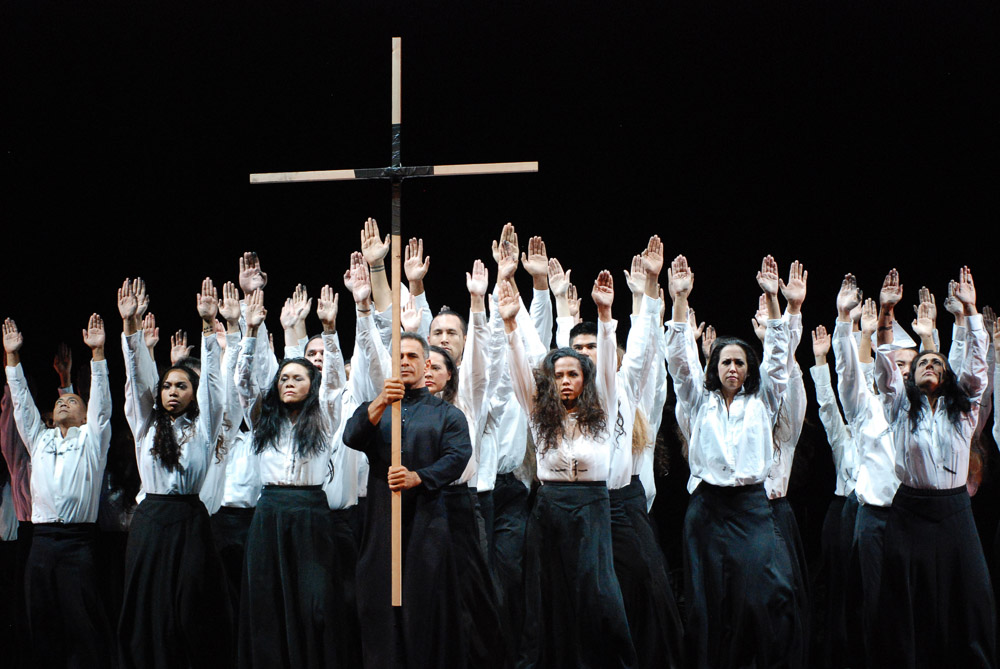
In “Salva Mea,” the company of forty male and female dancers is buttoned up tight in
long-sleeved white shirts and long black pants and skirts. One of them plants a simple cross in the middle of the stage. We have a church, a congregation. The music changes, and the dancers are suddenly in a line spanning the stage, stamping their feet in unison and moving forward.
They twitch their torsos left and right. At times they hinge at the waist, their arms zooming up behind them like demonic wings. At others they advance like a line of mercenaries,
expressionless. A black-robed priest, played by Makuakāne, charges onstage. He singles out one dancer, grabs her by the hair, and throws her over his bent knee. With a piece of charcoal he marks her forehead with a cross, rips open her blouse, and brands her on her bare chest. Then, done with her, he throws her to the ground and storms off. She struggles to get up, and, now disheveled, stumbles back to the line. She has been symbolically raped.
At the end of the dance, the priest climbs onto a mount behind the crowd of dancers
and thrusts the cross upward. They cluster below him, reverent, a white circle of desperate arms, reaching for redemption in a tangle of ecstasy, fury, ferocity, and docility. A native population has gone from graceful to industrious to violent, from naked to neatly dressed to wandering around in tatters, from fiercely independent to strangely malleable. The lights go black.
Act I now ends with “Kaulana nā Pua,” a patriotic anthem protesting the 1893
overthrow of the Hawaiian monarchy. The song is also known as “Mele ʻAi Pōhaku,” the “Stone-Eating Song,” because of a line in which the protesters say they would rather eat stones than take the promises of the spurious new government (Ua lawa mākou i ka pōhaku / I ka ʻai kamahaʻo o ka ʻāina, “We are satisfied with the rocks / The wondrous food of the land.”)
For a century, “Kaulana nā Pua” was considered so precious that dancing to it was
tantamount to disrespect for Native Hawaiians. By 1970, according to scholar Amy K. Stillman, “that conception carried the force of an edict.”
In The Hawaiian Journal of History, Stillman writes about new scholarship that
provided the perfect counter-argument—and catnip to Makuakāne. Two scholars revealed that they found an account by a historian from 1895. He had interviewed imprisoned counterrevolutionaries, who described the singing of the song as a way of honoring those who had supported the monarchy. Apparently, the prisoners “beat out the rhythm, thumping their drums and miming their scorn of the ‘heap of government money.’” They stamped their feet, twisted their heels, slapped their thighs, dipped their knees, and doubled their fists. In short, they performed the hula.
Makuakāne read the account of this discovery with great excitement. What about a
dance that pays homage to the prisoners, whose identification with the song was immediate and visceral? If ever a dance could mix gravitas and aggression, this was it.
Act II
When the curtain goes up on Act II of the new Natives Are Restless, the first tableau takes us to the year 2016 and a stunning assembly of people, overflowing into the wings. They are dressed in the bright, primary colors worn by the protesters now making a mark in the islands—like the multitudes who participated in the Aloha ‘Āina Unity March in August 2015. Some ten thousand people crowded Kalākaua Avenue, turning Honolulu’s tourist boulevard into a sea of red T-shirts; yellow banners; ti plants held aloft; and red, white, and blue Hawaiian flags. Marchers stopped frequently to chant, sing, blow conch shells, and plead for their causes—from blocking telescopes on Mauna Kea, a mountain sacred to Native Hawaiians, to forbidding GMOs in agricultural lands. Their activism was a wave of the Sovereignty Movement, which at its core is the argument that Native Hawaiians should have the same right to self-government and indpependence that has been granted other Native American peoples.
Among the first words of the onstage protesters will be the first lines of the contemporary chant “ʻO Ke Au Hawai‘i.” It imagines a day in which the descendants of the great chiefly clans of Hawai‘i will rise up, proud of who they are, and continue in the great tradition of
their ancestors: Auē e nā ali‘i ē o ke au i hala / E nānā mai iā mākou nā pulapula o nei au e holo nei / E ala mai kākou, e nā kini, nā mamo o ka ‘āina aloha, “O the chiefs of the past / Look upon us, the descendants of this time / Let us get up, the multitudes, the precious children of the beloved land.”
“Woe to the stones that have been strewn and scattered,” the chant goes on to say.
“Let the rocks be restacked so that a new home foundation can be made firm.”
Other dances in Act II celebrate recent efforts to rejuvenate the Hawaiian language and
to restore fishponds near Kāne‘ohe—an effort that combines ecology, economy, history, and culture in one fell swoop. There will be “odd pairings” that Makuakāne says he enjoys inserting into his shows and choreography, including a Hawaiian-language translation of the Beatles song “Come Together,” reimagined by Puakea Nogelmeier and reimagined again by Makuakāne. A piece praising ancient navigators will be paired with one praising the scientific stargazing that takes place at Mauna Kea. In Makuakāne’s vision, science and stargazing might be able to coexist with cultural traditions—perhaps on Mauna Kea, perhaps on some other mountaintop.
Like the original first act of Natives, the new second act will surely mutate, transmogrify,
and deepen over time, as Native Hawaiians continue to agitate and educate, to cry out in
protest and chant in homage to the ancients.
KANAKOLU: 30 Years of Hula
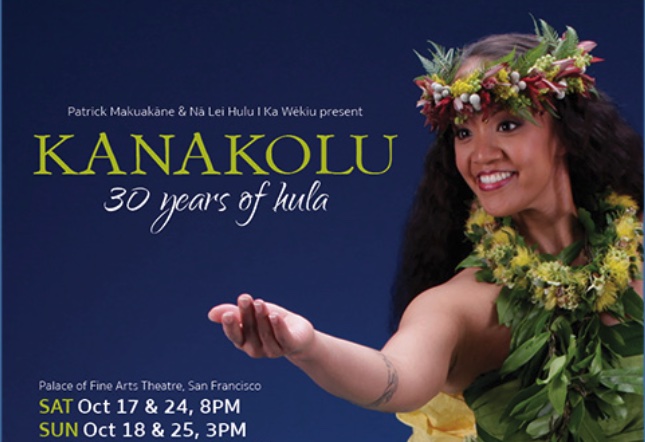
October 17 – 18, 24-25, 2015 | Palace of Fine Arts Theatre, San Francisco
Thirty years as a hālau, and still kicking. (Or should that be kaholo-ing?) “Those ‘uehe,” Kumu Patrick calls out from the stage at Daniel Webster Elementary School, referring to a step plié with a hip swish. “Please remember to keep the soles of your feet on the floor. I’ve been lax on that for the past decade or so.” His tone is slightly peeved. The dancers in his performing group are running through their warm-up. The kumu holds out his right hand and taps his fingers, one by one with the left, as if playing “this little piggy went to market.” He begins: “I can tell who practiced [index finger], who didn’t [middle finger], who thinks they don’t need to practice [ring finger], who needs to practice [pinky]. I know, you say to yourself, ‘I never thought I had to practice’—and some of you don’t. But if you don’t practice and you come to hula, you’d better be fabulous.”
It’s a little past noon on a Sunday in February 2015, and Kumu Patrick is leading company practice in the “downtime” of the year, between the big shows that happen each October. This time they’re rehearsing Kanakolu, their thirtieth-anniversary show, which is a kind of “greatest hits” of Kumu Patrick’s dances: perennial crowd-pleasers and bits of choreography that have, over thirty years, become known as the hālau’s signature pieces. (The critics sometimes differ from the crowds on such repertory shows. In 2007, Jennifer Dunning, of the New York Times, mused about whether “Mr. Makuakāne’s genial between- numbers banter has grown somewhat weary-sounding and too practiced” and whether the “novelty of seeing traditional-style Hawaiian dancing to music by Peggy Lee, Cyndi Lauper, and Tony Bennett” didn’t wear thin after a while. Though he doesn’t mention such feedback, Kumu Patrick is clearly bent on answering such critics with flawless dancing.) Thirty-five of the company dancers are lined up in six rows, some in sweats, some in skirts with elastic casings that gather volumes of cotton around the hips. Many of them are professionals in fields as diverse as massage therapy and banking, and Sunday is their lone rehearsal day of the week. Which may explain Kumu’s particular teaching style.
To make it perfect, to get everyone to perform together in a cohesive unit, you have to be exacting. “He’s much more forgiving of his dancers now,” says Makani daSilva, who started with him as a child and remembers him taping her hands to keep her fingers from splaying. “He has his moods,” notes Debbie Garcia, who, as the alaka‘i, or assistant teacher, in the hālau, watches him from a close remove. “But, unlike many kumu, he teaches as many classes as he can. As kumu, he plays multiple roles: the nurturer, the artistic director, and the critic.” Even as a benevolent patriarch, Kumu Patrick remains a perfectionist.
These may be the crème de la crème of his school, but he still pulls out every stop, scolding, badgering, inspiring, making metaphors, and giving a little hula history to help his troupe grasp not just the moves but the meaning. And not just the meaning but the feeling. Kumu Patrick is barefoot onstage, dressed in board shorts and a worn black T-shirt that says JEET KUNDO on the front, superimposed over an image of Bruce Lee, with red-and-white kanji characters on the back.
He starts the warm-up the way he starts every class he teaches, and the way his kumu did, by taking dancers through each of the ten basic steps of hula. The exact number of steps is an issue of great debate among hula dancers, but he sticks to ten. In the approximate order in which he teaches them, they are kāholo, kāwelu, kā‘ō, hela, lele, ‘uehe, lele ‘uehe, ‘ami, ‘ami kūkū, and ‘ōniu. (Occasionally he adds one more, ‘ai kāwele, if it comes up in a dance, and there are still others that only the performing company learns.) Kumu Patrick almost invariably follows the warm-up with his own version of “Kāwika,” the song praising King David Kalākaua that is a standard in all hula schools. After a few other standards, he turns to the numbers he is teaching his students for the next show. Because these are early rehearsals, he is not yet using his pahu drum. Instead, he stands behind a wooden lectern, banging it with a ferocity that would make even the Daniel Webster Elementary School principal cower. He pounds out the beat for “Ho‘olono ‘Ia Aku Ho‘i Kaua‘i” (Kaua‘i Has Now Been Heard”), a mele composed in honor of King Kalākaua’s birthday jubilee on November 16, 1886.
He has choreographed it as a slow, deliberate dance, with grand sweeps of the arms, subtle tilts here and there, and a few strong and swift motions to punctuate the others. “That ‘āina,” he says, stopping and referring to the word for “land” and to a moment where the arms move quickly from pointing groundward (along with the entire torso) to hinging in front of the chest, parallel to the ground, as the torso unbends. “When you come up, it’s a nice, soft lift,” he barks, then softens. “Sometimes you imagine a lift, but your kino, your body, doesn’t actually lift. But if you imagine it, the lift is there. Think about cinnamon and the whiff of fragrance it gives. You don’t dump it into your cookies. It must be soft.” He continues, launching into a sermonette he repeats over and over, not just in beginner classes but with these company veterans, too. “Old hula like this are very simple, not too many motions,” he begins. “The story is not in the hand—the story is in the mele. Because we lost the language, our hula movements became more dramatic.” With those last words, he thrusts both arms into a dramatic V to demonstrate. “It’s not this, either”—he bends his elbows and makes his palms like a Balinese dancer. “Or this”—he kicks in a parody of a cancan girl. Most songs from the past two centuries have a rhythmic refrain, a sort of caesura in between verses, called a pā, which allows the dancer a chance to go on autopilot for a few seconds—to collect the self and get ready for the next verse. The pā for “Ho‘olono,” however, is hardly a rest. The arm and leg extend to one side at a forty-five-degree angle, jutting out, tucking in, then jutting out again, while the torso bends to that side and the opposite arm extends upward. Oh, and the hands rotate forward and back, along the axis of the arm. Think triangle pose in yoga, only your hand isn’t resting on your shin, you don’t get to hold the pose, and your palms are rotating to the beat. “In this pā, you are really working,” Kumu Patrick says, then plunges the knife in. “But you cannot look like you are working.” Practice continues, and he keeps up a constant patter—partly to motivate his dancers, partly to give them tiny rests, partly to coax virility and femininity out of a group of people of varying body types, ages, and sexual preferences: “Gents, don’t get moloā,” he admonishes, using the word for “lazy.” “Ladies, that’s an easy lean—not a tango move. Like this.” He tilts backward gently. “Hiki nō?” In other words, “Got it?” “Boys, what is that? Are you doing a man hop?” He turns over the teaching of “If I Could Be with You,” a seductive female dance set to the song by Louis Armstrong, to three of his veteran dancers. They watch, critique, and coach the others. “Some of us—maybe I’m one—look like we are doing shoulder exercises,” says Janet Auwae-McCoy. “You’re not stretching your sore neck here! You are being sexy.” “The feminine mystique,” he says admiringly, as he watches. “Some have it, some don’t.” Eight months later, when Kanakolu is performed, the dance critic Allan Ulrich comments in his San Francisco Chronicle review on the results of such painstaking rehearsals. Perhaps Kumu Patrick's singular accomplishment, he suggests, has been “to weld a group of committed part-time dancers into a troupe that moves with a singular impulse. When these 37 dancers fill the stage with impeccable swaying unisons and pelvic rotations, and delight us with a complex gestural language, you begin to wonder where amateur ends and professional begins.”
Celebrating three decades …When he first presented hula mua like “First Time Ever I Saw Your Face,” Kumu Patrick earned a bit of a reputation as a bad boy of hula. Some in the hula world considered him a showman, his style “too theatrical.” Since then, he has gained a few bona fides, not to mention packed performance halls and attention from mainland critics. And, of course, sanction from Aunti Mae Klein after his ‘ūniki, which gave him the hula equivalent of a gold medal and a brass ring, all wrapped in a blue sash. Which isn’t to say his dances aren’t intentionally mischievous. Give him a subject, any subject, and he may well poke fun at it. Take the controversy over the birthplace of Hawai‘i’s first “native son” president, Barack Obama. That gave us “The Birth Certificate Hula,” which begins by teasing those who need a lesson in geography: “We’re a long way from Africa/ Honolulu doesn’t look like Kenya/ So you have to do . . ./ ‘The Birth Certificate Hula.’” Or consider “The Hawaiian War Chant,” originally penned as a love song in the 1860s by Prince Leleiōhoku, the brother of Kalākaua. English lyrics were written in 1936 and the tune changed by Johnny Noble, the king of hapa-haole, literally “half-white,” music. This bastardized version of the prince’s song has been performed by Tommy Dorsey, the Muppets, and Hawai‘i’s first comedienne of hula, Hilo Hattie. In Kumu Patrick’s hands, it has become “Ta-Hu-Wa-Hu- Wai.” Women in slinky white and men in dress black do the Charleston, the Watusi, and anything in between. Their hula is pretty close to the movements performed by the most unknowing dancers, whose hips swish and hands flop without the slightest understanding or meaning. It’s a parody of a parody, by dancers who are able to code-switch with their hips. All in the family In the old days, a hālau was carried on within a literal family; today it thrives through a figurative one—and a surprisingly inclusive one, at that. Nā Lei Hulu has plenty of gay students, one transgender one, and many more straight ones.
There are mothers and daughters in the same class, brothers and sisters, husbands and wives. There is one three-generation family. And at practice on Sunday, mothers dance with their newborns in slings, toddlers sit on quilts and fiddle with iPads, and Kumu Patrick more than occasionally invites one to sit with him onstage, pointing out Mommy or Daddy in line. One of those daddies is Jason Laskey, a half-Japanese, half-Irish-English-German-French senior investment manager at Wells Fargo. Laskey met his wife, Lola, in the performing group, and their two young sons come to many rehearsals. Laskey joined the hālau in 2001 and says that Kumu Patrick’s charisma is what has kept him coming back. “You just want to hear what he has to say,” Laskey adds. “He’s well read and articulate and finds ways to explain things to us.” As a way of explaining what distinguishes Kumu Patrick as a teacher, and the particular challenges of teaching after the diaspora, Laskey mentions a legendary peak on O‘ahu’s windward coast that figures in “Pua ‘Āhihi,” a dance inherited from Aunti Maiki. “Sixty or seventy percent of his students have never seen Lanihuli,” Laskey points out, “but he finds a way to help them imagine the peak by regaling them with stories about it.” There are no soloists, per se, in the company, but among the men, Ryan Fuimaono is hard to miss. He’s tall and half-Samoan and can’t keep the smile off his face when he’s dancing. After having performed with a Polynesian revue as a child in San Diego, at family gatherings, and then with various Bay Area groups, Fuimaono says he has found his place in Nā Lei Hulu. “I like how meticulous he is, in creating a vision but also in terms of our lines and spacing,” says Fuimaono about Kumu Patrick. “He’s a Virgo, I’m a Virgo,” he adds, half-jokingly. A social worker for the City of San Francisco, Fuimaono appreciates the structure of the hālau, which, he says, allows for expressive freedom. “It’s comforting to be held by a group of people,” he says, “to be able to tap into certain emotions and feel safe in the group.” Like many members of the company, as well as the larger hālau, he mentions the sense of being part of a family. He grew up Samoan-style, with lots of siblings and cousins around, big family meetings, and a way of resolving family conflicts that reflected the chief system of the village back in Samoa as much as any American model.
The sense of family merges with a sense of place and a feeling about that place: “I live in the Mission, we are based in San Francisco, and in dancing and chanting to honor San Francisco, we give back. It feels very Polynesian.” In fact, the Hawaiian concept of ‘ohana—extended clan, chosen family, or important community—is a significant operating principle here. Classmates are “hula brothers and sisters.” The dancer who teaches featherwork is Uncle Herman. The short, stout lady in the back who wears a red-and-gold skirt, collects the money, and scolds you if you get out of line is Aunty Bobbie. A combination of strong aunt, wise elder, and bookkeeper, she is an indispensable part of the functioning of the hālau. This is, after all, extended family as arts organization. But even in a smaller and more old-school hālau, various members take on other prescribed roles to help the group. These positions were once called kōkua and today are called “social media manager,” “grantwriter,” and “costume designer.” The traditions of hula demand respect for all elders, and certainly for the kumu. This translates into both loyalty and fealty to a sometimes arcane set of rules and behaviors that have been passed down for generations. Called “protocol,” these rules range from taking off your shoes as you enter class and greeting fellow students never with a handshake, always with a kiss, to trusting in a kumu’s every decision. There can be an odd side to such traditions—and to belonging to a new family, even if a chosen one. Affection for the kumu can border on slavishness. Group dynamics can get dicey. Psychologists might note rampant projection. The ability to manage the expectations of 350 students is part of the job description of any kumu. But not all kumu are able to exhibit not just the “charisma” that Jason Laskey notes, but a kind of persuasiveness that would be called “leadership” in the MBA world. Kumu Patrick seems to have a special ability to find hidden talents in his motley group of students and former students—among them multimedia designers from Apple, former secretaries with wicked organizational skills, and business owners able to whip together a fund-raiser—and then convince them to become highly effective volunteers…. Staying tethered Kumu Patrick has learned a lot about himself over the past thirty years. One thing that’s been an issue from the beginning—a common one for creative types—is how to blend his personal and his professional life. All his romantic partners have had to learn to “live with my mistress,
which is hula,” he says, laughing. “I tell them at the beginning, ‘We’re in a canoe. You have to either pick up this paddle and help or get off.’” Bob Davis was his first partner in San Francisco, and his way of paddling was to give Kumu Patrick critical feedback. In fact, Davis is largely responsible for the talk-story format Kumu uses in his shows. “He told me he didn’t feel included when he watched my early shows,” Kumu Patrick explains. “He wanted much more context, so I developed that format to bring the audience in.” Since 2010, Kumu has been in a relationship with Rob Edwards, a real estate agent and former city planner. They share a loft apartment in Dogpatch, under the freeway, heavy on the black décor, the Apple devices, and the coconut juice in the fridge. Occasionally an orchid graces the long table in the kitchen area. And then there is the tongue-in-cheek kuahu, or altar, made of giant rubber Incredible Hulk hands always hung with dried lei. Edwards is a fixture at Kumu’s shows, helping set up and break down dressing rooms, delivering flowers, and watching dress rehearsals. He often acts as a sounding board as well. “My students can’t tell me that something doesn’t work,” Kumu Patrick says. “I need a Michelle Obama—someone who can say, ‘What was that?’” He lets out a long, hearty laugh. Then he shares Edwards’ perspective on his role as a kumu: “Rob says he has never witnessed someone vacillate so wildly between unparalleled generosity and unbridled tyranny.”
Of course, Kumu Patrick also has sounding boards with whom he is not romantically involved. “Julie Mau has been with me since 1990,” he says. Mau is the general manager of the hālau, a San Francisco firefighter, and a daughter of Wai‘anae, on the rough leeward coast of O‘ahu. “She brings that Hawaiian local perspective,” he says. But his closest creative partner, emotional supporter, performance soloist, and sometime muse is his own hula sister Shawna Alapa‘i. The two danced with The Brothers Cazimero, moved from Hawai‘i to the Bay Area, founded their respective hālau, and later traveled together to Hawaii for ‘ūniki training with Aunti Mae. “You need a peer to bounce things off of. She is the yin to my yang,” he says, using the Chinese metaphor but then returning to the Hawaiian notion of duality, of ever-present male and female principles. Then he chucks the language of philosophy and turns to Hawaiian Creole: “I can make prettier lei than she can, and she can kick my butt paddling a canoe.” As time goes on, Kumu Patrick has begun to step back and allow new collaborators to step up. After all, his once-jet-black hair is now steely gray and he is preparing for a second hip surgery. Now that he is fifty-five, some new realities are hitting home. “I have a different level of energy,” he says. “But it causes me to be more present. I don’t want to miss anything my students are going through. And it means that when I illustrate a move, they better take notice, ’cause I’m only doing it once!” He began giving high-level training to twenty students in 2002. It took loads of work on their part—research, preparing for class, learning a new hula style—and dogged perseverance, but some of those students have taken on new roles. Debbie Garcia teaches in Kumu Patrick’s absence and choreographs dances; John Shima and Debbie Tong play ipu and ‘ukulele in class and adopt a behind-the-scenes role outside it. Makani da Silva and Julie Mau teach the new children’s classes.
“The Sunday group now knows how to rehearse without me,” Kumu Patrick says. “Now that Debbie and John are able to lead the other classes, I am freed up to be creative in new ways. I can prepare for Merrie Monarch. I can take my kumu hat off and put my student hat back on, taking classes again. I can go to LA to pick fabrics for the dresses for this next show.” “In the old days, I would only leave hula here for a hula reason. Now I can call in sick. Or have a guilt-free vacation.” It takes prodding, though, to get him to admit to nonhula diversions. “A good portion of my life outside hula is spent at the gym,” he says. “Inside my body is a fat Hawaiian boy screaming to get out, so I keep going to the gym and only let him out on special occasions.” But he does admit to taking time to see modern dance, ballet, and theater. In the spring of 2016, he was trying to score tickets to Hamilton in New York City. …While Kumu Patrick tries to stay on top of mainland culture, he says it is even more important for him to stay bound to Hawaii, to “the foundation.” He goes back to the island as often as possible and brings Hawaiian kumu, scholars, musicians, and craftsmen to San Francisco to offer his students workshops and special programs. (The ethnomusicologist Amy K. Stillman notes that this penchant for collaboration is a hallmark of California hālau.)
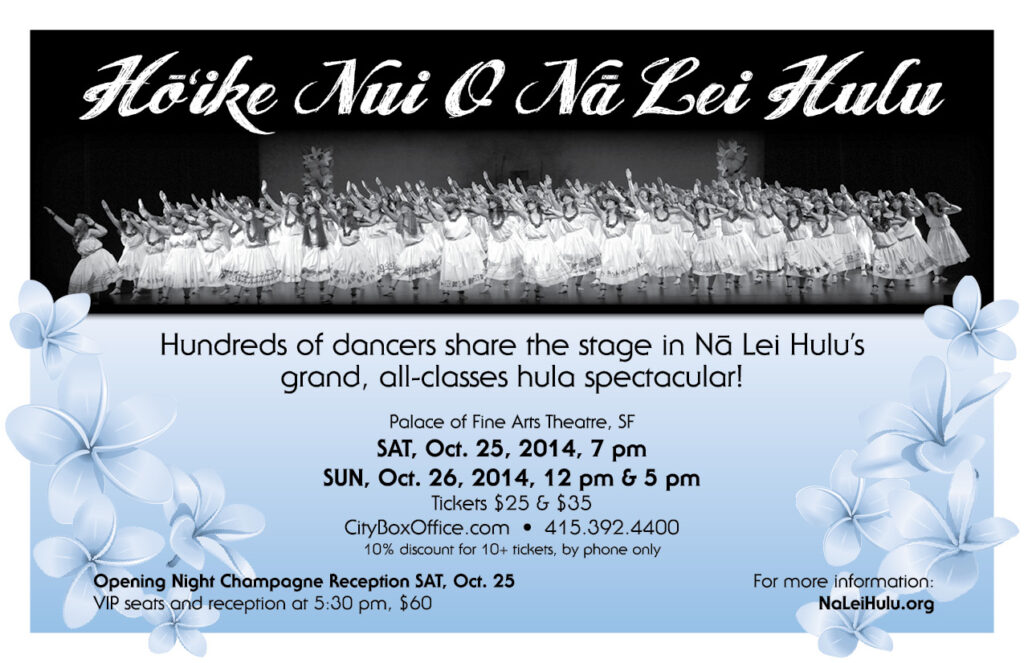
In 2014, Kumu Patrick achieved a hālau first: he took a four-month sabbatical in Honolulu, returning to San Francisco just once a month to check on his classes. He gave himself a relatively light choreography load by staging, as with his annual October show, a hō‘ike nui, or “grand recital,” featuring a total of two hundred dancers from all but his most beginner class. (Members of the performing group were able to take a rest and play just a backstage role.) In their heterodox totality, they gave a proud image of the hālau’s diversity and size. They danced kahiko; they danced ‘auana. They danced sacred dances; they danced sassy dances. The aunties danced; the keiki danced. And even the kumu danced. At the end of the first half, a collection of men from different classes danced “Noho Paipai,” the rocking-chair hula. Kāne (men) were scattered throughout different classes, vastly outnumbered by women. “It was an unusual chance to dance together, just kāne,” says one of them, Daniel “Pono” Sternburgh, who speaks Hawaiian and sprinkles his sentences with Hawaiian words, including Kū, the Hawaiian equivalent of the Roman Mars or the Greek Ares. “Kumu surprised us all by jumping in. What a privilege! Very few kumu dance with their students. There was such Kū energy—a real ‘man’ moment.”
Hula Guyz and Hōʻike Nui
October 18, 24 – 25, 2015 | Palace of Fine Arts Theatre, San Francisco
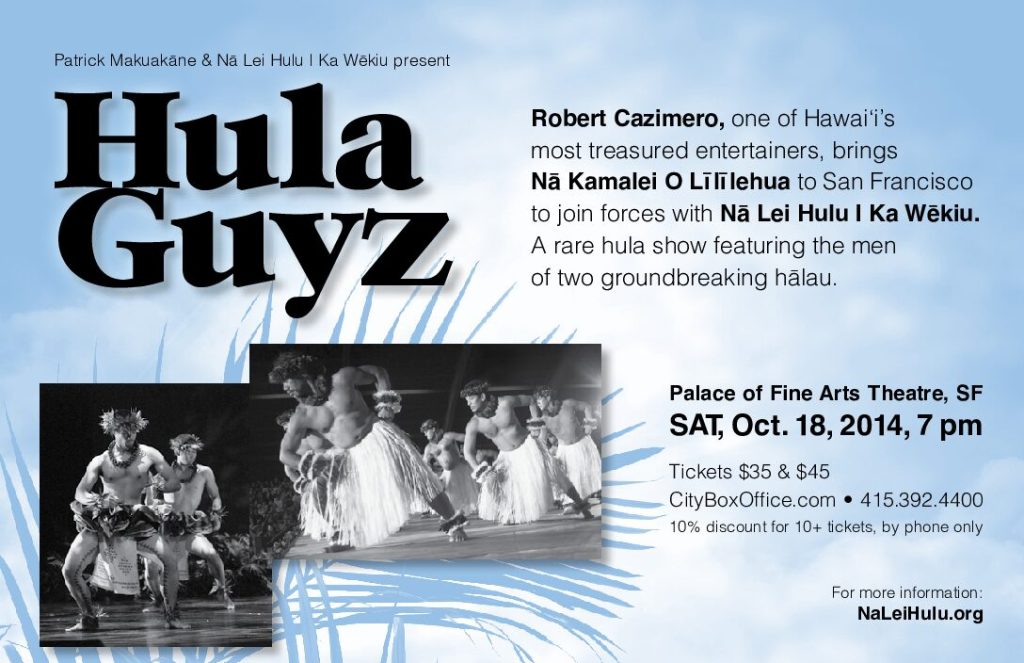
Two special shows: Hula Guyz, featuring Robert Cazimero’s Nā Kamalei O Līlīlehua joining forces with Nā Lei Hulu I Ka Wēkiu; and Hōʻike Nui o Nā Lei Hulu, a grand, all-classes hula spectacular. HulaGuyz_Ad_0614_F
Ka Leo Kanaka: The Voice of the People
October 19 – 20, 25 – 27, 2013 | Palace of Fine Arts Theatre, San Francisco
May 9 & 10, 2014 | Hawaii Theatre, San Francisco
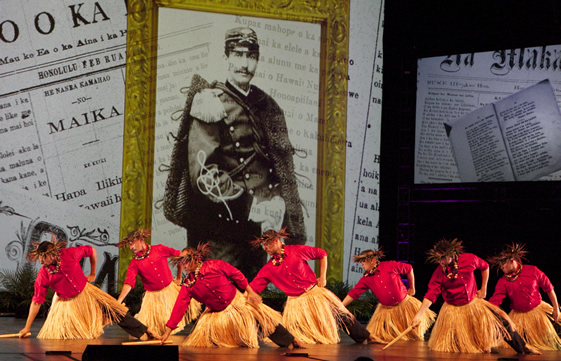
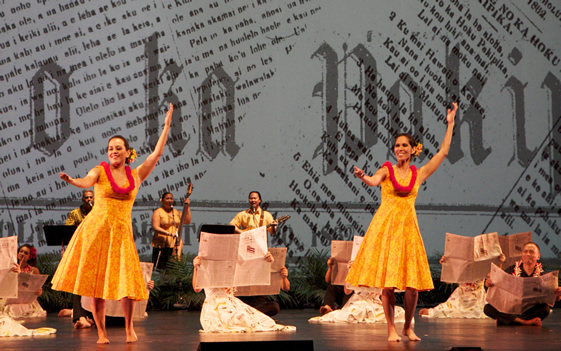
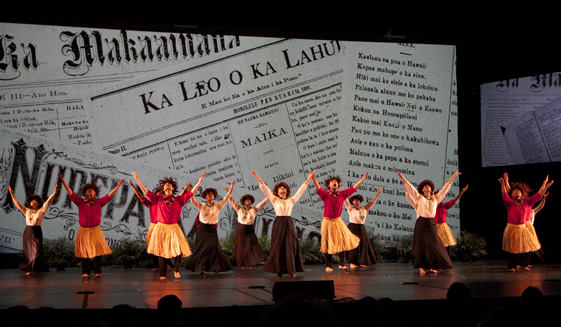
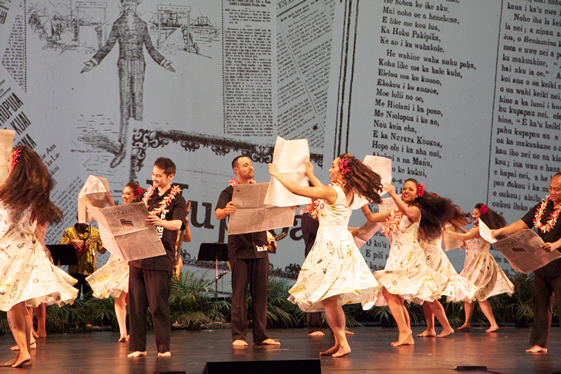
Poems by kings, serialized epics about gods and goddesses, political essays – all this and more inspired Patrick Makuakane’s latest evening-length hula show, “Ka Leo Kanaka” or “The Voice of the People.” wLast year, members of Makuakane’s halau (hula school) volunteered with the yearlong Ike Kuokoa project to help transcribe and digitize an archive of Hawaiian language newspapers.
Reviews:
- Island tales inspire Palace of Fine Arts hula show (SFGate.com)
- Denby Fawcett: A Hula Show Devoted to Early Hawaiians’ Love of News (CivilBeat.org)
The Hula Show: 2012
October 20 & 21, 26-28, 2012 | Palace of Fine Arts Theatre
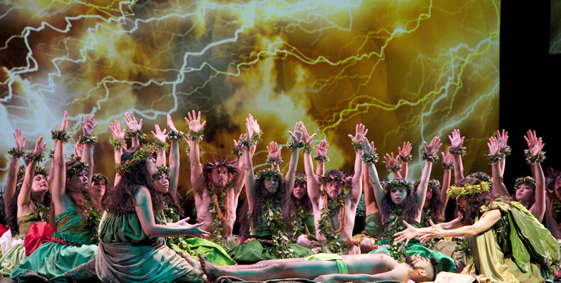
Review ‘The Hula Show 2012’ review: Sultry hip-hop SFGate.com
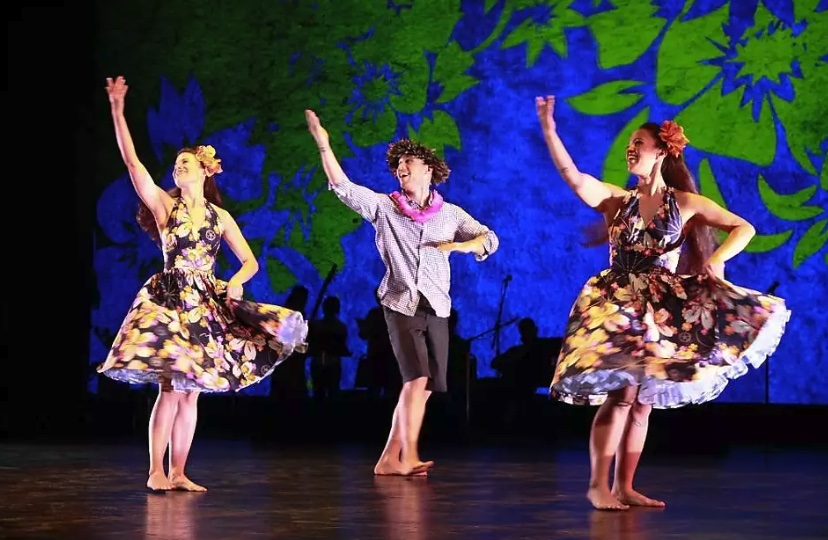
“The members of Makuakane’s halau, or hulu academy, tell their stories with remarkable simplicity, but perhaps most stirring is the demonstration of power from unison. A particularly impressive section for the women playing puili (split bamboo sticks) gives crisp definition to rhythmic structures on top of an eloquent rise and swell of movement. And in scenes that are oftentimes as earthy as they are beautiful, the 30 men and women of Na Lei Hulu revel in Makuakane’s sly humor.
In “Birth Certificate Hula,” a group of men with one woman dance a fast-paced satire to a song about the controversy surrounding Barack Obama’s birth certificate. Born in the same hospital as Obama and only weeks apart, Makuakane recounts with glee how he compared his birth certificate with the president’s. He found no irregularities.
On a more sultry note, Makuakane creates a sensual cross between hula and vogue for the women of the halau to Willis’ smoky cover of “Word Up.” The men take a grittier turn to the electronica of Faithless’ “Salva Mea.” Surprisingly, hula fits together with hip-hop moves seamlessly. Who knew that the downward pull of the hips and legs countered by an upward vector of the arms and eyes is both perfectly hula and perfectly hip-hop?
Guest Shawna Alapaʻi lent an elegant presence to two solos, and longtime Na Lei Hulu musicians Lihau Hannahs Paik on bass and Kellen Paik on guitar contributed lilting accompaniment.ʻ
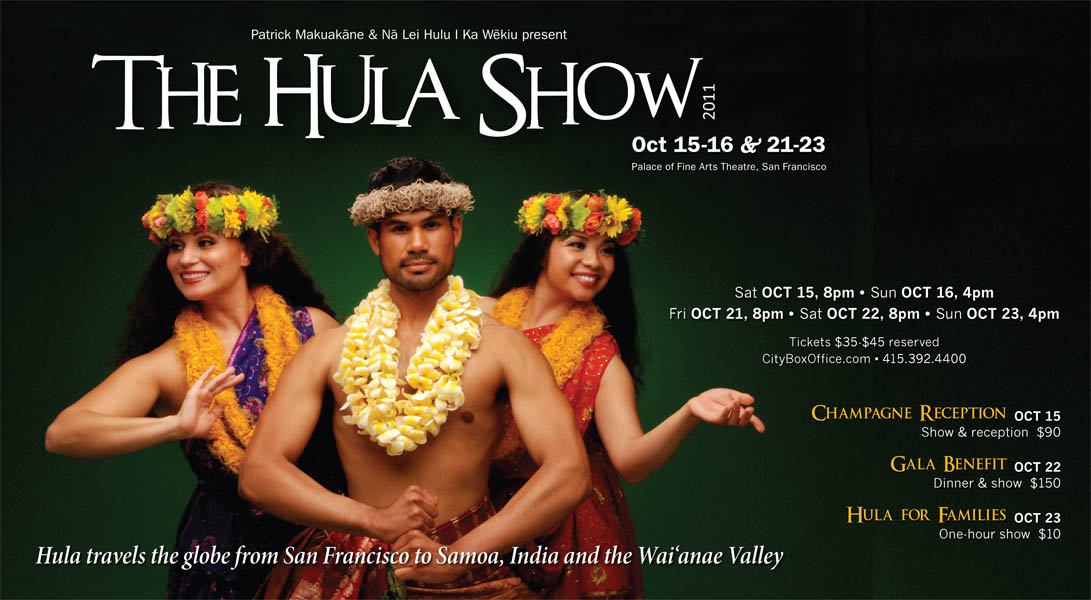
The Hula Show: 2011
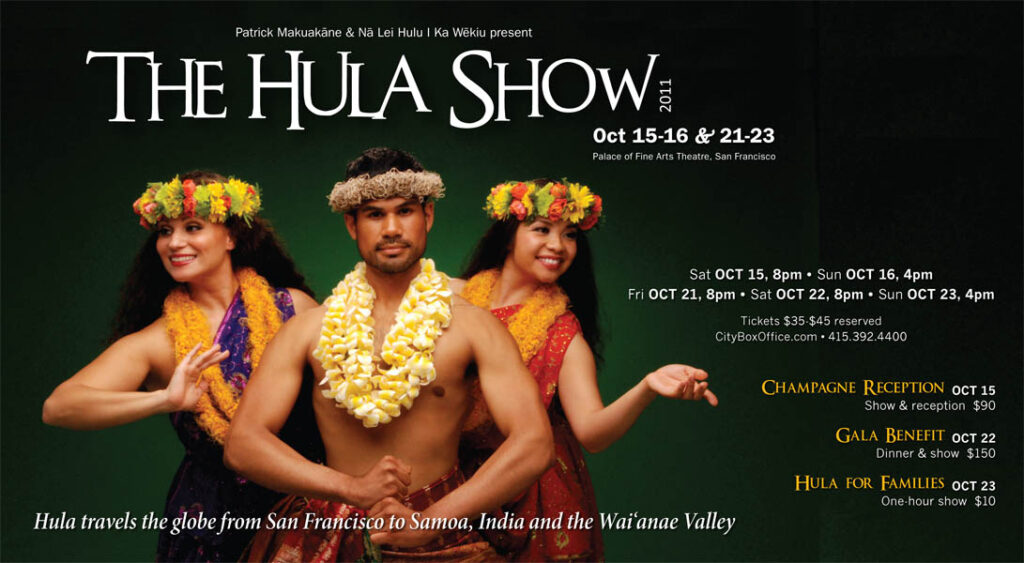
October 15 – 16, 21 – 23, 2011 | Palace of Fine Arts Theatre, San Francisco
Review: Patrick Makuakane discusses Na Lei Hulu I Ka Wekiu (SFGate.com)
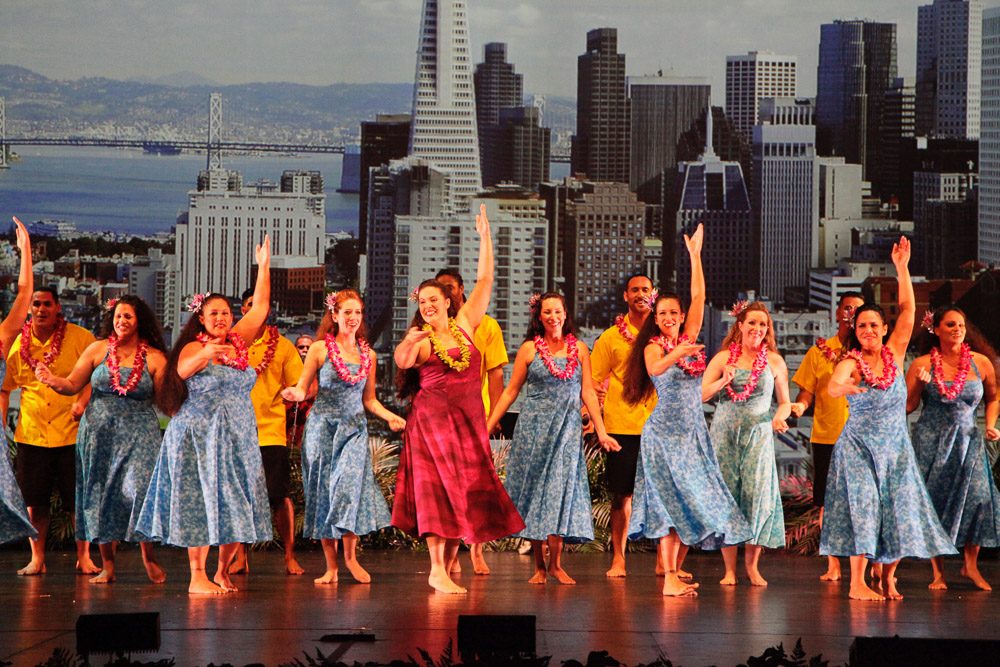
ʻWith a critical eye, Patrick Makuakane stands at a podium on stage and surveys 36 dancers standing in lines before him.
All belong to the performing troupe of his halau, Na Lei Hulu I Ka Wekiu, and they’re several hours into a daylong session of hula practice in the multipurpose gym at Daniel Webster Elementary in Potrero Hill.
There’s a faint scent of sweaty kids, floor wax and construction paper rather than plumeria or pikake. It’s mid-September, a month before they present their annual show at the Palace of Fine Arts. Slightly elevated on stage, Makuakane looks down at the dancers. He starts explaining what movements he wants – “bigger steps” – and demonstrates. The dancers watch. There are no questions. He steps behind a podium, and drums on it. He watches and stops the dancers. He demonstrates again and resumes his pounding. Then he watches. After the beat ceases he says:
“Much better. When I said ‘bigger steps,’ I didn’t mean bigger, sloppy steps.”
The dancers relax. Their teacher, or kumu, is pleased, and in this halau – as in any school for hula – the kumu rules absolutely.
Do the dancers ever push back? “No, no, no, no, no,” said Makuakane earlier in the week with an amused bark of a laugh. “You can’t say no to the kumu. You may have grumblings and go out with your hula brothers and hula sisters and say, ‘What is he doing?’ But you don’t say anything to him. It’s in the culture.”
Driven to dance
At a break in the Sunday session, a few dancers eat lunch in the schoolyard, cheerfully mocking themselves. “Yes, kumu,” chirps Maile Apau-Norris, 34, a workers’ compensation manager with a private insurance company who drives from Sacramento with three other dancers. “Yes, kumu,” pipes in Linda Zane, 44, a freelance graphic designer who comes in from the Peninsula with her 18-year-old daughter, Lehua, a student at the College of San Mateo who chimes in, “Yes, kumu.”
Giggly laughter bounces off the school’s walls. “We love our kumu, we love our kumu,” chants Janet Auwae-McCoy, sounding more like a singing Chipmunk than a 41-year-old analyst with the state Department of Toxic Substances Control. “We love our kumu.”
Makuakane, 50, understands the dedication that has the dancers practicing all day, every Sunday, at least 10 months of the year. “As a kumu, you are many things, brother, sister, mother, father. … They’re fully on board and they’re very trusting,” says Makuakane, who, as a young man in Honolulu, treated his kumu, Robert Cazimero, with the same respect.
Yet it was while dancing with Cazimero, a leading figure in the 1970s resurgence of Hawaiian culture and music, that Makuakane decided to “step it up.” He moved to San Francisco, where he graduated from San Francisco State with a physical education degree and launched a career as a personal trainer to support his hula habit.
“The most difficult thing about leaving Hawaii was leaving hula,” says Makuakane, who founded Na Lei Hulu I Ka Wekiu (“the many feathered wreaths at the summit, held in high esteem”) in 1985, the year he arrived in the city.
“When I first moved here and told people I was a hula teacher, the comments were unbelievable, and so inappropriate,” says Makuakane. “People were really incredulous. ‘Hula? And men do it?’ People thought you only saw it in hotels with dancers in coconut bras. They thought it was done to attract tourists – not that it was attached to the culture.
“I laugh about it now, but it was very frustrating in the early days,” says Makuakane. But even then, the Bay Area supported a hula network. News spread that a Cazimero dancer was teaching. It was like car-crazy kids learning the new drivers ed teacher had trained with Mario Andretti.
Today, Makuakane teaches hula full time, as he has for 10 years. Every two years, he starts a new class with 150 to 200 students. People enroll for many reasons. Some want to stay connected to home; others yearn for the Hawaii glimpsed as a visitor. Many seek a fitness routine.
“Then they realize it’s hard work. … They must learn language, the chants, learn the history, learn about the environment. It’s not just 5-6-7-8,” says Makuakane counting out a hula beat. “You’re learning why 5-6-7-8.”
Dedicated students
Slowly, students “remove themselves,” as he puts it.
The process reduces classes to 40 or 50 very dedicated people, from children to people in their 80s. They all learn movements that draw on “the natural environment, the breezes, the warmth of the sun, the land, the trees … and then you dress yourself with the greenery of the land,” says Makuakane.
“There’s a strong pull to the land. … That’s why there’s no leaping, we don’t spin too much. We stick close to the ground, to Mother Earth, to Haumea.”
Makuakane selects the creme de la creme of his students for the performance troupe. Among them are Jason Laskey, 34, an investment manager with Wells Fargo; his Honolulu K-12 schoolmate Jenny Des Jarlais, 34, an editor at BabyCenter.com; Ryan Fuimaono, 31, a social worker at Glide Community Housing; and Rose Guthrie, 21, a UC Berkeley senior who grew up on Potrero Hill. She’s an archaeology major, focusing on Hawaii.
The performing group, supported by students in the other classes, began putting on a really big show each autumn in 1996. It’s always a sellout, with the exception of 2008, the year the economy receded. Makuakane makes no apologies for choreographing to songs such Roberta Flack’s “The First Time Ever I Saw Your Face” because it gives new audience members a way in to more traditional works.
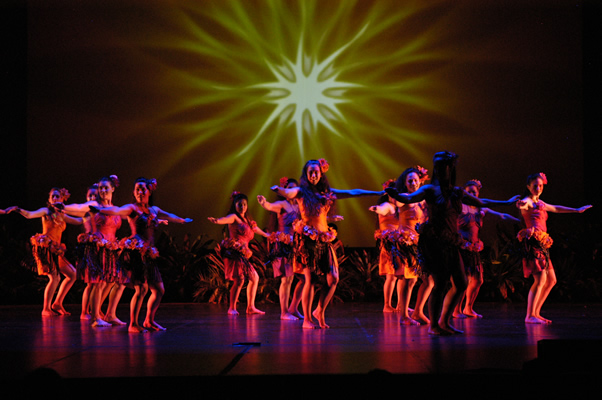
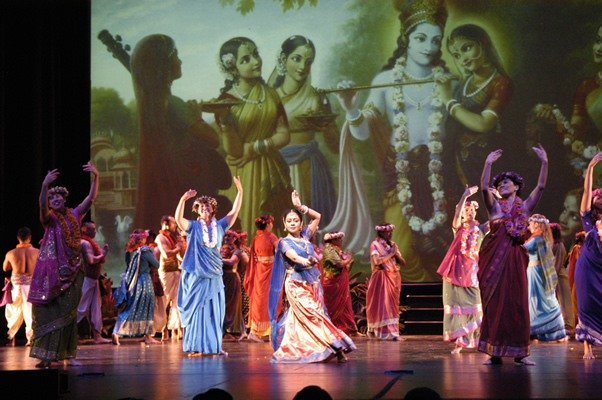
This year the show will present hula danced to music from India, Samoa, Turkey, Spain and Waianae. It includes Hanohano Kapalakiko, a suite of chants celebrating historical bonds between Hawaii and San Francisco.
“It is not traditional hula,” says Makuakane. “We execute a variety of dance styles; some of it is very modern. But the foundation for the movement is in hula vocabulary. The movement enhances the poetry; it’s all about embodying the mele (song or music), not overtaking the mele.”
Shift in direction
Makuakane credits Cazimero for pointing him toward nontraditional hula. “He raised many eyebrows experimenting, and that inspired me to try something different, to evolve hula. Hula mirrors your life. It’s different now than it was 200 years ago, it’s different in San Francisco from Hawaii.”
In 2003, Makuakane returned to Hawaii to study traditional hula with Mae Klein. In his 20s and 30s, Makuakane says he wanted hula to be exciting, but as an older dancer he could “see the pristine beauty in those dances. … It doesn’t need to be changed. Now, when I am choreographing difficult pieces, if I’m stuck, I’ll look to traditional dance and movement. It always seems to work.”

25 Years of Hula: The Hula Show 2010
October 16 – 23, 2010 | Palace of Fine Arts Theatre, San Francisco
Review: Na Lei Hulu I Ka Wekiu presents “25 Years of Hula” (StarkInsider.com)
In honor of its 25th Anniversary, Kumu Hula Patrick Makuakāne and his award-winning dance troupe, Nā Lei Hulu I Ka Wēkiu, return to the Palace of Fine Arts Theatre for six performances only (October 16-24) with 25 Years of Hula, a retrospective that pays tribute to the company’s vast body of work. Featuring several of the most popular dance pieces from the past quarter of a century, Nā Lei Hulu I Ka Wēkiu will also feature a full-length version of the newly commissioned piece, “Kumulipo” – a series of dances inspired by the epic 2000-line Native Hawaiian creation chant that is nature’s song of origin. “Kumulipo” was commissioned by a 2010 Individual Artist Commission grant from the San Francisco Arts Commission.
Known for their trademark hula mua – which brings the ancient Hawaiian dance form into the modern realm by setting traditional hula movements to decidedly non-Hawaiian music resulting in a theatrical experience that is visually captivating and culturally rich – as well as hula kahiko – the traditional pre-Western style of Hawaiian dance – Nā Lei Hulu I Ka Wēkiu has garnered critical and audience acclaim throughout the San Francisco Bay Area and beyond. In 2006, Patrick Makuakāne was honored with the Malonga Casquelourd Lifetime Achievement Awards by World Arts West / San Francisco Ethnic Dance Festival for excellence in ethnic dance. Most recently, the troupe won an Isadora Duncan Dance Award (The Izzies) for Best Company for their performance of Roberta Flack’s “The First Time Ever I Saw Your Face” at the 2009 San Francisco Ethnic Dance Festival. The Izzies honor local dance artists and promote the diversity and vitality of the Bay Area dance community.
Among the pieces featured in 25 Years of Hula are “Hula’s Bar and Lei Stand,” a disco-inspired tribute to Honolulu’s most famous gay bar featuring Matthew Martin, one of San Francisco’s premier drag queens, “The Flower Duet” from the opera Lakme, in honor of King David Kalākaua, who was instrumental in reviving hula in the late 1800s after it had been banned by the missionaries and “Salva Mea,” Nā Lei Hulu’s iconic piece that reflects on the arrival of missionaries to early 19th century Hawaii.
25 Years of Hula will play six performances only at San Francisco’s Palace of Fine Arts (Bay & Lyon Streets). Performances are: Saturday, October 16 at 8 p.m., Sunday, October 17 at 3 p.m., Friday, October 22 at 8 p.m., Saturday, October 23 at 8 p.m. and Sunday, October 24 at 3 p.m. A one-hour family matinee designed especially for children and families is scheduled for Sunday, October 24 at 12 p.m. There will be an opening night champagne reception immediately following the performance on Saturday, October 16, as well as a gala benefit Lu’au and silent auction on Saturday, October 23 at 5:30 p.m.
MELE KUHIKUHI – SONG LIST 25 YEARS OF HULA
ACT ONE
Maikaʻi Ka ʻŌiwi O Kaʻala – traditional
ʻAuʻa ʻIa – traditional
Walk With Me – Moby, from the CD,album Wait for Me.
Lord’ʻs Prayer – traditional
Salva Mea – Faithless, from the CD single, “Salva Mea” (tuff mix).
pPost- production remix, Patrick Makuakāne.
The Flower Duet – Leo Delibes, from the oOpera, Lakmeé
He Aloha Nō ʻO Honolulu – Lot Kauwē
Aia I Waimanalo Kō Nuʻa Hulu – traditional
ʻAuhea Wale ʻOe E Ta Ua ʻUlalena – Nakulula
Aloha Ka Manini – Lot Kauwē
Hualālai – Dennis Kamakahi, from the CD, album Ka Pua Hae Hawaiʻi, by Nā Palapalai
Pāpālina Disco Megamix – Various artists, remixed by Patrick Makuakāane
History Repeating – The Propellerheads, featuring Shirley Bassey,
from the album CD, decksdrumsrockandroll
ACT TWO
Hānau Ka ʻUku Koʻakoʻa – traditional
Hānau Ka Iʻa – traditional
Hānau Ka Naonao – traditional
Hānau Ke Poʻo Waʻawaʻa – traditional
Ua Ao… Puka – Moby, from the CD single, “Go” (iIn dub mix).,
Post- production remix, Kris Kanoho.
Ka Pua Mohala – Puakea Nogelmeier
Every Time – Lustral
The First Time Ever I Saw Your Face – Ewan MacColl, from the album CD, Best of Roberta Flack
The Gift (2010 Remix) – Way Out West, 2010 remix. P post- production remix, Patrick Makuakāne.
O Ka ʻAu Moana – Lucia Tarallo Jensen
Manu ʻŌʻō – traditional
Wanting Memories / Maikaʻi Nā Pua – Sweet Honey in the Rock / Manu Boyd
Aia I Pōliko – Patrick Makuakāne
Love U More – Sunscreem/Patrick Makuakāne