Roxie Theater, SF | October 24, 2022. Q&A with Directors Hinaleimoana Wong-Kalu, Dean Hamer & Joe Wilson and Editor Bill Weber following the screening!
On Honolulu’s famed Waikiki Beach stand four giant boulders placed as a tribute to the four legendary mahu–individuals of dual male and female spirit-who brought the healing arts from Tahiti to Hawaii long ago. Although the stones have survived for centuries, their story has been hidden and the respected role of mahu erased. The Healer Stones of Kapaemahu documents the trail of post-colonial suppression through the eyes of a Native Hawaiian director, herself mahu, and uses rare archival materials, new historical findings, and vivid animation to bring the unexpurgated story back to life.
Directed by Hinaleimoana Wong-Kalu, Dean Hamer, Joe Wilson, 2022. 56minutes.
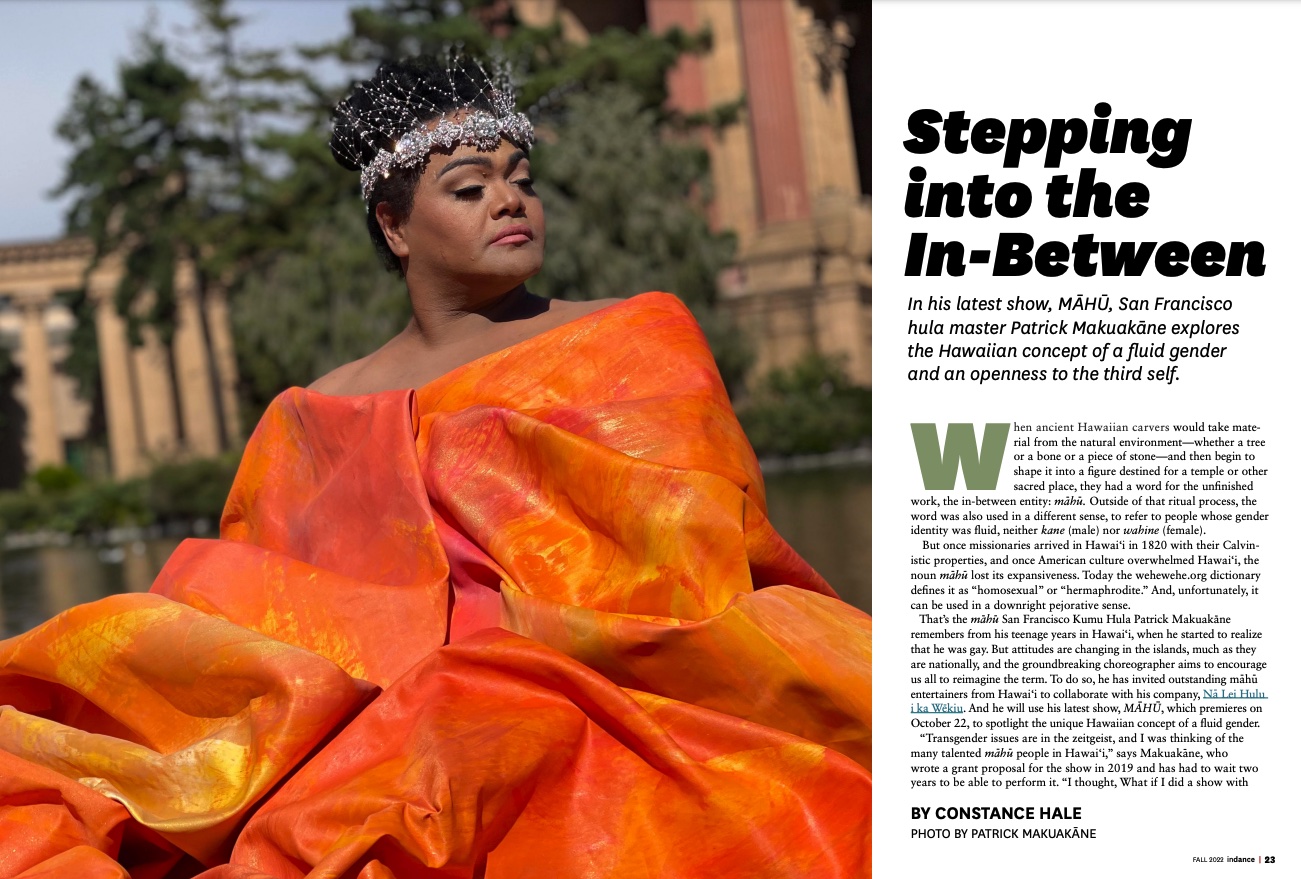
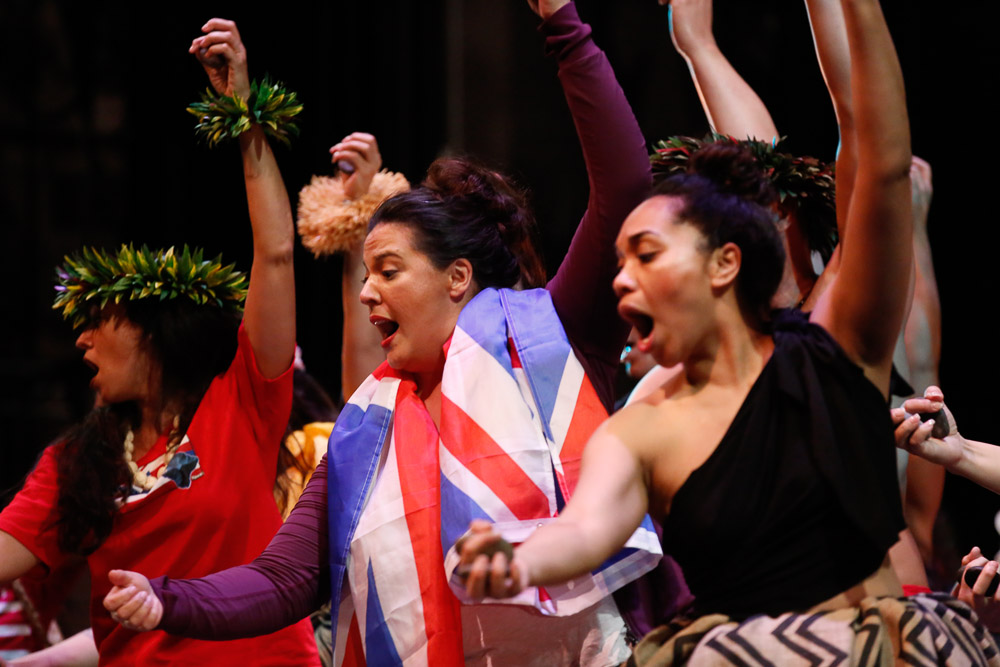
In his latest show, MĀHŪ, San Francisco hula master Patrick Makuakāne explores the Hawaiian concept of a fluid gender and an openness to the third self.
When ancient Hawaiian carvers would take material from the natural environment—whether a tree or a bone or a piece of stone—and then begin to shape it into a figure destined for a temple or other sacred place, they had a word for the unfinished work, the in-between entity: māhū. Outside of that ritual process, the word was also used in a different sense, to refer to people whose gender identity was fluid, neither kane (male) nor wahine (female).
But once missionaries arrived in Hawai‘i in 1820 with their Calvin- istic properties, and once American culture overwhelmed Hawai‘i, the noun māhū lost its expansiveness. Today the wehewehe.org dictionary defines it as “homosexual” or “hermaphrodite.” And, unfortunately, it can be used in a downright pejorative sense.
That’s the mahu San Francisco Kumu Hula Patrick Makuakāne remembers from his teenage years in Hawai‘i, when he started to realize that he was gay. But attitudes are changing in the islands, much as they are nationally, and the groundbreaking choreographer aims to encourage us all to reimagine the term. To do so, he has invited outstanding mahu entertainers from Hawai‘i to collaborate with his company, Nā Lei Hulu i ka Wēkiu. And he will use his latest show, MĀHŪ, which premieres on October 22, to spotlight the unique Hawaiian concept of a fluid gender.
“Transgender issues are in the zeitgeist, and I was thinking of the many talented mahu people in Hawai‘i,” says Makuakāne, who wrote a grant proposal for the show in 2019 and has had to wait two years to be able to perform it. “I thought, What if I did a show with transgendered artists who sang for us while we danced? I didn’t want to take a political stance, per se. I just wanted to let people hear them sing and watch them dance, because their artistry is so powerful.”
Yet Makuakāne acknowledges that celebrating such artists, and thereby celebrating the respect given to māhū people in ancient Hawaiian society, is inherently political. (There has never been a dance production or any kind of artistic showcase that has ever used that term in its name.) The show intends to move past the shame and ridicule that LGBTQ Hawaiians have endured by being labeled māhū. Instead it invites them to feel pride. Most important to him, though, is to “reclaim the idea of their authenticity and their humanity.”
The concept of a third gender, where individuals can express both their masculinity and femininity freely, is not unique to Hawai‘i. Parallels include hijra in Hindu society, Two-spirit Native Americans, the fakaleiti or fakafefine of Tonga, and the fa’afafine of Samoa.
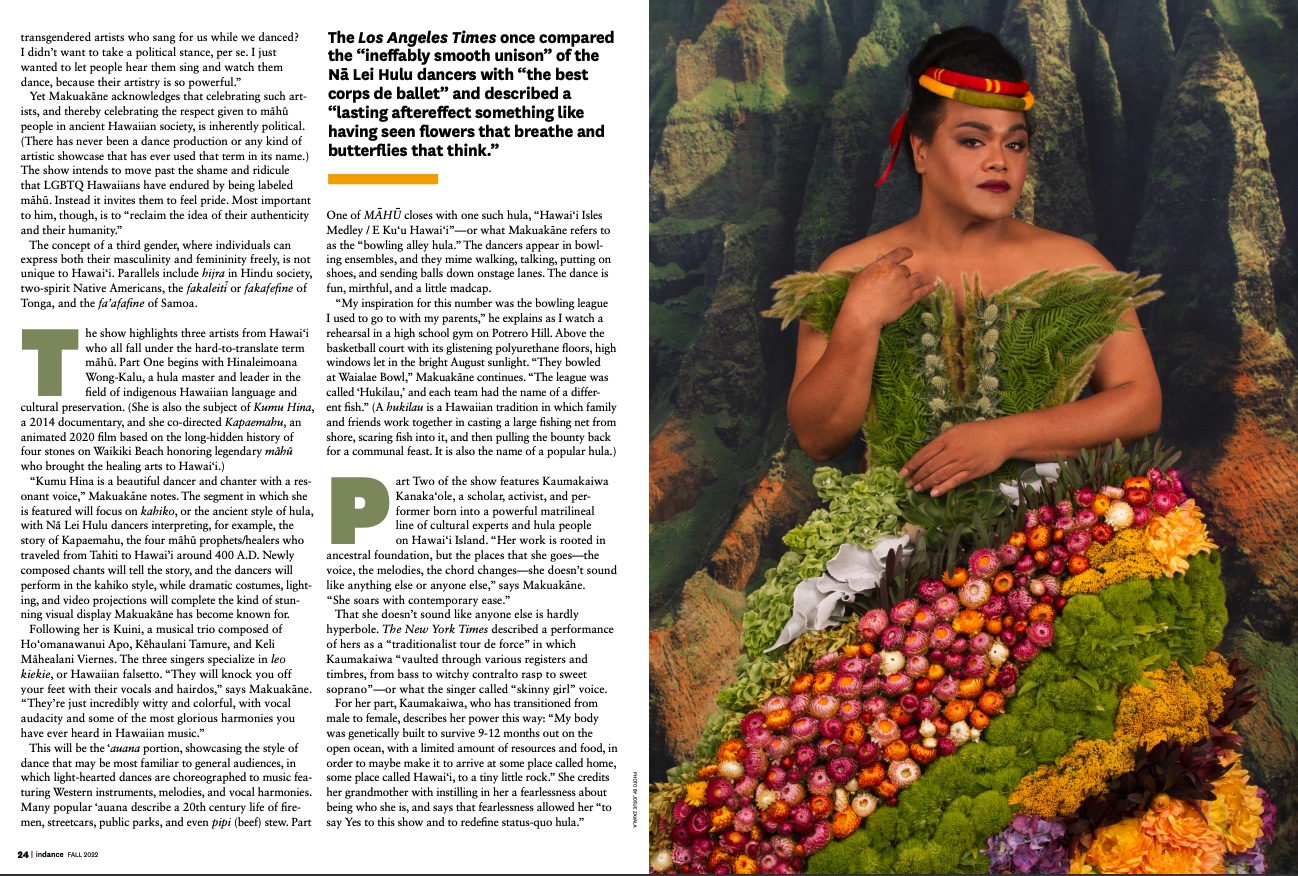
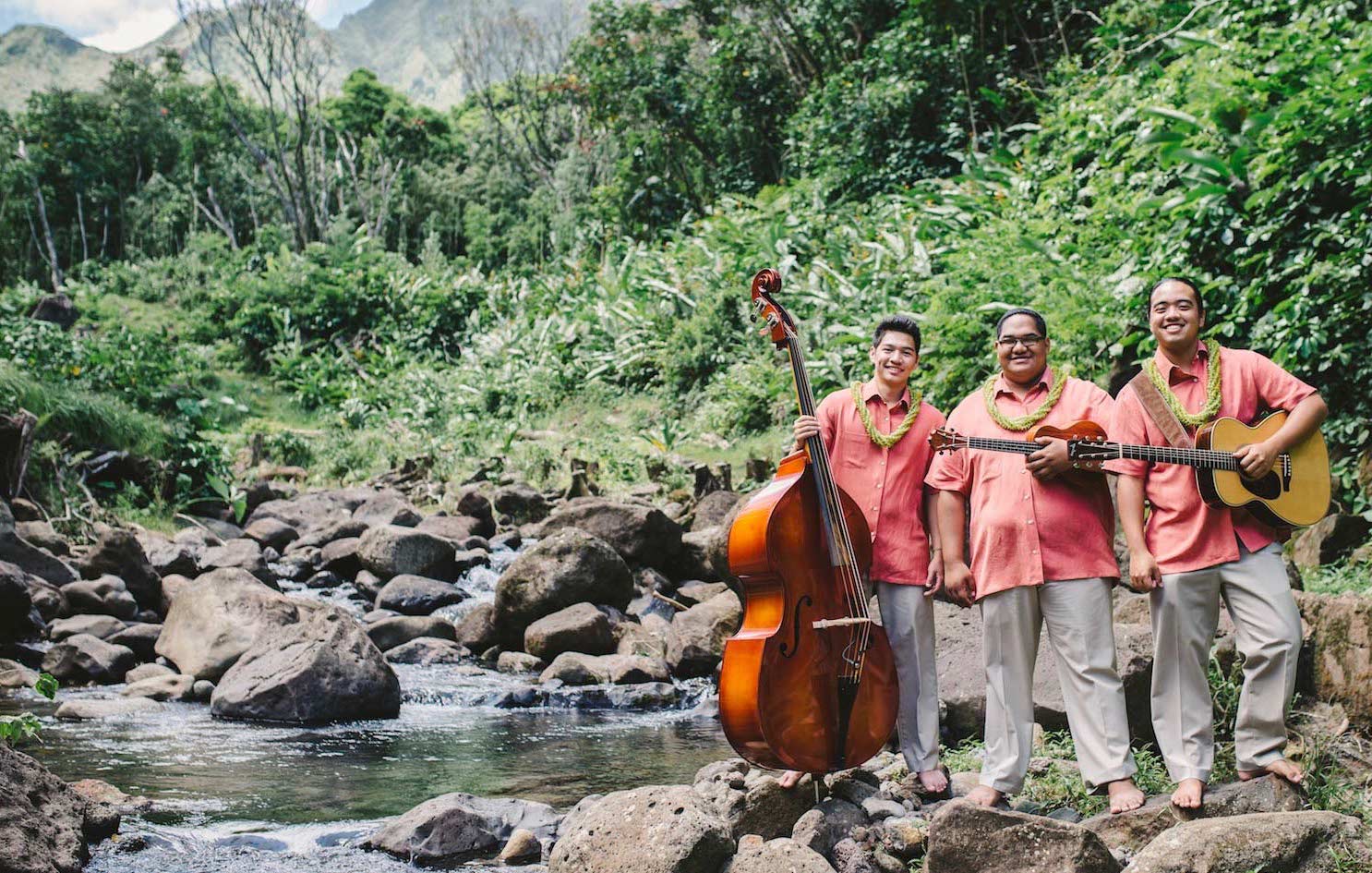
The show highlights three artists from Hawai‘i who all fall under the hard-to-translate term māhū. Part One begins with Hinaleimoana Wong-Kalu, a hula master and leader in the field of indigenous Hawaiian language and cultural preservation. (She is also the subject of Kumu Hina, a 2014 documentary, and she co-directed Kapaemahu, an animated 2020 film based on the long-hidden history of four stones on Waikiki Beach honoring legendary mahu who brought the healing arts to Hawai‘i.)
Kaumakaiwa’s off-the-charts music, which synthesizes Makuakāne has met with all three of his guest artists separately to conceptualize original pieces that celebrate the tradi- tional status of mahu as cultural stan- dard bearers, artisans, and healers. In Kaumakaiwa, in particular, he found an ambassador of mahu, someone who has thought deeply about the mean- ing of the word not just culturally but artistically. “In Hawai’i, we don’t have gendered pronouns,” she told a hula class in a Zoom lecture. “There is no such thing as ‘she’ or ‘he.’ It’s just ‘o ia.’” The term mahu literally trans- lates to a state of being and doesn’t refer to a specific gender. It encompasses everything, the entire breadth of gender expression.”
With a collaborator like Kaumakaiwa (he calls her his “linchpin”), something new began to happen that took even Makuakāne by surprise. Call it collaboration, alchemy, or just the magic of finding a new muse. “I’m directing her, but I’m stimulated by her, and she by me,” he says.
“I’ve never hid the fact that I am gay, but in this show I can internalize that. I can ask myself, ‘What does it mean for me to do a show called MĀHŪ?’ I can step into a self that is always there, though perhaps hidden a bit, or pro- tected. It allows me to inhabit that self fully.”
He clearly enjoys the flamboyance of these guest artists. “Every song is a parade, and who doesn’t love a parade?” he says. “The combination of guest artists is allowing me to go all out. Every choreographer wants that!”
“For this show, everything is being reexamined,” Makuakāne told Hawaii Public Radio. “People are going to see a combination of different musical styles, of costumes, of traditional, modern and contemporary dancing, chanting.
I mean, I don’t like linear. I don’t like to start with tradi- tion and then move through time to end up in contempo- rary times. I love to mix them all up. Because I feel that’s what my life is. I’m one big wheel collecting everything as I move throughout the day.”
Say Aloha to These Local Luminaries in Dance, Education, Sports and More
by Jeanne Cooper
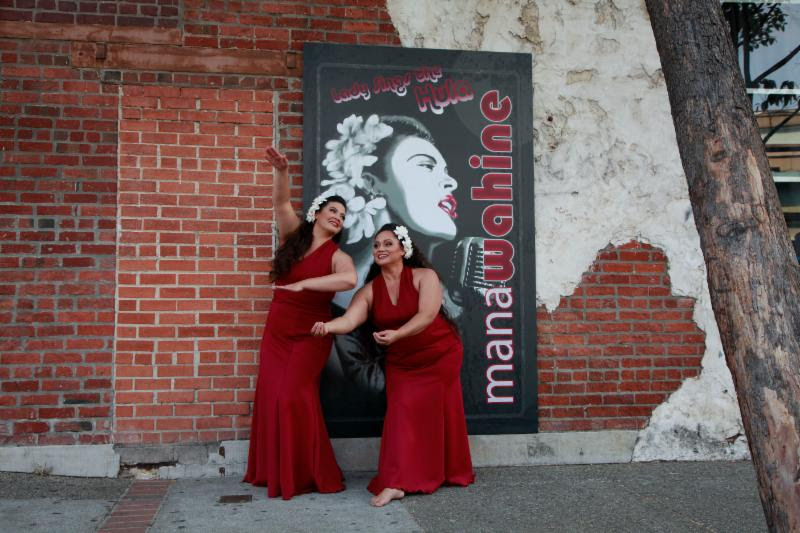
Patrick Makuakāne | Sixteen years after receiving a lifetime achievement award from the San Francisco Ethnic Dance Festival, the iconoclastic kumu (hula master) picked up a second such honor, this time from the Hawaii Chamber of Commerce of Northern California at its 20th anniversary gala in May. “That just means I’m old,” jokes Makuakāne, who founded dance company Nā Lei Hulu I Ka Wēkiu in 1985, a year after moving to San Francisco from his hometown of Honolulu. Still abuzz from presenting hula at his sixth Burning Man, Makuakāne says he’s also invigorated by the collaborators for his troupe’s annual Palace of Fine Arts performances, October 22 and 23. Called Mahu, the Hawaiian term for “third gender” or transgender, the show features mahu trio Kuini, kumu Hinaleimoana Wong-Kalu and singer-songwriter Kaumakaiwa Kanaka‘ole, “who are over the top because that’s who they are,” Makuakāne notes. “As a teacher, you pray to get those kinds of musicians to inspire your students to dance their ass off. If it’s worth doing, it’s worth overdoing.”
May 27, 2022 | Hawaiʻi Chamber of Commerce of Northern California
Kumu Patrick Makuakāne receives the 2022 Kūlia I Ka Nuʻu Lifetime Achievement Award.
Patrick Makuakāne is the Director & Kumu Hula of Nā Lei Hulu I Ka Wēkiu. He is a creative force in the hula world, and is well known for his innovative choreography. His work is grounded in the traditions and fundamentals of hula, and he labors to keep traditional dances intact as they have been for generations. Born and raised in Honolulu, Hawai’i, Mr. Makuakāne began dancing at the age of 13 and went on to study with some of Hawai’i’s most recognized hula masters, including John Keola Lake and Robert Cazimero.
The Asian American Pacific Islander (AAPI) prison population in the U.S. skyrocketed 250 percent in the 1990s, while the country’s overall prison population grew by only 77 percent. AAPI is now counted within a group called “Others” by the prison tracking system. Among “Others” released from state prisons across this country in 2005, the recidivism rate for the AAPI community is sobering. Seventy-two percent were arrested for another crime within three years. For the AAPIs that return to San Quentin’ there is hope through spiritual services called the Native Hawaiian Religious Group (NHRG).
In San Quentin, one of the few remaining native Hawaiians is perched in his cell, meditating and reading about returning to the place he now understands is his home — Hawaii. Travis Vales, 28 years old, has his sights set on returning to the Islands, “to go home,” after his prison term is complete. “Being at San Quentin has allowed me to touch my familial roots like I would never have done on the streets. Now, I want to utilize my knowledge and skills to provide affordable housing, and to teach basic work skills and money management. If I can assist in fighting the epidemic of homelessness and drug usage at home, I believe Hawaii can be more than a tourist attraction. To me, it all starts with a willingness to encourage people to be and do more by leading.”
The San Quentin Native Hawaiians and members of the AAPI community together make up the NHRG. The group assists in the rehabilitation of the incarcerated men. The group’s mission is helping participants connect with their roots and culture through traditional dance and chants, while encouraging a spiritual journey. Some of the men were disconnected from their culture before incarceration. As a result, they gravitated towards gangs, drugs and violence. Through the NHRG these men are able to hold them for their actions. Unfortunately, the NHRG has been on a year and a half absence due to the COVID-19 pandemic.
The men of Native Hawaiian Religious Group practiced traditional dances to keep traditions alive. For more about NHRG log on to www.naleihulu.org.
When the NHRG resumes, Vales will have an opportunity to study his culture, which he believes will make him “one with the earth and all of its peaceful aspects.” He continued, “I pray I can be touched by the spiritual teachings of Kumu Patrick Makuakāne, the way my incarcerated brothers here before me were touched. I can look forward to seeing my family come in to watch me perform in this holy ritual.”
Kumu Patrick Makuakāne, a spiritual leader, is the cultural anchor of San Quentin’s NHRG and is assisted by Adel “Auntie Adel” Serafino and Jun “Auntie Jun” Hamamato. Their goal is to build a bridge between the outside local AAPI community and the incarcerated AAPI community. Adel teaches ukulele. Hamamoto teaches origami classes.
History of the AAPI struggles
The economic boom of American and Japanese commercialism, both before and after WWII, diminished the footprint of native Hawaiian tribes. Today they are a shadow of what they were. Since 1918, when Queen Lili‘uokalani exchanged Hawaiian sovereignty for a paltry sum of money, Hawaiians have seen their homeland gentrified and their native identity fade.
As was the experience of natives on the mainland whose land was incorporated into the United States, Hawaiian native culture became blended with the mainland’s White, European-rooted culture. This relationship led to an erosion of native cultural values.
As investments from the mainland accelerated following WWII, including a building boom in the ’70s and ’80s, the “progress” that it represented was never fully shared by the native people whose culture contributed so much to the appeal of the islands. Don Ho’s Tiny Bubbles thrived, as the island culture became merely a tool to promote tourism. Pacific Islanders believe that they have witnessed the destruction of their communities and now are contemplating reparations.
Na Lei Hulu’s virtual 2021 show features newly choreographed pieces that run the gamut from kahiko to auana to hula mua (traditional to modern to innovative). Filmed in San Francisco and in Hawaii, this new production also includes special appearances by guest artists!
Emily Wilson | sfcv.org
Patrick Makuakāne is the founder and artistic director of the Hawaiian dance company, Nā Lei Hulu I Ka Wēkiu (“the many feathered wreaths at the summit, held in high esteem”). He recently joined with Saddle Road Productions to form the group Eō. In April, they released their first single, Hānau, about the birth of the Hawaiian Islands, from the album of the same name, which comes out later this year.
Makuakāne, who has received several Isadora Duncan Dance Awards as well as a lifetime achievement award from the San Francisco Ethnic Dance Festival, is known for combining disparate elements in hula — he has included opera, drag queens, and electronic music in his shows — as well as one telling the story of the colonization of Hawaii. His annual shows sell out the Palace of Fine Arts, and he’s performed on the streets of New York City and San Francisco, Burning Man, and San Quentin Prison.
In a video interview, Makuakāne talked about how he joined up with Patrick and Scarlet Eskildse from Saddle Road Productions (when they did some traditional Hawaii music in the style of lindy hop), making his first album, marrying disparate things to create dialogue, some dances being like precious family heirlooms that should be left alone, and the best compliment he ever got about his work.
Celebrating our 35th Anniversary with livestream surprises, specially created content, and some of your favorite hulas.
October 2019: Two weekends of music and hula!
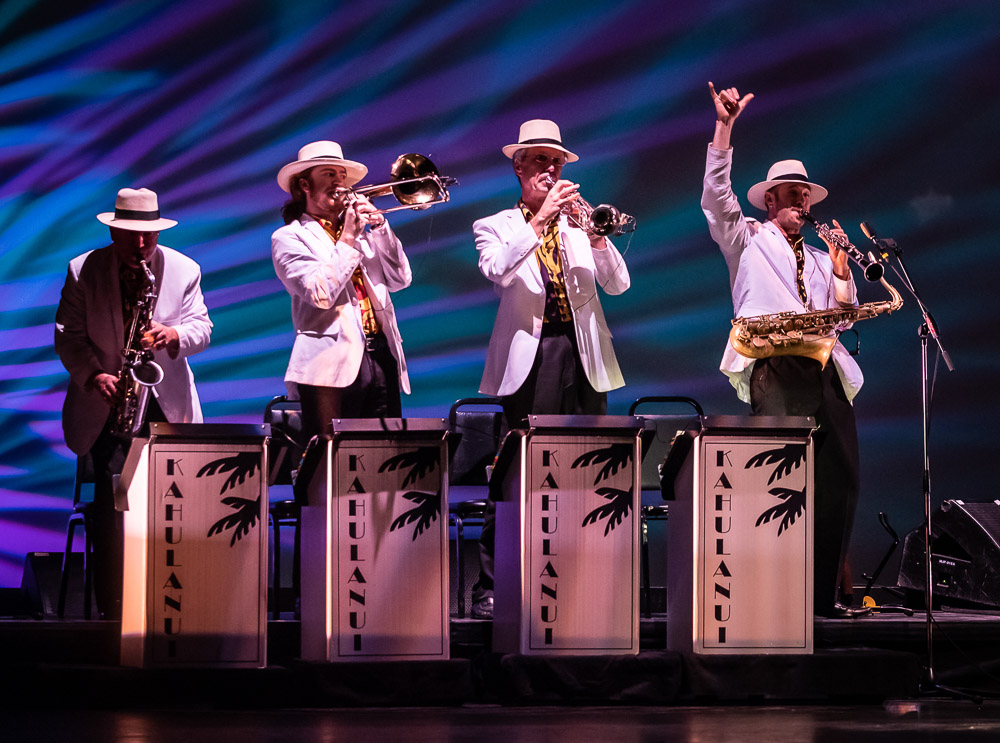
October 19-20 Hawaiian swing band Kahulanui with Nā Lei Hulu.
October 26-27 Hōʻike Nui featuring Nā Lei Hulu students, accompanied by the award-winning sounds of Keauhou.
GoodNewsNetwork.org | Jan 16, 2019
Hula dancing might not seem like the most obvious pastime for grizzled male prisoners, but it is apparently shaping up to be an unlikely method of reform for California inmates.
The infamous San Quinten State Prison of northern California has been hosting hula classes for the male inmates twice a week – and many of them say that it has become an invaluable source of emotional relief and inspiration.
“Pre-hula, I was a really dark person,” one inmate told Circa. “But hula really spring-boarded it for me. I think, had I not found myself spiritually, I still would be searching.”
Though there are not many studies that have precisely quantified the benefits of hula dancing, experts say that the traditional art form has a tremendous impact on the physical, mental, and spiritual wellbeing of both Native Hawaiians and non-Natives. This study even says that it helps non-Hawaiian dancers to become more culturally aware and appreciative of other lifestyles.
Similarly, this West Virginia nonprofit has found transformational success in teaching yoga classes at local prisons and correctional facilities.
“The need for healing within the prison environment is profound,” the nonprofit’s co-founder told Good News Network. “They’re using these tools to get in touch with what they care about. What kind of person do they want to be while they’re in prison—and how to find that freedom on the inside while they’re incarcerated. It’s really very powerful.”
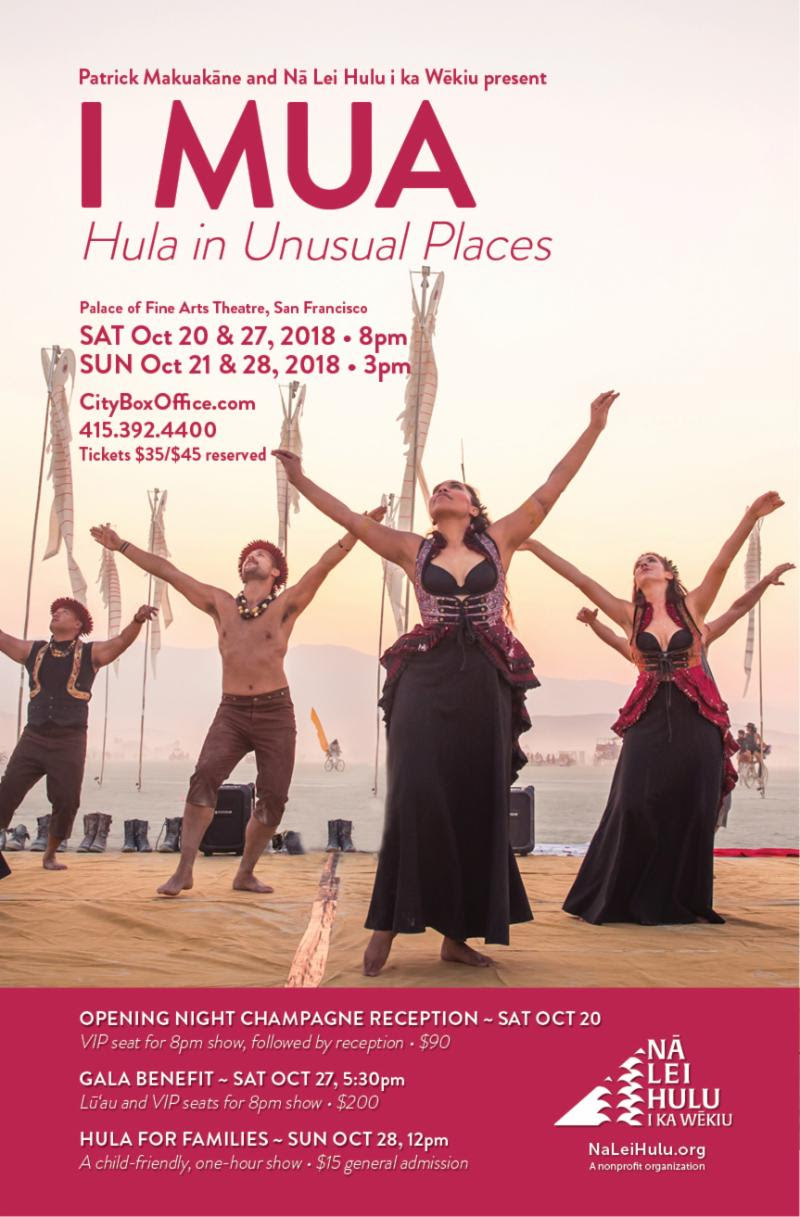
“I MUA – Hula in Unusual Places,” which takes you to the desert, behind bars, to the streets of New York City, and to one of the grandest stages in San Francisco.
DATES:
Saturday, October 20 8:00 PM
Sunday, October 21 3:00 PM
Saturday, October 27 8:00 PM
Sunday, October 28 12:00 PM (Hula for Families)
Sunday, October 28 3:00 PM
October 20-28th | Palace o Fine Arts, San Francisco