Hula for the Healing Stones
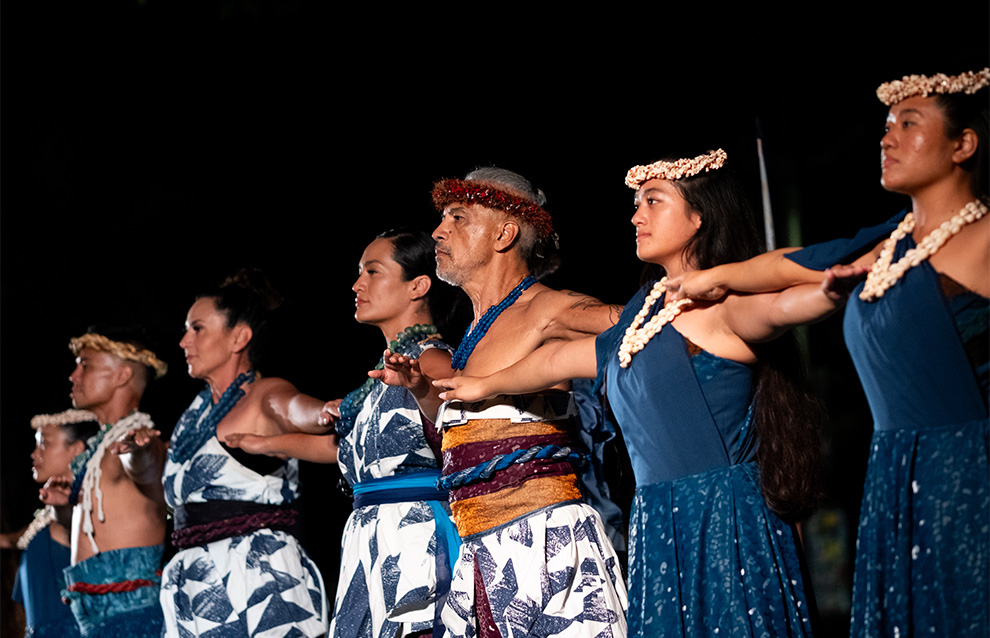
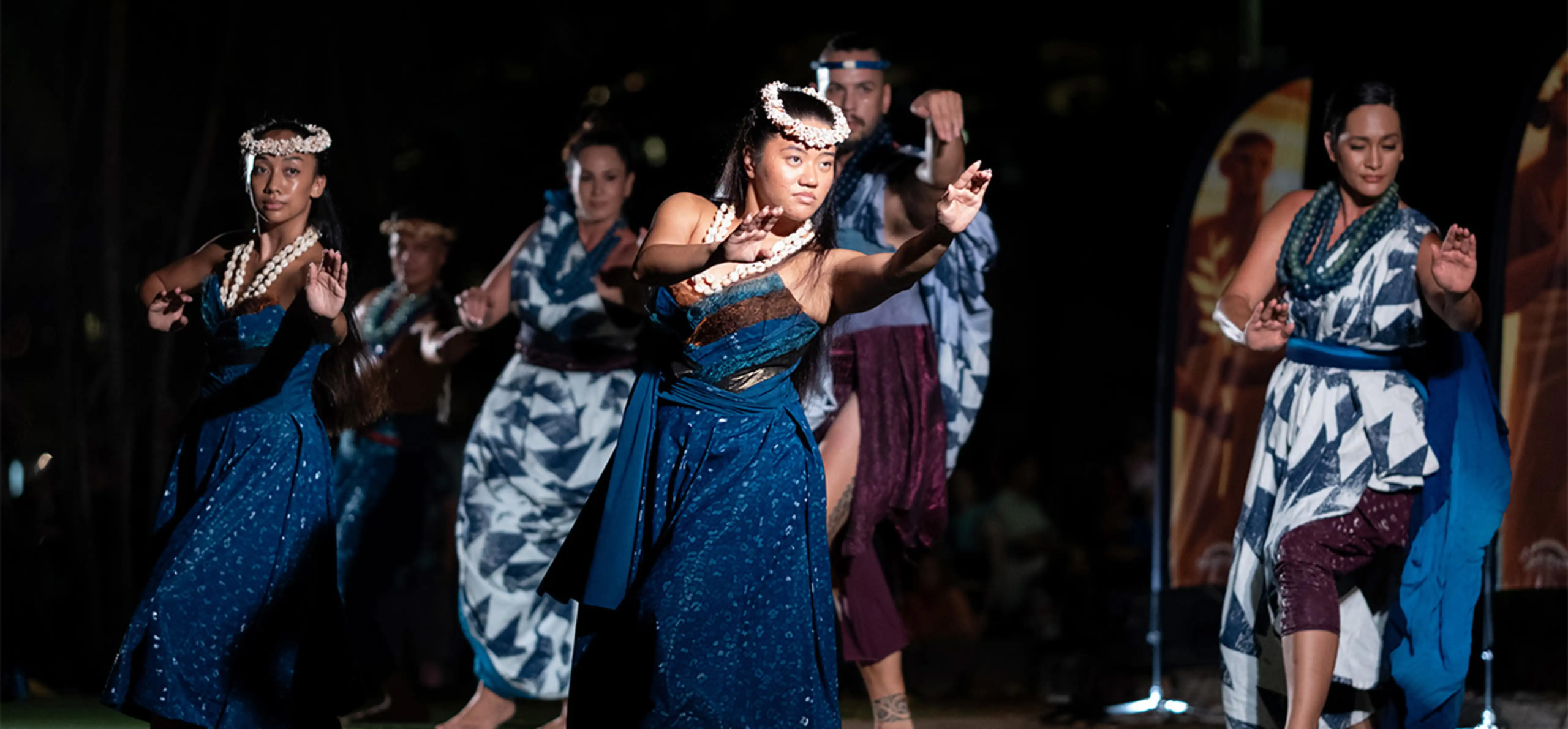
Every Wednesday at sunset, hula dancers perform The Return of Kapaemahu at Kuhio Beach Park in Waikiki.
Story By Martha Cheng
Photos By Anthony Consillio
A little show about transgender healers isn’t, you know, what you thought you were gonna see when you got to Waikiki,” says Patrick Makuakane, a kumu hula (hula teacher) and the composer, choreographer and director of that “little show,” The Return of Kapaemahu. And yet every Wednesday since its debut in January 2025, its audience in front of the Kuhio Beach hula mound includes a few local families laying blankets on the sand and visitors turning their backs to the ocean sunset as the free performance begins: The dancers emerge, their iridescent costumes shimmering.
Through narration in olelo Niihau (the Niihau dialect of the Hawaiian language) and English—and against a soundtrack of historic chants layered with a groovy beat and a touch of electronica—The Return of Kapaemahu recounts the story of four healers who voyaged from Tahiti to Waikiki long ago. According to the moolelo (story), “They were not male. They were not female. They were mahu … a mixture of both … in heart, mind and soul.” The healers were so beloved that the people of Oahu quarried four large stones from nearby Kaimuki and carried them to Waikiki as a tribute. The stones were rediscovered in 1963 after being buried under a bowling alley and now lie about five hundred feet from the hula mound, between a public restroom and the Duke Kahanamoku statue.
Makuakane, who was named a MacArthur “Genius” Fellow in 2023, was working on a show in 2022 called Mahu. He had wanted to open it with the story of Kapaemahu, with Hinaleimoana Wong-Kalu, who is herself mahu and a kumu hula and cultural practitioner, as the lead. Coincidentally, she had just finished directing an animated short about Kapaemahu with the co-founders of Lei Pua Ala Queer Histories of Hawaii, Dean Hamer and Joe Wilson, who were looking for other ways to share the moolelo. Hamer was drawn to the legend, he says, because “this isn’t a story about people who had to struggle because they’re mahu,” he says. “It’s a story about people who were admired in part because they were mahu.” The legend is in keeping with Hawaiian culture, in which mahu were respected figures, often wisdom-keepers and healers.
Hamer and Wilson were also excited that the moolelo was marked in the physical landscape by the healing stones in Waikiki, “but that story was not available to people,” Wilson says. “We felt [the story] needed to be restored in a physical sense.” And what better place than the hula mound not far from the stones. Makuakane adapted his Kapaemahu segment for Waikiki and “made it better,” he says. He added healing chants that “deal with sexual potency. It’s like all these subjects are now taboo because of Western encroachment. By no means are we perfect, but we did have a very progressive outlook, and I think it’s an important thing and not to be ashamed of it.”
queerhistoriesofhawaii.org/kapaemahushow